For a family that washes bath towels regularly, a washer-dryer is only suitable if the load you want to dry is within its drying capacity; the Consumers’ Association (Consumentenbond) stresses that washing and drying capacities must be considered separately. If you often dry several loads one after another and have the space, compare a separate washing machine and tumble dryer too. If you rarely use a machine to dry your laundry, air-drying could be an alternative. When comparing machine drying, look at the figures for the complete wash-and-dry cycle, not just those for washing.
Who is this buying guide for?
Families with large towel loads
You want to wash several bath towels in one go and, ideally, dry them too. The Consumers’ Association recommends checking washing and drying capacities separately, so you know how much laundry can go through the complete cycle.
Families that often use a tumble dryer
You dry towels regularly and want to compare the complete cycle and drying technology. The Consumers’ Association and European product information distinguish between washing only and washing and drying.
Families with limited space
You may be looking for a single appliance, but you also want to know whether the drying load and programme duration fit your household’s laundry routine. The Consumers’ Association reports that combined cotton cycles take almost seven hours on average; the duration varies by model.
What should you look for when buying?
Washer-dryer with condenser drying
A good fit if: you want one appliance and your towel load is within the stated drying capacity.
The trade-off: the Consumers’ Association reports relatively high energy use for drying with standard washer-dryers, as well as a long combined cotton cycle. This is not a performance guarantee for every model.
Heat pump washer-dryer
A good fit if: you want one appliance and regularly tumble-dry towels.
The trade-off: according to the Consumers’ Association, heat pump drying uses less energy and virtually no extra water than standard washer-dryers. Check the figures for the specific model and the complete cycle.
Separate washing machine and heat pump tumble dryer
A good fit if: you have room for two appliances and regularly get through several towel loads one after another.
The trade-off: two appliances need more space. Milieu Centraal recommends separate appliances because of their energy use; the results also depend on the models you choose and how often you dry laundry.
Washing and air-drying
A good fit if: your towels do not need to be tumble-dried straight away and you have a suitable place to dry them.
The trade-off: you need space and time to dry your laundry. Milieu Centraal recommends air-drying where possible.
| What to consider |
What to check before buying |
Who should pay extra attention |
| Drying capacity |
Compare the washing and drying capacities in kg for the exact model. If needed, weigh a typical load of dry towels. |
I want to wash and dry several towels in one go, without being caught out by a lower drying limit. Around 36% of consumers prioritise sufficient drying capacity. |
| Energy and water use when drying |
Compare energy and water use for the same complete wash-and-dry cycle; do not compare these figures with washing-only figures. |
If I often tumble-dry towels, I want to take the impact of the complete cycle into account. Around 29% of consumers prioritise the cost of frequent drying. |
| Installation space and connections |
Measure the space and check the model dimensions, water supply, drainage, stable floor and connections, following the installation instructions. |
I only have one suitable space and want to know in advance whether the appliance can be safely installed and connected there. Around 21% of consumers prioritise the space available. |
| Programme duration |
Check how long the complete cycle takes for the programme you plan to use, and consider whether it suits consecutive loads. |
If several towel loads need to be washed at home one after another, I want to know how long the drum will be occupied. Around 14% of consumers prioritise turnaround time. |
Common buying mistakes
-
Confusing washing capacity with the capacity for a complete wash-and-dry cycle
A model may be able to wash more cotton laundry than it can dry in the same cycle. This could mean taking some towels out of the drum or drying them later.
Compare the washing and drying capacities of the exact model with your usual towel load.
A lower drying limit could mean extra drying cycles and a longer overall turnaround time.
-
Comparing washing figures only
If drying is often part of your routine, washing-only figures will not show you how much energy and water the complete cycle uses.
Compare the information on the same label basis for washing only and for washing and drying, including energy and water use.
-
Assuming a washer-dryer will get through consecutive loads faster
The Consumers’ Association reports that combined cotton cycles take almost seven hours on average, although this varies between models. While a cycle is running, the appliance is not available for the next load.
Check how long the programme you actually want to use takes. If you handle several loads one after another, compare separate appliances too.
The next load may have to wait longer while the washer-dryer is busy washing and drying.
-
Ruling out separate appliances just because they need more space
A washer-dryer takes up the space of one appliance, but if you dry laundry often, capacity and the time the appliance is occupied may also be important factors.
If you have room for two appliances, compare both setups in terms of the complete cycle, capacity and how often you dry laundry.
Brands and models to consider
LG
The Dutch F4DR7006S1W is a useful comparison model if you are considering a washer-dryer with a washing capacity of 10 kg and a drying capacity of 6 kg.
- LG lists a cotton programme, steam function and dimensions of 600 × 850 × 565 mm for this model.
- The 10 kg washing capacity does not apply to the drying stage; the model information is not independent confirmation of its drying performance.
Bosch
The Dutch WNC254A0NL is worth comparing if a generous washing capacity and automatic dosing are important to you.
- Bosch lists a maximum capacity of 10,5 kg for washing only and 6 kg for washing and drying, as well as i-DOS and Auto Dry.
- The stated washing capacity is higher than the capacity for a complete wash-and-dry cycle. Bosch’s claim about detergent savings is a brand claim.
Samsung
The Dutch WD90HG6U94BEU3 offers a useful comparison with a washer-dryer that has a washing capacity of 9 kg and a drying capacity of 6 kg.
- Samsung lists an energy rating of D and the AI Wash feature for this variant.
- A feature description is not independent confirmation that it will get towels cleaner or drier.
AEG
The Dutch LWR9506BN4 is worth looking at if you are considering a heat pump model in the washer-dryer category.
- AEG describes this model as a heat pump washer-dryer with a washing capacity of 10 kg.
- AEG’s claims about lower drying temperatures come from the manufacturer. Check the drying capacity and label figures for the exact model before comparing.
Products at Joybuy
This selection includes both separate washing machines and heat pump tumble dryers, as well as washer-dryers. Compare the drying capacity and space required with your towel loads and laundry routine.
 No image available
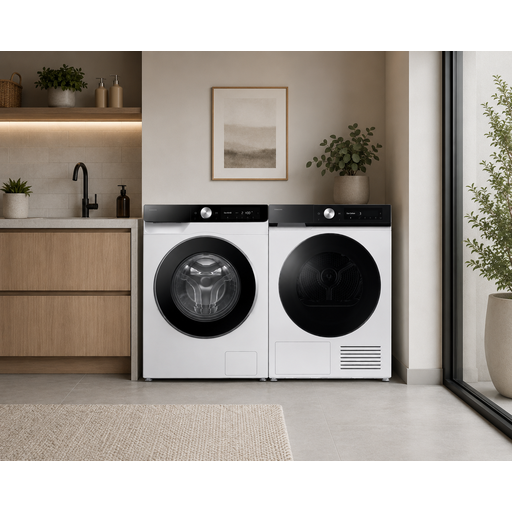
Samsung WW90DG6U25LK washing machine and DV90DB7845GEU3 tumble dryer
Suited to households that want to wash and dry separately and have room for two appliances.
The set lists a capacity of 9 kg for each appliance; the tumble dryer is described as a heat pump model.
View at Joybuy
 No image available
Samsung WD18DB8995BZ/T2
Suited to anyone looking for one appliance and wanting to check that the stated drying capacity is enough for a large towel load.
The product information lists a washing capacity of 18 kg, a drying capacity of 11 kg and heat pump drying. The drying capacity is lower than the washing capacity.
View at Joybuy
 No image available
Comfee CFP03ED100W-HR
Suited to anyone who wants to wash and dry in one appliance and check their towel load against the drying limit.
The product name lists a washing capacity of 10 kg and a drying capacity of 7 kg, so the drying capacity is lower than the washing capacity.
View at Joybuy
 No image available
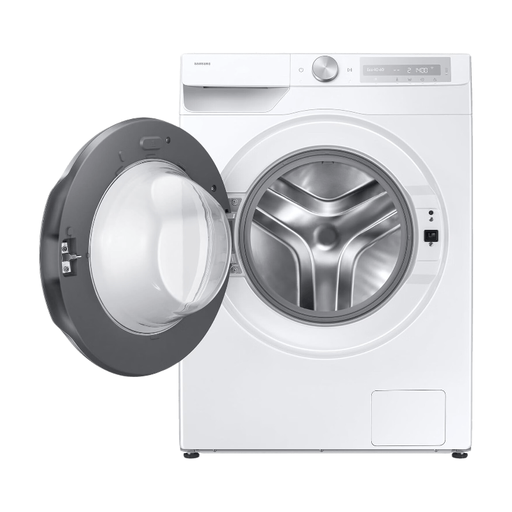
Samsung WD90HG6U94BEU3
Suited to anyone looking for one appliance and wanting to check whether a drying capacity of 6 kg is enough for their usual towel load.
The product name lists a washing capacity of 9 kg, a drying capacity of 6 kg, 25 programmes, automatic dosing and Wi-Fi.
View at Joybuy
 No image available
TCL CP1210WA0
Suited to anyone looking for one appliance and wanting to match the drying capacity to the number of towels they need to dry in one go.
The product name lists a washing capacity of 10 kg, a drying capacity of 6 kg and a steam wash function; the drying capacity is lower than the washing capacity.
View at Joybuy
Frequently asked questions
Can I dry a full load of towels completely straight after washing?
Only if the load is within the drying capacity of the chosen programme and model. Check the washing and drying capacities separately; the maximum washing capacity does not automatically mean you can wash and dry that amount in one uninterrupted cycle.
Do bath towels always need to be washed at 60 °C?
No. According to Milieu Centraal, towels usually do not need to be washed at 60 °C to get clean. Follow the care label and programme instructions; a higher temperature may be appropriate in certain hygiene situations.
What should I check before installation?
Check the manual for your chosen model and make sure it is installed on a level, stable surface, with the water connections correctly fitted and an earthed socket. Remove the transit bolts before use and follow the cleaning and maintenance instructions.
Which label figures should I compare if I often dry towels?
Compare the figures for washing only and for the complete wash-and-dry cycle, including energy use per 100 cycles, capacity and water use. European product information distinguishes between these cycles, so make sure you are comparing like with like.
Who should I contact about a faulty product in the Netherlands?
Report a fault to the seller. The Dutch government states that the seller must provide a solution if there is a problem; a manufacturer’s guarantee or an extended warranty does not replace your statutory rights.


