
Family with a large bedding load
You want to know whether sheets and pillowcases will fit together in one complete wash-and-dry cycle. So compare the wash capacity with the drying capacity, not just the largest stated load.


A washer-dryer can be a good fit if you have space for just one appliance and your bedding load is within its drying capacity, which is often lower than its maximum wash capacity. The Dutch Consumers’ Association points out that, for one uninterrupted wash-and-dry cycle, you need to consider how much you want to dry. If you have room for two appliances and dry laundry often, compare a separate washing machine and heat-pump dryer too: Milieu Centraal recommends separate appliances on energy-use grounds.
You want to know whether sheets and pillowcases will fit together in one complete wash-and-dry cycle. So compare the wash capacity with the drying capacity, not just the largest stated load.
You use the drying function regularly and want to weigh up energy use and programme length against the option of two separate appliances.
You want to wash and dry in the space available for a single appliance, and can accept a smaller drying load if it suits your bedding.
Start with the dry load you want to process in one cycle. Then compare energy use, available space and how long a complete cycle takes.
| What to consider | What to look for | Who should bear this in mind? |
|---|---|---|
| Bedding load in one cycle | Weigh your usual dry load and compare it with the capacity for the cotton or combined programme. Check the care labels on your bedding too. | If you want to wash and dry sheets and pillowcases together, you’ll need to know whether the dry load will fit in one cycle. Around 36% of consumers prioritise load capacity. |
| Energy use when drying regularly | Compare the EU label figures for washing only and for the complete wash-and-dry cycle on a like-for-like basis. Consider how often you use the drying function. | If you regularly use a tumble dryer, you’ll want to take the energy use of the complete cycle into account. Around 29% of consumers focus primarily on running costs. |
| Space and connections | Measure the available space, including room for the necessary connections. Check the installation instructions for the water supply, drainage, floor and plug socket. | If there’s room for only one appliance at home, its size and position are decisive. Around 21% of consumers prioritise the space available. |
| Cycle time and drying results | Compare the duration of the complete cycle and, where available, independent tests of drying speed, evenness and creasing. | If you need clean bedding again quickly, you’ll want to know how long the combined cycle takes. Around 14% of consumers focus primarily on cycle time. |
The stated drying capacity may be lower than the wash capacity. So a load that fits in the wash may not automatically fit in one combined cycle.
Compare your usual dry bedding load with the wash-and-dry capacity of the exact model.
The EU label distinguishes between the figures for washing and those for the combined cycle. For standard washer-dryers, drying and water use during drying may also affect the figures.
Compare figures for the same type of cycle and consider how they relate to the way you use the appliance.
The Dutch Consumers’ Association describes the combined cotton cycle as time-consuming. A long cycle can be inconvenient if you need clean sheets again quickly.
Check the cycle time for the exact model. If you often have several loads to do in a row, compare the option of two separate appliances too.
Additional warranty cover and your statutory rights are not the same thing.
Before buying, check what extra cover is provided and report any fault to the retailer.
The capacities and energy ratings shown apply to the models listed, not to every appliance made by that brand.
The AEG LWR9516BN4 is a heat-pump model to compare if you’re looking for one appliance.
The Bosch WNA14420NL is a condenser washer-dryer to compare for capacity.
The LG GD3R509S0 is a condenser washer-dryer with a stated capacity of 9/6 kg.
The WD90DB7B85GWU3 is a Dutch-market 9/6 kg washer-dryer to compare for capacity and controls.
The Miele WTD 280 WCS is a condenser washer-dryer to compare if a smaller bedding load is enough for you.
This selection features freestanding washer-dryers with a range of stated wash and drying capacities. Compare the drying capacity with the bedding load you want to process in one cycle.
 Image unavailable
Could be a good fit if your bedding load is within the stated drying capacity of 5 kg.
Capacity: 9 kg washing and 5 kg drying. The product information lists 1400 rpm and an overall energy rating of D. The drying capacity is lower than the wash capacity.
 Image unavailable
Could be a good fit if your bedding load is within the stated drying capacity of 7 kg.
Capacity: 10 kg washing and 7 kg drying. The stated width is 60 cm; the drying capacity is lower than the wash capacity.
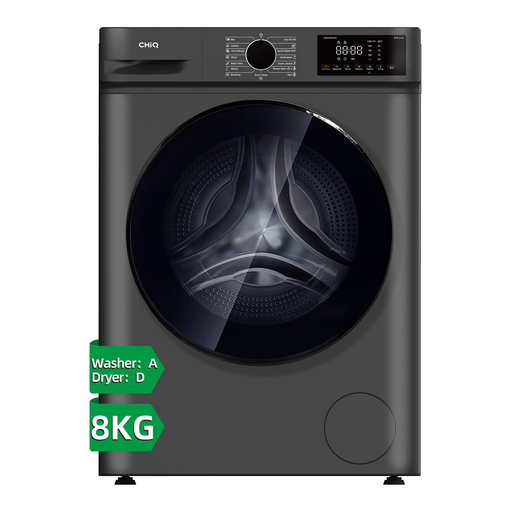 Image unavailable
Could be a good fit if your bedding load is within the stated drying capacity of 5 kg and depth is limited.
Capacity: 8 kg washing and 5 kg drying. The stated dimensions are 600 × 520 × 847 mm; the product information also lists a cotton programme.
 Image unavailable
Could be a good fit if your bedding load is within the stated drying capacity of 6 kg.
Capacity: 10 kg washing and 6 kg drying. The product information lists an E energy rating for washing and drying; the drying capacity is lower than the wash capacity.
No. Check the care label on each item. Bosch advises checking the care instructions for bedding, as different materials may need different treatment.
Place the appliance on a flat, solid surface and remove the transit bolts before use, as advised by the Dutch Consumers’ Association. Follow the instructions for the exact model when connecting and maintaining it.
Compare figures for the same type of cycle on the EU label. The European Commission notes that the label shows, among other things, energy use per 100 cycles and water use per cycle. To estimate your own costs, multiply the consumption per cycle by the number of cycles you expect to run and your own tariff.
Not before checking what the additional cover offers. The Dutch government states that there is no fixed statutory warranty period in the Netherlands, because products do not all last the same length of time.