
Housemates with lots of bedding
You want to know whether a duvet cover will fit in with the rest of the load for one wash-and-dry cycle. Consumentenbond points out that the maximum drying capacity may be lower than the washing capacity.


Choose a washer-dryer if you only have room for one appliance and want to machine-dry your bedding. Check that the dry load is within the drying capacity of the programme you choose. If housemates often need to do their washing one after another, or can usually hang it up to dry, a separate washing machine may be more practical: according to Consumentenbond, a combined cotton programme takes a long time, and standard washer-dryers use extra energy and water when drying.
You want to know whether a duvet cover will fit in with the rest of the load for one wash-and-dry cycle. Consumentenbond points out that the maximum drying capacity may be lower than the washing capacity.
If you may only have room for one appliance, compare the dimensions and connection point with the practical benefit of washing and drying in the same machine.
If several people share the machine, the length of the full programme matters: the drum stays in use for as long as the washer-dryer is running.
Best suited to: situations where one appliance has to do the job and you want to dry laundry electrically.
Consider: the drying capacity may be lower than the washing capacity; also compare the duration and energy and water use of the full cycle.
Best suited to: regular electric drying, provided the price and available space work for the specific model.
Consider: Consumentenbond describes the AEG LWR9516BN4 as rather expensive; this comment applies to this model and not automatically to other heat pump washer-dryers.
Best suited to: situations where you can usually hang washing up to dry, or housemates prefer to schedule washing and drying separately.
Consider: a washing line avoids electric drying, but you need space to hang the laundry; separate appliances each need their own space.
| What to consider | What should you check? | Who is this most relevant to? |
|---|---|---|
| Bedding in one cycle | Compare the washing and drying capacities for the programme you plan to use; weigh the dry load and follow the fabric care label. | If I want to dry my bedding straight after washing it, the full load needs to be within the drying limit. Around 33% of consumers say drying capacity is their main concern. |
| Space and connections | Measure the space and check the water supply, drainage, floor and the model’s installation requirements. | If there is room for only one appliance, the machine and its connections need to fit the space practically. Around 27% of consumers say installation is their main concern. |
| Availability for housemates | Compare the duration of the full wash-and-dry programme; discuss when everyone needs to use the shared machine. | If housemates want to do their washing one after another, it matters when the drum will be free again. Around 20% of consumers prioritise machine availability. |
| Ongoing drying costs | Compare the full cycle on the EU energy label, including energy use per 100 cycles and water use per cycle. | If you often dry clothes electrically, you’ll want to factor in the energy and water used per cycle when working out shared running costs. Around 20% of consumers focus mainly on this. |
The maximum amount you can wash is not automatically suitable for drying in the same cycle. According to Consumentenbond, the tested models with a 9 kg washing capacity and 6 kg drying capacity have a lower stated limit for drying.
Check the limit for your chosen programme before putting several duvet covers in the drum together.
If the load is over the drying limit, you may need an extra drying cycle or to dry some of it separately.
According to Consumentenbond, a combined cotton programme takes almost seven hours on average. This is an average from tests, not a set time for every model or load.
Compare the duration of the full cycle and consider whether washing separately and hanging clothes up to dry would make it easier for housemates to plan.
A long cycle means the shared drum stays in use for longer.
If you also dry clothes electrically, the full wash-and-dry cycle is what matters. The EU label includes information such as energy use per 100 cycles and water use per cycle.
Compare the figures for the full cycle and consider how often you actually use the dryer.
According to the Dutch government, the Netherlands does not have a fixed statutory guarantee period. Your statutory rights are separate from a manufacturer’s guarantee.
Check what situations are covered by an additional guarantee and compare its terms with your statutory rights.
Consumentenbond lists the Hisense WD3S9043BW3 with a 9 kg cotton washing capacity and a 6 kg cotton drying capacity.
According to Consumentenbond, the Bosch WNG24406NL has a 9 kg cotton washing capacity and a 6 kg cotton drying capacity, with conventional condenser drying.
Consumentenbond lists the AEG LWR9516BN4 as a heat pump washer-dryer with a 10 kg cotton washing capacity and a 6 kg cotton drying capacity.
According to Consumentenbond, the Samsung WD80TA049BE/EN has an 8 kg cotton washing capacity and a 5 kg cotton drying capacity.
These Joybuy products combine washing and drying in one appliance. Compare the stated drying capacity with the amount of bedding you want to dry in one cycle.
 No image available
For anyone who wants to wash and dry in one appliance; check that the dry bedding load is within the drying capacity.
8 kg washing capacity and 6 kg drying capacity; 1400 rpm and a steam function.
The product information lists 14 programmes.
 No image available
An option to compare if you’re looking for one appliance and your bedding load is within the drying limit.
9 kg washing capacity and 6 kg drying capacity.
 No image available
Worth comparing if you want one appliance; match the load to the drying capacity of the programme you choose.
10 kg washing capacity and 6 kg drying capacity.
The product name mentions a 60-minute wash-and-dry programme; check which load size this duration applies to.
 No image available
An option to consider if you want one appliance and the dry load is within the stated capacity.
10 kg washing capacity and 7 kg drying capacity.
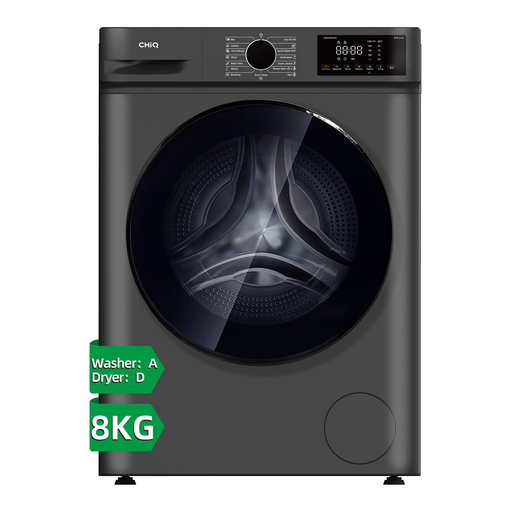 No image available
Worth comparing with other one-appliance options; check that the dry bedding load is within the drying limit.
8 kg washing capacity and 5 kg drying capacity; 1400 RPM and a steam function.
Only if the load is also within the drying limit for the programme you choose. Consumentenbond distinguishes between the maximum amount you can wash and the amount that can be dried in one combined cycle; check the fabric care label too.
Check that the machine will stand on a level, firm surface and that the connections comply with the model’s installation requirements. Consumentenbond advises removing the transit bolts before use. If you live in a shared or rented home, make practical arrangements with the people concerned before installing it.
Compare the figures for the full wash-and-dry cycle, not just washing. According to the European Commission, the EU label includes information such as energy use per 100 cycles and water use per cycle.
No. According to the Dutch government, the Netherlands does not have a fixed statutory guarantee period: you are entitled to a product that does what you can reasonably expect it to do. If there is a fault, contact the seller; the manufacturer’s guarantee and any additional guarantee are on top of your statutory rights.
When you buy a new, similar appliance for private use, the Dutch government says the old-for-new scheme applies, including to online purchases. The seller must take back the old, similar appliance free of charge; the practical arrangements for handing it over may vary.