
Careful cover washer
You want to wash removable covers without choosing a treatment that the care label doesn’t allow. GINETEX distinguishes between washing and drying instructions.


A washer-dryer is most useful when the care label allows the cover to be both machine-washed and tumble-dried, you have limited space and the load fits within the drying capacity. If you’d rather dry the cover on the line, a washing machine is enough and you can avoid machine drying; Milieu Centraal recommends line-drying laundry whenever possible. Check the care label before counting a drying function as a reason to buy: GINETEX explains that washing and drying instructions are separate guidelines.
You want to wash removable covers without choosing a treatment that the care label doesn’t allow. GINETEX distinguishes between washing and drying instructions.
You don’t have much room for two appliances and want to wash and dry suitable small loads in one go after getting home. The Consumers’ Association points out that drying capacity determines how much laundry can fit in a continuous cycle.
You can leave covers to dry and are weighing up the convenience of machine drying against its energy and water use. Milieu Centraal recommends line-drying laundry whenever possible; the European Commission explains what consumption information the EU label for washer-dryers shows.
Choose this if: the cover’s care label allows both treatments, one appliance suits your space better and the load stays within the drying capacity.
Bear in mind: the full wash-and-dry cycle can take a long time; compare the EU label for the entire cycle.
Choose this if: you need one appliance for washing, but would rather line-dry the cover or it isn’t suitable for the drum.
Bear in mind: you’ll need space to leave the cover to dry after washing.
Choose this if: you have room for two appliances and regularly want to dry more textiles than will fit in a single washer-dryer load.
Bear in mind: you’ll need more space. The Consumers’ Association notes that a separate heat-pump tumble dryer may be more energy-efficient than a standard washer-dryer if you dry laundry regularly.
| Buying consideration | What to look for | Who cares about this? |
|---|---|---|
| Permitted fabric care | Check the washing and drying instructions on the care label; only tumble-dry if it’s allowed. GINETEX explains the care symbols. | I want to care for the cover according to its label, even if that means not machine-drying it. Around 33% of consumers prioritise permitted fabric care. |
| A complete wash-and-dry load | Compare the washing and drying capacities and the duration of the full programme for the exact model. The Consumers’ Association points out that drying capacity may be lower than washing capacity. | I want to wash and dry suitable covers after getting home without having to remove some of the laundry from the drum partway through. Around 27% of consumers prioritise a continuous cycle. |
| Space and installation | Measure the available space and compare it with the exact model’s external dimensions; also allow room to hang laundry to dry. | If space is limited, I want to know whether one appliance will fit before I decide. Around 20% of consumers prioritise the space available. |
| Energy and water use when drying | On the EU label, compare the same type of use, such as washing only or the full wash-and-dry cycle. The European Commission lists, among other things, energy use per 100 cycles and water use per cycle. | I can line-dry the covers and want to know how machine drying affects consumption. Around 20% of consumers base their choice mainly on running costs. |
Washing and drying instructions are separate guidelines. So a cover that can go in the washing machine isn’t automatically suitable for the tumble dryer.
Check both instructions on the cover’s care label before considering the drying function.
A model may be able to wash more kilograms than it can process in one continuous wash-and-dry load. For example, Bosch lists a 9 kg washing capacity for the WNG24406NL, but a maximum of 6 kg for washing and drying.
Check both capacities for the exact model and programme. If the load exceeds the drying limit, you may need to remove some laundry or schedule an extra drying cycle.
That could mean extra steps or a second drying session.
The energy rating for washing alone doesn’t tell you how much energy the full wash-and-dry cycle uses. The European Commission explains that the label gives separate information for different types of use.
Compare the label values for the same type of cycle and weigh them against line-drying or, if you have space, separate appliances.
The LWR9506BN4 is a heat-pump washer-dryer. It may be worth considering if you want to compare drying technology and figures for the full cycle.
The WNG24406NL shows how washing and drying capacity can differ on the same model.
According to LG, the W4X1085NWB has an 8 kg washing capacity and a 5 kg drying capacity.
The WD3S9043BW3 is one model to compare with other washer-dryers that have a 9 kg washing capacity and a 6 kg drying capacity.
These product picks are aimed at washing and machine-drying in one appliance, including models for small textile loads. For cushion covers, always check first that the care label allows the drying method you plan to use.
 No image available
A combined appliance for anyone who wants to wash and dry with one machine; check that the drying load can accommodate the number of covers.
Washing capacity: 9 kg. Drying capacity: 5 kg. Spin speed: 1400 rpm. The title mentions an AI Power Drive inverter motor and a steam function.
The drying capacity is lower than the washing capacity. Always follow the care label for your cushion covers.
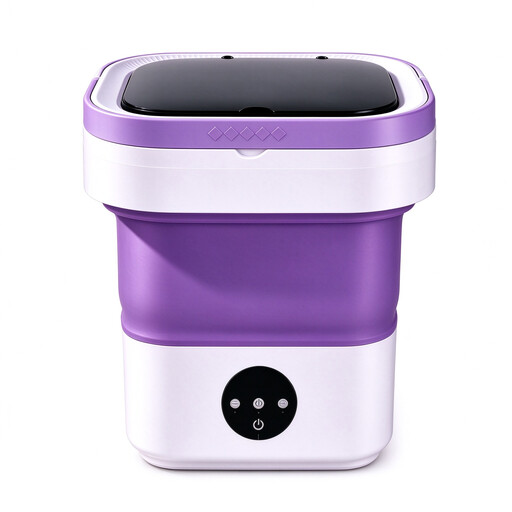 No image available
The product description presents this portable model as suitable for small textile loads, not as an obvious replacement for a machine that handles larger loads of laundry.
Capacity according to the product title: 12 l. The title describes a portable 3-in-1 washing and drying appliance.
According to the product information, don’t leave the appliance unattended while it’s in use. Check that its size and intended use are suitable for the cover.
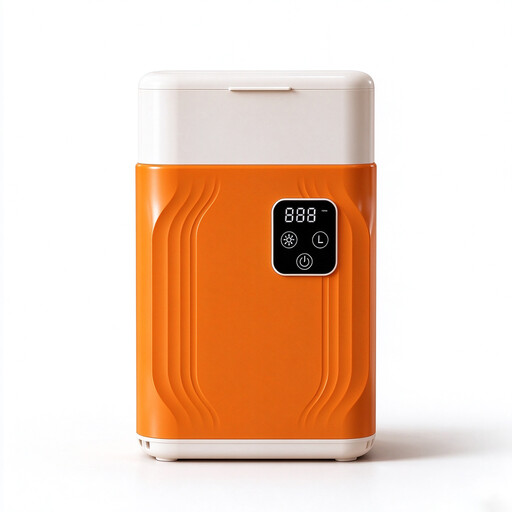 No image available
The description positions this portable model for small textile loads, so check whether the cover is the right size for this use.
Model number: HB-222. The product title describes a foldable 3-in-1 washing and drying appliance.
According to the product information, don’t leave the appliance unattended while it’s in use. Follow the washing and drying instructions on the cover’s care label.
 No image available
A washer-dryer for anyone who wants to wash and dry with one appliance; bear the lower drying capacity in mind when running a continuous cycle.
Washing capacity: 8 kg. Drying capacity: 6 kg. Spin speed: 1400 rpm. The title mentions Wi-Fi and a steam function.
The drying capacity is lower than the washing capacity. These features alone don’t tell you whether your cushion cover can be machine-dried.
 No image available
A combined appliance for anyone looking for one machine to wash and dry; make sure the amount of laundry is suitable for the drying capacity.
Washing capacity: 8 kg. Drying capacity: 5 kg. The product information lists AutoDry and a Wash&Dry programme.
The drying capacity is lower than the washing capacity. Check separately whether the cover’s care label allows tumble-drying.
No, ‘washable’ doesn’t mean that. Check the cover’s separate drying instructions; GINETEX distinguishes between washing and drying guidelines.
Compare the washing and drying capacities of the exact model and keep the load within the limit for the programme you choose. The Consumers’ Association gives the Bosch WNG24406NL as an example: it can wash 9 kg, but can wash and dry a maximum of 6 kg in one go.
Measure the available space and compare it with the external dimensions of the exact model. Also check the installation and maintenance instructions; dimensions vary between models.
On the EU label, compare the same type of use: washing only or the full wash-and-dry cycle. The European Commission lists, among other things, energy use per 100 cycles and water use per cycle; your final costs also depend on how you use the appliance and current tariffs.
According to the Dutch government, you’re entitled to a product that works properly, and you should contact the seller if there’s a problem. There’s no fixed statutory guarantee period in the Netherlands; a manufacturer’s warranty is additional.