What should you look for when choosing?
Start with the number of towels you want to wash and dry in one load. Then consider whether the programme duration, shared space and energy and water use suit your household.
Condenser washer-dryer
Choose this if: there’s only room for one appliance and the towel load fits within the drying capacity.
The trade-off: the same drum is occupied throughout the combined cycle. The Consumentenbond reports that standard washer-dryers use relatively large amounts of energy for drying, and generally water too.
Heat-pump washer-dryer
Choose this if: you need one appliance and regularly tumble-dry your laundry.
The trade-off: the Consumentenbond says this technology uses less energy for drying and virtually no extra water during the drying stage. However, the Consumentenbond reports that there are few models available, and the upfront cost may be higher. The machine is still occupied throughout the combined cycle.
Separate washing machine and heat-pump dryer
Choose this if: you have room for two appliances and housemates often want to do their laundry one after another.
The trade-off: you’ll need to transfer the washing between appliances and have space for both. Milieu Centraal recommends this set-up because it uses less energy than a washer-dryer.
Washing machine with line-drying
Choose this if: you have a suitable place to dry your towels and don’t need them to be tumble-dried straight away.
The trade-off: this avoids the energy use of tumble-drying, but takes time and space. Milieu Centraal recommends paying attention to ventilation when drying laundry indoors.
| What to consider |
What to check before buying |
Who is this important for? |
| Washing and drying towels in one go |
Compare the capacity for washing alone with the capacity for washing and then drying cotton. If you’re unsure how much your towels weigh, weigh a typical dry load. |
If I want to wash and dry a full load of towels in one go, I’ll focus on the drying capacity. Around 31% of consumers prioritise a suitable capacity. |
| Freeing up the shared machine on time |
Check how long the full cotton wash-and-dry programme takes, and agree how everyone will use the machine. |
If housemates need to use the machine soon after one another, the time a combined cycle keeps the drum occupied matters. Around 25% of consumers prioritise having the machine available for the next load. |
| Washing and drying in one space |
Measure the space, doorway and delivery route; check the dimensions and connections for the exact model. |
If there’s only one suitable space, I want to combine washing and drying without installing a second appliance. Around 25% of consumers prioritise this space requirement. |
| Energy use and additional costs |
Compare the washing and complete wash-and-dry cycle information on the EU energy label. Ask about delivery and installation costs in advance. |
If we tumble-dry often, I want to be able to weigh up the energy and water use of our full routine. Around 19% of consumers prioritise keeping running costs manageable. |
Washer-dryers at Joybuy
These washer-dryers are for households that want to combine washing and drying in one space. Capacities vary by model, so compare the drying capacity with the towel load you want to dry after washing.
 No image available
Samsung WD90DB7B85GWU3 9 kg/6 kg
An option if you want one appliance for washing and drying straight afterwards, with a drying load up to the stated capacity.
Capacity: 9 kg for washing and 6 kg for drying. The drying capacity is lower than the washing capacity, and the machine remains occupied throughout the combined cycle.
View at Joybuy
 No image available
Hisense WD5I8043BWF 8 kg/6 kg
An option if you want to wash and dry with one appliance and can keep your usual drying load within the stated capacity.
Capacity: 8 kg for washing and 6 kg for drying. The same machine won’t be available for another wash while the combined cycle is running.
View at Joybuy
 No image available
Samsung WD18DB8995BZ/T2 18 kg/11 kg
An option to compare if you want to wash and dry a larger towel load in one combined cycle.
The product description lists a heat pump, an 18 kg washing capacity and an 11 kg drying capacity. The stated 98-minute cycle is for a small mixed load, not a full load of towels. The machine remains occupied throughout a combined cycle.
View at Joybuy
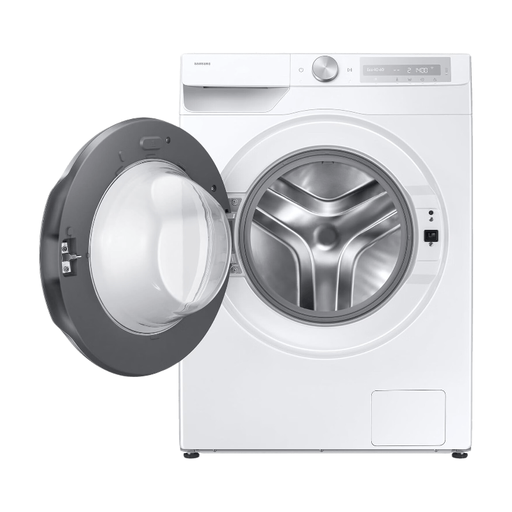 No image available
Samsung WD90HG6U94BEU3 9 kg/6 kg
An option if you’re looking for one appliance and your desired towel load fits within the drying capacity.
Capacity: 9 kg for washing and 6 kg for drying. The product name mentions automatic dosing and Wi-Fi. The drying capacity is lower than the washing capacity.
View at Joybuy
 No image available
Comfee' CFP03ED100W-HR 10 kg/7 kg
An option to consider if your towel load is larger than the drying capacity of lower-capacity models, but no more than 7 kg.
Capacity: 10 kg for washing and 7 kg for drying. The product name mentions a BLDC motor, Auto Dry and an A-rated wash cycle. The drying capacity is lower than the washing capacity, and the machine is occupied throughout the combined cycle.
View at Joybuy
Frequently asked questions
Can I leave a full load of towels to dry without doing anything in between?
Only if the load is within the stated capacity for both washing and drying straight afterwards. The drying capacity is often lower than the washing-only capacity, so check the figures for the cotton programme on the exact model.
How long will a washer-dryer be occupied?
According to the Consumentenbond, a combined cotton programme takes almost seven hours on average. The duration of your chosen programme and the permitted load determine what this means for your shared laundry schedule.
Do cotton towels always need to be washed at 60 °C?
No. According to Milieu Centraal, towels usually don’t need to be washed at 60 °C. Follow the care label and programme instructions; specific hygiene requirements may call for a different approach.
What should I consider when installing and using an appliance in a shared house?
Check the available space and connections against the instructions for the exact appliance. Brandweer Nederland recommends plugging high-power appliances directly into a wall socket where possible, rather than using a cable reel or multi-socket adaptor. Agree who will empty the machine when it finishes too.
What costs and rights should I be aware of after buying?
Ask about any delivery and installation costs in advance. According to the Dutch government, there’s no fixed statutory warranty period in the Netherlands; if a product isn’t of satisfactory quality, the retailer is your point of contact. A manufacturer’s warranty doesn’t replace your statutory rights.


