
Moving with a small load of washing
Wants to have napkins clean and dry before setting off, and knows that a short programme is only suitable for the specified load size and fabrics.


For just a small load of napkins before a move, buying a new washer-dryer may not be necessary: first see whether an existing machine or another laundry facility will do. If you expect to use a dryer regularly after moving but have limited space, compare the drying capacity, programme duration, care instructions and energy consumption for both washing and the full wash-and-dry cycle. Milieu Centraal recommends buying a separate washing machine and tumble dryer if you dry clothes often, as they use less energy together than a washer-dryer.
Wants to have napkins clean and dry before setting off, and knows that a short programme is only suitable for the specified load size and fabrics.
Is looking for a permanent solution for washing and drying in one place after the move, and needs to consider connections, installation and transport.
Wants to weigh up the ongoing energy and water consumption against the space available and the cost of buying an appliance.
First decide whether you only need to deal with this one load or plan to use a dryer regularly after the move. Then consider the programme, installation, fabric care and energy consumption.
| Priority | What to look for when buying | Who should consider this most? |
|---|---|---|
| Finishing a small load in time | Check the maximum load and fabric requirements for the short programme. Bosch lists Wash & Dry 60' for small loads; this does not apply to every load or fabric. | If I need the napkins clean and dry before setting off, I want to know whether the short programme is suitable for my small load. Around 33% of consumers prioritise finishing a load in time. |
| Installation and moving | Measure the space and access route, and check the water supply, drainage, floor surface and model-specific installation instructions. | With limited space, I want to know in advance whether the appliance will fit and can be moved safely later; around 27% of consumers give installation and transport the highest priority. |
| Looking after fabrics | Follow the washing and drying advice on the care label, and check that the chosen programme is suitable for the fabric. | If I want to get the napkins clean without damaging the fabric, I start with the care label. Around 20% of consumers prioritise fabric care over speed or space. |
| Ongoing energy consumption | Compare the figures for washing alone with those for the complete wash-and-dry cycle on the energy label. | If you often use a tumble dryer after moving, you’ll want to factor in the energy consumption of repeated use. Around 20% of consumers prioritise these ongoing running costs. |
A washer-dryer may have a lower drying capacity than washing capacity. The Consumentenbond points out that for a combined cycle, you shouldn’t wash more than you want to dry afterwards.
Plan the cycle around the drying capacity and the load limit for the programme you’ve chosen.
Otherwise, some of your washing may need another drying cycle or a separate drying method.
A short programme may be intended for a small load. Bosch lists Wash & Dry 60' for small loads; the Consumentenbond points out that a full combined cycle can take longer.
Before you start, check the load size, fabric requirements and duration of the specific programme you plan to use.
Washing and combined washing and drying are different ways of using an appliance. The EU energy label includes information for the relevant programmes; the European Commission describes the scale from A to G.
If you dry regularly, also compare the figures for the complete wash-and-dry cycle and weigh them against the space needed for separate appliances.
Finding a suitable space, checking the connections and preparing the appliance for transport are all part of choosing a model. Bosch Netherlands advises using the transit bolts when moving the appliance and removing them before use, following the installation instructions.
Measure the space and access route, and follow the chosen model’s manual for connection and transport instructions.
Bosch Netherlands lists a washing capacity of 8 kg and a drying capacity of 5 kg for the WNA13400EU. Wash & Dry 60' is designed for small loads.
Hisense Netherlands lists a washing capacity of 9 kg and a drying capacity of 6 kg for the freestanding WD3S9043BW3.
According to AEG, the LWR9506BN4 is a heat pump washer-dryer with a washing capacity of 10 kg and a drying capacity of 6 kg.
The product options below range from a compact solution for small loads to washer-dryers for use after your move.
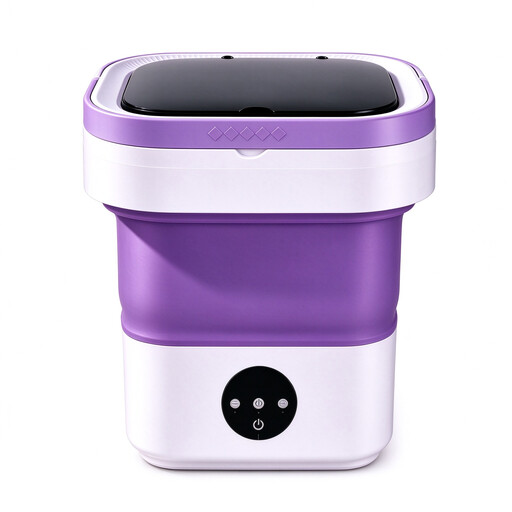 No image available
Could suit anyone looking for a portable solution for a small load of laundry.
The product name states a capacity of 12 L and a foldable design. Don’t leave the dryer unattended while it’s in use, and keep the air outlet clear.
 No image available
An option if you want to wash and dry with one appliance after moving.
The product name lists a washing capacity of 8 kg, a drying capacity of 6 kg, 1400 rpm, Wi-Fi and a steam function. According to the product information, make sure it’s on a stable, level surface and connected to the water supply correctly.
 No image available
The small combined load may be useful if you want to wash and dry a few napkins before setting off.
The capacity is 8 kg for washing and 5 kg for drying. Bosch lists Wash & Dry 60' for small loads; this timing doesn’t apply to every load or fabric.
 No image available
An option if you’re looking for a freestanding washer-dryer to use after your move.
The product name lists a washing capacity of 8 kg and a drying capacity of 6 kg.
 No image available
Its stated capacity makes this model particularly worth considering if you’re choosing an appliance for regular use after your move.
The product name lists a washing capacity of 18 kg and a drying capacity of 11 kg.
Only if the care label allows machine washing and drying, and the load size and fabric meet the programme requirements. Bosch lists Wash & Dry 60' for small loads on the WNA13400EU; this isn’t a guarantee that it’s suitable for every napkin or a full drum.
For a combined cycle, use the drying capacity and programme requirements as your guide, rather than relying on the washing capacity alone. The Consumentenbond advises against washing more than you want to dry in the same cycle.
Check the space, ensure the surface is stable, and check the water supply and drainage using the model’s manual. Bosch Netherlands advises securing the drum with transit bolts when moving the appliance and removing them before use, following the installation instructions.
Compare the figures for washing alone with those for the complete wash-and-dry cycle, and consider how often you’ll use each cycle. According to the European Commission, the EU energy label has used a scale from A to G since 1 March 2021; check the figures for the specific model.
There’s no fixed statutory guarantee period in the Netherlands, but you are entitled to a product with the qualities you can reasonably expect. The Dutch Government says that if there’s a problem with the product, you should contact the seller.