
Household with a full load of bed sheets
Wants to run as few separate cycles as possible after a busy school week. So, first check the drying capacity for the whole load; it may be lower than the washing capacity.


If you want to wash and dry cotton bed sheets in one continuous cycle, choose a machine based on the dry weight of your usual load, not just its washing capacity. Then compare the duration and consumption of the complete cycle. According to the Consumentenbond, a cotton wash-and-dry cycle takes almost 7 hours on average, although the time can vary from one model to another. If you have room for two appliances and often use a tumble dryer, also consider a separate washing machine and heat pump dryer: Milieu Centraal says this combination uses less energy than a washer-dryer.
Wants to run as few separate cycles as possible after a busy school week. So, first check the drying capacity for the whole load; it may be lower than the washing capacity.
Wants to know whether the bed sheets will be clean and dry in time to make the beds again. Compare the duration of the full cotton wash-and-dry cycle, not just a washing programme.
Has room for one machine and wants to check in advance that the appliance, connections and open door will fit. The Consumentenbond also recommends a flat, stable surface.
Choose this if: you want one appliance and your bed sheets fit within its drying limit.
Bear in mind: the Consumentenbond reports that a combined cotton cycle takes almost 7 hours on average. This is not a time guarantee for any specific model.
Choose this if: you need one appliance, often use the dryer and want to compare the full cycle and energy label carefully.
Bear in mind: compare the drying capacity and programme duration for each model; the technology alone does not prove it will save energy in your household.
Choose this if: you have room for two appliances and regularly dry several loads.
Bear in mind: you’ll need to transfer the laundry between appliances. Milieu Centraal says this combination uses less energy than a washer-dryer.
Choose this if: you have enough drying space and don’t need the bed sheets to be tumble-dried straight away.
Bear in mind: you’ll need time and space to hang the bed sheets out to dry.
| Consideration | What to look for | Who is this most relevant to? |
|---|---|---|
| Dry weight of the bed sheets | Compare the drying limit for the cotton or combined programme with your dry load. Check that the programme can handle that load in one continuous cycle. | Do I want to dry a full load of bed sheets after the school week without having to hang some of it up? Around 29% of consumers are most concerned about this drying capacity when buying. |
| Time until the bed sheets can go back on the bed | Compare the duration of a complete wash-and-dry cycle with a suitable load. Check whether a short cycle is actually intended for that load. | If I need to remake the beds at a set time, I want to know how long the full cycle takes. Around 23% of consumers are most concerned about having their laundry ready on time. |
| Location and connections | Measure the space, including the connections and room for the door to open. Check the water supply, drainage, socket and flooring requirements in the installation manual. | If there’s only room for one machine, I want to be sure the appliance and connections will fit before I buy. Around 18% of consumers are most concerned about the space available for installation. |
| Consumption when drying regularly | Compare the same type of cycle on the EU energy label and check energy use per 100 cycles, water use per cycle and programme duration. Take into account how often you use the tumble dryer. | If I often tumble-dry my bed sheets, I want to factor in the consumption of the complete cycle. Around 18% of consumers are most concerned about the ongoing energy use of drying. |
| Washing and drying instructions | Check the washing and drying symbols on the bed sheets and confirm that the chosen programme allows the required treatment and load size. | I want to care for my bed sheets according to their own instructions, even if another programme seems quicker. Around 12% of consumers are most concerned about fabric care when buying. |
The stated washing capacity may be higher than the amount you can wash and dry in one continuous cycle. For the Bosch WNG254A7NL, for example, Bosch states a washing capacity of 10,5 kg and a maximum wash-and-dry capacity of 6 kg.
Weigh your usual dry load of bed sheets and compare it with the drying limit of the programme you want to use.
If the load exceeds the drying limit, you’ll need to dry some of it separately or hang it up.
A short programme time doesn’t necessarily tell you how long a full load of cotton bed sheets will take. According to the Consumentenbond, a combined cotton wash-and-dry cycle takes almost 7 hours on average; that average doesn’t predict how long an individual model or your load will take.
Check the time for a complete cycle with a load size suitable for your bed sheets.
With a washer-dryer, you also need to factor in the energy used for drying. The EU energy label gives figures for energy per 100 cycles, water per cycle and cycle duration.
Compare the same type of complete cycle and take into account how often you tumble-dry your bed sheets.
The connections, an open door and the installation position also affect whether the machine will fit in the space you’ve chosen. The Consumentenbond recommends a flat, stable surface and a machine that is level.
Measure the space, including room for the connections and the door to open, and follow the installation instructions for your chosen model.
An unsuitable location may mean extra work to adjust the installation or connections.
The LWR76144 and LWR9506BN4 offer different capacities and drying technologies to compare.
The WNG254A7NL is worth comparing if you want to wash large loads but understand that the drying limit is lower for a combined cycle.
The F4DR3096N3W is worth comparing if you’re looking for an all-in-one appliance with a cotton programme.
The WD90DB7B85GWU3 is worth considering when both capacity and available space matter.
The WTI370 WPM is an option to compare if your usual load fits within a drying capacity of 5 kg.
This selection includes washer-dryers and a separate washing machine with a heat pump dryer for washing and drying cotton bed sheets.
 No image available
The 5 kg drying limit is the key figure for a continuous wash-and-dry cycle.
Capacity: 9 kg washing and 5 kg drying.
Features listed: 1400 rpm, a cotton hygiene programme, delayed start and a display showing the time remaining.
 No image available
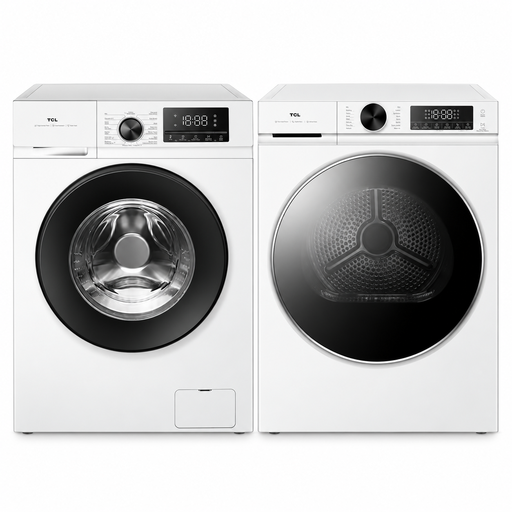
This set is an option if you have room for two appliances and can transfer the laundry between them.
Stated capacity: 8 kg for the washing machine and 8 kg for the separate dryer.
The description lists a spin speed of up to 1400 rpm for the washing machine and says both appliances can be used at the same time.
 No image available
The stated drying capacity of 6 kg is the limit to bear in mind for one continuous cycle.
Capacity: 8 kg washing and 6 kg drying.
Features listed: 1400 rpm, Wi-Fi control, delayed start, a cotton programme and a steam function.
 No image available
For a continuous cycle, the load must stay within the 5 kg drying capacity.
Capacity: 8 kg washing and 5 kg drying.
The description lists AutoDry, a Wash&Dry programme and programmes for different fabrics, including everyday cottons.
 No image available
The 6 kg drying capacity determines how much laundry can be dried in one continuous cycle.
Capacity: 10 kg washing and 6 kg drying.
The description lists steam washing, a 60-minute wash-and-dry function, a 15-minute quick wash and a delayed end-time setting.
Only if the load is within the drying limit for the programme you’ve chosen. Compare both kg figures and don’t look only at the maximum washing load.
Measure the appliance and the available space, then check the water supply, drainage and socket against the installation manual. The Consumentenbond recommends, among other things, a firm, flat surface and a level machine; whether the location is suitable depends on the space and the model.
Start by checking the washing and drying instructions on your bed sheets. Then check the manual for the permitted load size and programme duration; don’t assume every model has a dedicated bedding programme.
The EU energy label lists information such as energy use per 100 cycles, water use per cycle and cycle duration. Compare the same type of cycle across models; the label figures don’t directly predict your own consumption.
According to the Dutch government, if a product you’ve bought is faulty, the seller must provide a solution; a manufacturer’s guarantee does not replace your statutory rights. The free old-for-new scheme applies when you hand in an old, similar household appliance, including with an online purchase. Arrange the practical details of the handover with the seller.