
Anyone washing aprons made from different fabrics
You wash aprons with everyday clothes and check which items can withstand the same washing and drying conditions. GINETEX explains the meaning of textile care symbols.


Start by checking the care symbols on each apron: a mixed-load programme or a higher wash temperature won’t make an unsuitable item safe to put in the washing machine or tumble dryer. Then choose based on the amount you actually want to wash and dry. If you tumble-dry regularly and have enough space, it’s also worth comparing separate appliances. Milieu Centraal recommends this combination because it uses less energy overall, while a washer-dryer saves space.
You wash aprons with everyday clothes and check which items can withstand the same washing and drying conditions. GINETEX explains the meaning of textile care symbols.
You want to wash and dry a load in one go. Consumentenbond points out that drying capacity may differ from the maximum wash load.
You have room for one machine and are weighing up the convenience of washing and drying in one appliance against programme times and energy use. If you have enough space, Milieu Centraal also recommends considering a separate washing machine and tumble dryer.
First check whether the aprons’ care labels say they can be washed and dried together. Then compare the drying load, energy use and space available.
| What to consider | What should you look for? | Who is this most important for? |
|---|---|---|
| Fabric and programme | Check the washing and drying symbols on each apron and compare them with the appliance’s temperature settings and programmes. | If I want to wash aprons with everyday clothes, I want to avoid including an item that needs different treatment. Around 33% of consumers prioritise suitability for the fabric. |
| Drying capacity | Compare the washing and drying limits in kilograms with the amount you want to dry straight after washing. | If I want to dry the whole load after washing, the lower maximum drying capacity is especially important. Around 27% of consumers give the usable drying load top priority. |
| Electricity and water use | Check the energy label and compare the figures for washing and for the full wash-and-dry cycle separately. | If I tumble-dry every week, I want to consider the energy use of the full cycle, not just washing. Around 20% of consumers prioritise energy use. |
| Space and cycle time | Measure the space available and compare the appliance depth with the duration of a suitable combined programme. | If I only have room for one appliance, I weigh the space saved against the time a combined cycle keeps the machine busy. Around 20% of consumers give space and cycle time top priority. |
Wash capacity and drying capacity are not the same. For example, Bosch lists a wash capacity of 9 kg and a drying capacity of 5 kg for the WNA14419NL.
Compare both limits with the load you usually want to wash and dry one after the other.
If the load is too large for the drying limit, you may need to take some items out or wait longer for an extra drying cycle.
The EU energy label distinguishes between washing and the full wash-and-dry cycle. Consumentenbond describes standard washer-dryers as relatively energy-intensive when drying.
Compare the label figures for the cycle you actually use. If you have enough space, you could also consider separate appliances; Milieu Centraal recommends this combination because it uses less energy overall.
If you use many drying cycles, higher electricity or water use may have a greater impact. Actual consumption depends on how you use the appliance and the cycle you choose.
The programme name doesn’t replace an apron’s care instructions. The label specifies, among other things, the maximum washing temperature and whether tumble-drying is suitable.
Sort the aprons according to their washing and drying symbols before choosing a mixed-load programme or combined cycle.
The Siemens WN44A120NL is one model to compare if a Mix programme and the balance between washing and drying capacity are important to you.
The AEG LWR9506BN4 from the 9000 AbsoluteCare range is a heat pump model to compare if you tumble-dry regularly.
The Bosch WNA14419NL is an alternative to compare if you want to check whether a drying capacity of 5 kg suits the way you do your laundry.
This selection features washer-dryers for washing aprons with your other weekly laundry. Check the care labels and make sure your load is within both the washing and drying capacities.
 No image available
An option to compare if you’re looking for one appliance for your weekly washing and drying.
The product name lists an 8 kg wash capacity, a 6 kg drying capacity, 1400 rpm, Wi-Fi and a steam function. The product description mentions cotton, wool and synthetic programmes.
 No image available
An option to compare if the load is suitable for the available programmes according to the care labels.
The product description lists a 9 kg wash capacity, a 6 kg drying capacity, 1400 rpm and cotton, synthetic and wool programmes.
 No image available
An option to compare if you’re considering washing and drying a larger load in one appliance.
The product name lists an 18 kg wash capacity and an 11 kg drying capacity. The product description mentions heat pump technology and AI detection of weight and fabric type. The stated dimensions are 686 × 1110 × 875 mm.
 No image available
An option to compare if you want one appliance for a load that fits within both capacity limits.
The product name lists a 10 kg wash capacity, a 7 kg drying capacity and a steam function. The product description mentions a wool programme.
 No image available
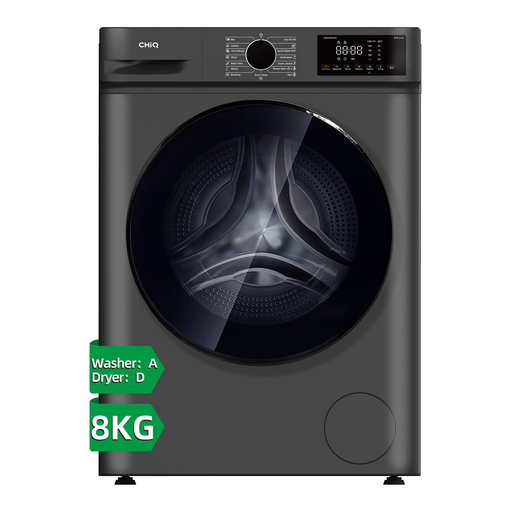
An option to compare if your laundry load is within the lower drying limit.
The product description lists an 8 kg wash capacity, a 5 kg drying capacity, 1400 rpm and cotton, quick wash and delicate programmes.
No. ‘Washable’ doesn’t tell you which treatment is suitable. Check the maximum washing temperature, any instructions for gentler treatment and the separate drying symbol on each apron. Split the load if the instructions differ.
Not without checking the label first. The European Commission describes eco 40-60 as intended for normally soiled cotton that can be washed at 40 °C or 60 °C according to its care label. For fabrics with different labels, choose a suitable programme and follow the care instructions.
First check that the load was within the drying limit and that the fabrics can be tumble-dried together. Consumentenbond notes that limited drum space can contribute to creasing. Smaller loads or air-drying may be alternatives, but they could take extra time.
Compare the energy use of the full wash-and-dry cycle, and ask before buying what delivery, connection and drainage services are included. If a product is faulty, Dutch consumers are entitled to a free remedy from the seller under applicable conditions, according to ACM ConsuWijzer.
European energy labelling rules apply to household washer-dryers. The European Commission explains the information shown on the label, including energy and water use based on the specified cycle. The Dutch government says an energy label is compulsory for the household appliances covered by the rules.