
Tackling a few muddy footprints
You’ve spotted a few defined marks after a weekend away and want to see whether blotting is enough before buying a machine or washing the whole runner.


For a few well-defined marks, you can start with a spot treatment that’s suitable according to the care label. If the dirt is more widespread, washing may be a better option, provided the components and size allow it. A portable spray-extraction cleaner is worth considering if you regularly want to tackle stains on suitable fabrics, but bear in mind the storage space, cleaning solution and maintenance required after use. Always check the instructions for your runner: a removable cover and an underlay may have different washing requirements.
You’ve spotted a few defined marks after a weekend away and want to see whether blotting is enough before buying a machine or washing the whole runner.
You want to choose a treatment that’s suitable for the fabric, backing and any removable underlay, so you’re checking the guidance on water, heat, cleaning solutions and washing.
You may also want to use a machine on other suitable surfaces, such as upholstery or a small rug, and are considering the attachments, reach and after-use cleaning.
Start by checking the care instructions and how much of the runner is dirty. Then compare the cleaning methods and any machine maintenance involved.
When: for a small mark, if your runner’s care instructions allow the treatment you’ve chosen.
Trade-off: you don’t need a machine, but a large or ingrained stain may take more work or mean you need to wash the runner after all.
When: if the dirt is widespread, or an approved spot treatment isn’t enough, and the care label says the components are machine washable.
Trade-off: consider your washing machine’s capacity and how long the runner will take to dry completely.
When: if you regularly want to treat defined marks on a runner and other suitable fabrics.
Trade-off: you’ll need to clean the machine and its tanks after use. Steam or heat may not be suitable if your runner requires cold water.
| Consideration | What to look for | Who it matters most to |
|---|---|---|
| Treating a few marks | Check the care label, the type of dirt and whether you can test an approved cleaning solution on an inconspicuous area. If you’re considering a machine, check whether its attachment is designed for small areas of fabric. | If I only have a few marks to deal with, I want to know whether I can treat them individually without washing the whole runner. Around 36% of consumers prioritise tackling a few defined marks. |
| Protecting the fabric and underlay | Read the instructions for your specific runner, distinguish between a removable cover and any underlay, and don’t use heat or steam just because a machine has that feature. | If protecting my runner and underlay is my priority, I want to choose a treatment that suits their construction and care label. Around 29% of consumers put this first. |
| Tackling several marks | Compare the reach, included attachments, cord and hose with the size of your runner and any other fabric surfaces that their care instructions say you can clean. | If I want to clean several marks or surfaces, I want to know whether the machine will be practical to use. Around 21% of consumers say this is their main consideration. |
| Buying and maintenance | Look for removable tanks and a rinse function, if available. Check which cleaning solutions are suitable for both the machine and your runner according to their instructions. | If I’ll only use the cleaner occasionally, I want to factor in storage space and cleaning it afterwards. Around 14% of consumers put buying and maintenance at the top of their list. |
In the two-piece system described by Ruggable, only the removable cover can go in the washing machine; the separate underlay can’t.
Check the care instructions for every part of your runner before washing or wet cleaning it.
Ruggable generally recommends cool or cold water for its runners in its care instructions. This doesn’t automatically apply to every runner, but it shows why you should follow the care label for your own fabric.
Follow the care instructions and guidance for the stain before considering any extra machine features.
A portable cleaner also needs attention after use: you’ll need to clean the water tanks and, depending on the model, the hose.
Before buying, check the manual to find out how to clean the machine and which solutions are suitable for both the machine and your runner.
Allow time to empty, rinse and dry the tanks, and bear in mind that you may need a suitable cleaning solution.
The features listed apply to the models and product ranges described; they aren’t a general recommendation for every product from that brand.
BISSELL offers portable models for spot-cleaning fabrics, including a model without steam and one with a steam function.
Kärcher describes the SE 3 Compact Home N1 as a compact spray-extraction cleaner for runners, small rugs and upholstery, among other things.
Philips offers the 3000 Series XW3193/11R1 as a refurbished stain remover for carpets and upholstery, among other things.
These are portable cleaners for stains and other marks on fabric. Before use, check whether wet cleaning is suitable according to your runner’s care instructions.
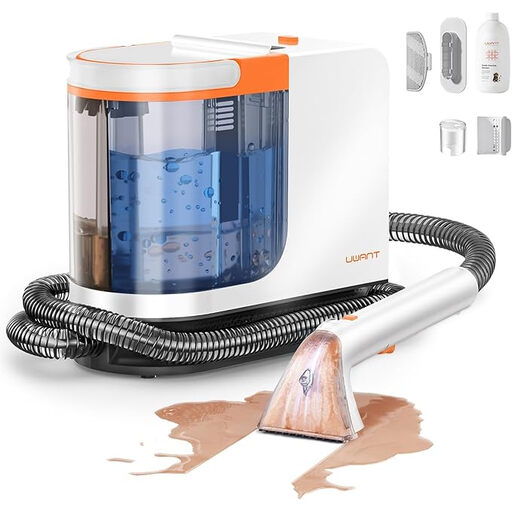 No image available
The product name describes it as suitable for stains on carpets and upholstery, among other things. First check whether wet cleaning is suitable for your runner.
The product name lists 18Kpa, a portable design and self-cleaning.
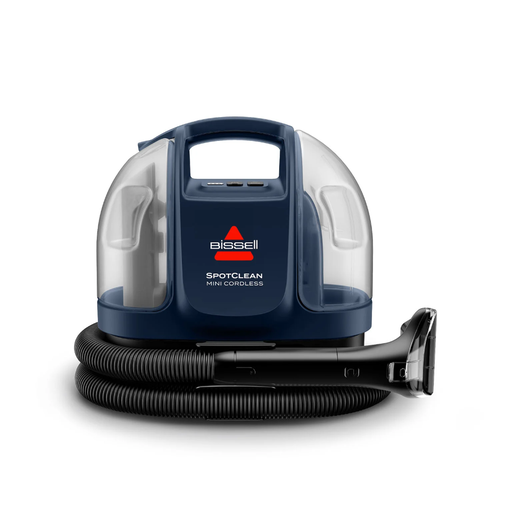 No image available
The product name describes this portable model as suitable for stains and spills. Check your runner’s care label before wet cleaning it.
The product name lists a runtime of 20 min and a 0.5 l tank.
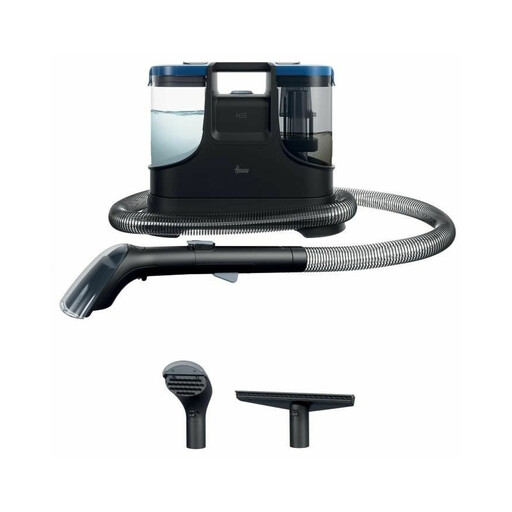 No image available
The product name lists several surfaces, including carpets and upholstery. Check whether your runner’s care instructions allow wet cleaning.
The product name lists a 1.5 l clean water tank, a 0.8 l dirty water tank and a 6.5 m operating range.
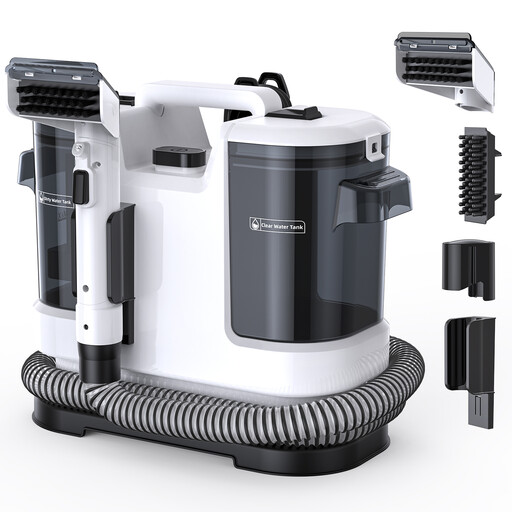 No image available
The product name lists carpets, rugs and upholstery as suitable surfaces. Follow your runner’s care instructions before wet cleaning it.
The product name lists 450 W and 13500 Pa.
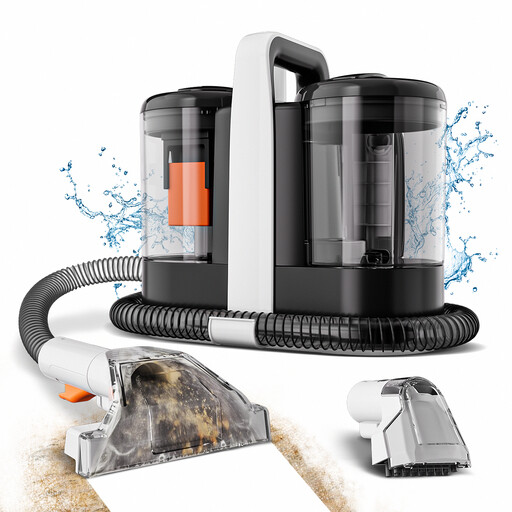 No image available
The product name describes this cleaner as suitable for marks on carpets and soft surfaces, among other things. Check whether your runner can be wet cleaned.
The product name lists 600W, 15Kpa and a corded design.
No, not just because it’s described as ‘washable’. Ruggable describes a two-piece system where only the cover can go in the washing machine, and an All-in-One system that can be washed as a whole. Follow the instructions for your specific runner and check that it will fit in your machine.
First, check the care label and remove any loose dirt. Test an approved cleaning solution on an inconspicuous area. Ruggable generally recommends blotting its runners with cool or cold water; check your own runner’s instructions before following this advice.
Be prepared to empty and clean the water tanks according to the manual. BISSELL lists removable tanks and a tool for rinsing the hose with the Little Green; Kärcher lists a rinse function for the SE 3 Compact Home N1.
According to the Government of the Netherlands, you’re entitled to a product that works properly and should contact the seller to resolve the issue. There’s no fixed statutory guarantee period for all products in the Netherlands; what you can expect depends, among other things, on the product, its price and whether it’s new or second-hand.
Dutch government information explains that manufacturers and retailers must ensure electrical appliances comply with the applicable European rules. Once the requirements have been met, the manufacturer affixes a CE mark and draws up an EU Declaration of Conformity. A product listing alone doesn’t prove that a specific item meets these requirements.