
Careful renter
You want to tackle stains without getting the runner or the floor underneath unnecessarily wet. So check the care label, the backing of the runner and the flooring underneath.


First, check the care label. If your runner fits in the washing machine and the label says it can be washed, you don’t automatically need a spot cleaner. For recurring, localised stains, a compact spray-extraction cleaner may be an option, provided the runner and the floor underneath are suitable for this treatment. Also consider the machine’s reach, storage space and maintenance.
You want to tackle stains without getting the runner or the floor underneath unnecessarily wet. So check the care label, the backing of the runner and the flooring underneath.
You mainly treat individual patches and want a machine that applies liquid and then sucks it back up, rather than having to wash the whole runner each time.
You’d like to use the machine on suitable upholstery too. Its dimensions, hose reach, attachments and cleaning requirements after use are all worth considering.
| What to consider | What should you look for? | Who is this important for? |
|---|---|---|
| Suitability of the runner and floor | Follow the care label for your runner, and check the backing, the flooring underneath and whether the cleaning solution is suitable. | As a renter, I don’t want to get the runner and floor unnecessarily wet; around 33% of consumers put suitability first. |
| Individual stains or the whole runner | Think about how often you treat stains and whether you can wash and dry the runner according to its care label. | If stains keep appearing, I want to clean them as they occur rather than wash the whole runner each time; around 27% of consumers prioritise this need. |
| Reach and storage | Compare the dimensions, hose and cable lengths, and the nozzles supplied with the exact model. | In a small flat, I want to clean without a machine taking up too much space; around 20% of consumers focus mainly on reach and storage. |
| Maintenance after use | Check how to empty and clean the tanks and hose, which accessories are included, and which cleaning solution is suitable. | If I have to clean the machine after treating a stain, I want to know how much maintenance it involves and what products I’ll need; around 20% of consumers make this their main consideration. |
Washing instructions vary from one runner to another. Depending on its material and construction, the fabric may also be sensitive to moisture.
Follow the care label for your runner and, before use, also check the backing, the flooring underneath and the instructions for the cleaning solution.
If your runner is machine-washable, washing it may be an alternative to buying a machine for the occasional stain.
Compare how often you treat individual stains with how easy it is to wash and dry the runner.
A machine also needs storage space and maintenance, even if you only use it occasionally.
A rinse attachment or self-cleaning function doesn’t automatically remove the need to empty and clean the tanks and parts.
Before buying, check the manual, how easy it is to access the tanks, and which accessories and cleaning solutions are included with that model.
After use, allow time to empty and clean the machine as instructed in the manual.
The SpotClean C5 3861N is a compact option for individual stains on suitable carpets or upholstery.
Kärcher lists runners, small rugs and upholstery as suitable uses for the SE 3 Compact Home N1 10815390.
Rowenta describes the Clean It IN5020F0 as suitable for spot-cleaning carpets and upholstery, among other surfaces.
The Philips 3000 Series XW3193/11R1 described here is a refurbished model for soft surfaces such as carpets and upholstery.
These products are designed for spot-cleaning suitable carpets, runners or upholstery. Check the specifications for each model and make sure it’s suitable for your runner.
 No image available
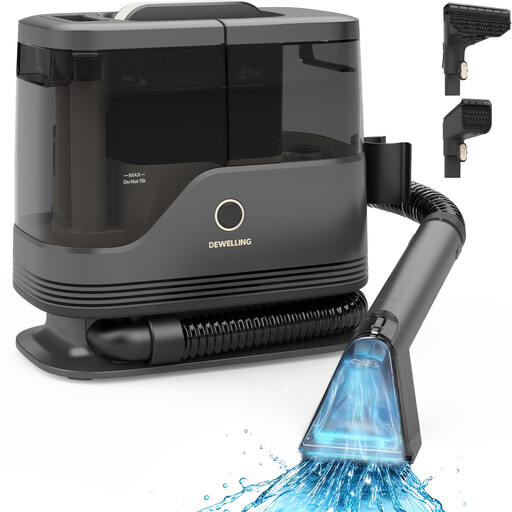
The product description mentions spraying and suction of dirty water for spot-cleaning carpets and upholstery.
400 W; 13 kPa; two nozzles; separate clean and dirty water tanks; 1,15 m hose and 5 m cable; weighs 3,2 kg. The description also mentions a self-cleaning button for the hose.
 No image available
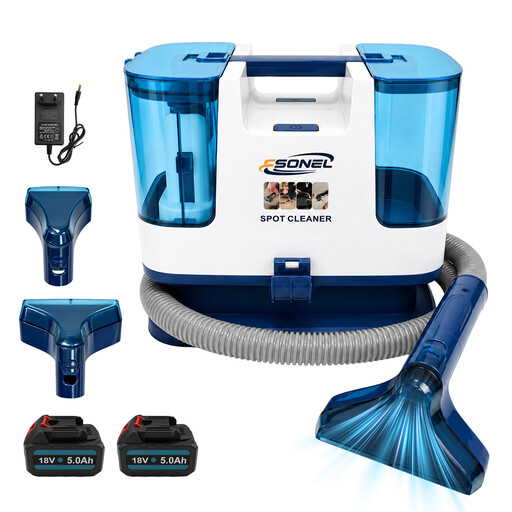
This portable model is designed for spot-cleaning carpets, sofas and car seats, among other surfaces; the description says it’s cordless.
400 W; 17 kPa; two batteries; separate clean and dirty water tanks. The product information recommends a non-foaming cleaning solution and says to empty and rinse the tanks after use.
 No image available
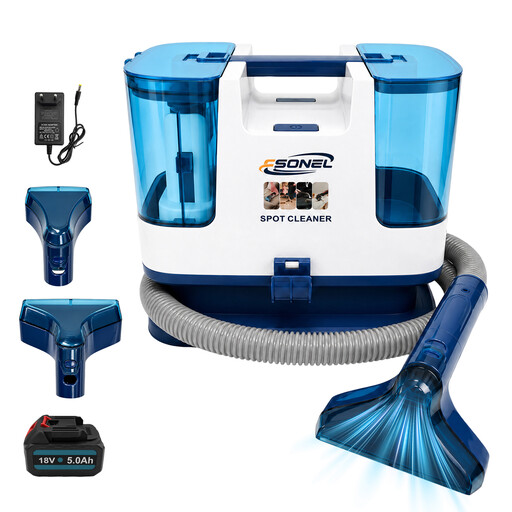
This portable model is designed for spot-cleaning carpets, sofas and car seats, among other surfaces; the description says it’s cordless.
400 W; 17 kPa; one battery; separate clean and dirty water tanks. The product information recommends emptying and rinsing the tanks after use.
 No image available
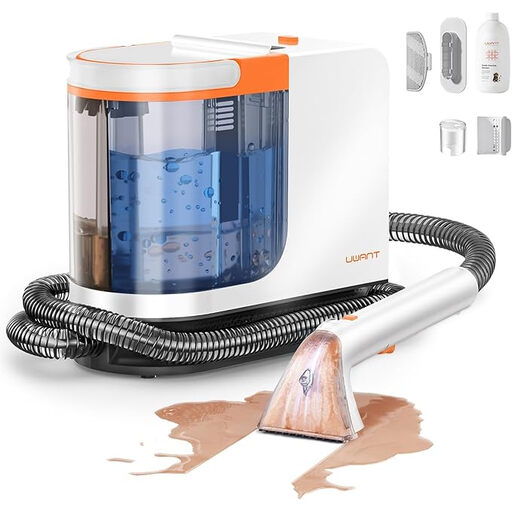
The product description mentions spot-cleaning carpets, rugs and upholstery by spraying, brushing and suction.
18 kPa; 14 cm brush; self-cleaning function.
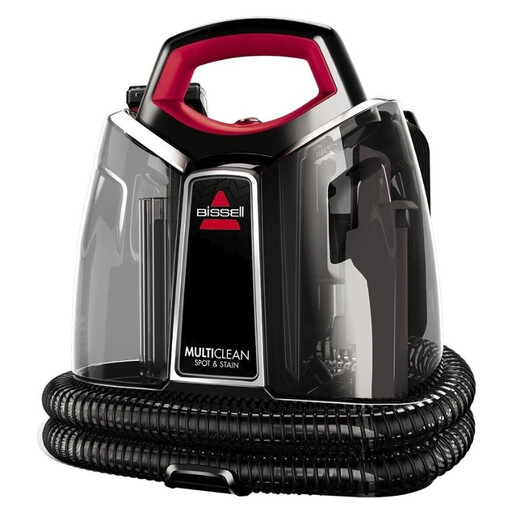 No image available
The instructions describe applying liquid, then sucking up moisture and dirt from stains on carpets or upholstery.
Two tanks; 8 and 15 cm brushes; 2,2 m hose. The instructions recommend using only cleaning formulas recommended by BISSELL.
Not necessarily. If the care label allows machine washing, the runner fits in your washing machine and you can dry it according to the instructions, washing it is an alternative. IKEA Netherlands, for example, gives these instructions for the TIPHEDE runner; the same washing instructions don’t automatically apply to other runners.
Before wet-cleaning, check the instructions for the runner, including its backing, and for the cleaning solution you’ve chosen. Also assess the floor underneath separately, and only put the runner back once both the runner and floor are dry. A general statement that a machine is designed for carpets doesn’t confirm that it’s suitable for your particular combination of materials.
Empty and clean the tanks according to the model’s manual. BISSELL lists a HydroRinse accessory for the SpotClean C5; Kärcher lists a rinse function for the SE 3 Compact Home N1. The maintenance steps required afterwards vary by model.
The retailer is responsible under statutory consumer rights. According to the Dutch government, there is no fixed statutory guarantee period in the Netherlands; what you could reasonably expect from the product and the circumstances of the fault determine your rights. A manufacturer’s guarantee doesn’t replace those rights.
It could if the damage to the rented property is the tenant’s responsibility. The Dutch government says the landlord may deduct the cost from the deposit; ordinary wear and tear isn’t included, and any deduction must be itemised in writing. This general rule doesn’t determine whether a particular damp patch counts as damage of this kind.