For small portions of custard, a freestanding solo microwave with adjustable power settings is a sensible choice. A grill or oven function is mainly useful if you need it for other dishes too. Choose an interior size that suits your dish and the space available on your worktop. The Voedingscentrum stresses that you should stir the food during heating, even when using a turntable.
Who is this choice relevant to?
Cookery workshop host who wants to warm custard precisely
You want to keep an eye on the texture and be able to stir the custard during heating. The Voedingscentrum stresses that stirring remains important even when using a turntable, so look for controls that let you set the heating yourself.
Host working with several participants
You heat portions one after another and want to know whether your dishes will fit and be easy to remove from the microwave. Compare your dish with the model’s turntable and interior dimensions; Inventum and ETNA publish specifications for their models.
Cook with a small workshop workspace
You need to leave room for the appliance as well as the dish you’re using. Inventum lists the external dimensions of the MN205S; compare the dimensions of your chosen model with your worktop and follow the placement instructions.
What should you look for in a microwave for custard?
Freestanding solo microwave
When: if you mainly want to warm custard and set the time and power yourself.
Trade-off: a solo model has no oven or grill function; also check that your dish will fit.
Solo microwave with other capacity or cleaning features
When: if capacity, the interior finish or a particular choice of power settings matters to you.
Trade-off: greater capacity or a different interior finish doesn’t, by itself, tell you how evenly custard will heat.
Combination microwave
When: if you also want to use the same appliance for baking or grilling during the workshop.
Trade-off: extra functions don’t remove the need to stir the custard during heating; consider whether you really need them.
| What to consider |
What to look for when buying |
Who is this most important for? |
| Control over heating |
Check whether you can set the time and power, and whether the dish is easy to remove. Adjust how you heat it to suit the recipe. |
If I want to keep a close eye on the texture of my custard, I want to be able to adjust the power and stir it during heating. Around 36% of consumers put control over heating and texture first. |
| Dishes and portions |
Measure your largest microwave-safe dish and compare it with the turntable and interior dimensions. Consider heating individual portions if that works better. |
When I’m catering for several participants, I want to know whether my dish will fit and whether I can heat portions one after another. Around 29% of consumers put dish size and consecutive portions first. |
| Workspace and placement |
Compare the external dimensions with your worktop and follow the placement and ventilation instructions in the model’s manual. |
If my worktop space is limited, I want to leave enough room for the appliance and a hot dish. Around 21% of consumers put available workspace first. |
| Controls and additional uses |
Compare the controls on the exact models you’re considering and decide whether you also need features such as grilling or baking. |
If I want to use the microwave for other tasks too, I consider the controls and extra functions. Around 14% of consumers put ease of use or wider functionality first. |
Avoiding common buying mistakes
-
Assuming a turntable means you don’t need to stir
According to the Voedingscentrum, some parts of food may remain cold when heated in a microwave. Stirring during heating is important even when using a turntable.
Choose a dish you can remove safely and make time for a pause to stir.
-
Choosing based on litre capacity alone
The models reviewed have turntables of different sizes, so the capacity in litres alone won’t tell you whether your dish will fit.
Measure your dish and compare it with the turntable, interior dimensions and available workspace.
-
Buying grill or oven functions just to warm custard
A solo microwave can heat and defrost food; extra functions are mainly useful if you’ll use them for other dishes too.
Before paying for extra functions, consider which dishes you’ll actually want to prepare in the same appliance during your workshop.
Brands to consider
Inventum
Inventum describes the MN205S as a freestanding solo microwave for heating and defrosting, with a capacity of 20 litres, five power settings and rotary controls.
- Inventum lists a 255 mm turntable and external dimensions of 25,9 × 44 × 35,5 cm for the MN205S.
- The model has no grill; check that your dish will fit.
ETNA
ETNA says the freestanding SMV720 has a capacity of 20 litres, a maximum microwave power of 700 W, five power settings and rotary controls.
- ETNA lists a 24,5 cm turntable.
- The control options don’t tell you whether custard will heat evenly without being stirred during heating.
Samsung
Samsung describes the MS23K3513AK/EN as a solo microwave with a capacity of 23 litres, a ceramic interior and Quick Defrost.
- Samsung describes the ceramic interior as easy to clean.
- This is a manufacturer’s claim, not an independent cleaning test; Quick Defrost is not a dedicated custard function.
Whirlpool
Whirlpool describes the freestanding MWP 101 B as a solo microwave with a capacity of 20 litres, a maximum power of 700 W and mechanical controls.
- Whirlpool lists a 245 mm turntable.
- Compare that measurement with your dish; the specifications don’t comment on the texture of heated custard.
Bosch
For the freestanding FFL020MS2, Bosch lists a capacity of 20 litres, rotary controls and five power settings of 90, 180, 360, 600 and 800 W.
- The listed settings give you several options to choose from.
- Bosch mentions Cleaning Assistance; the product specifications aren’t an independent comparison of cleaning ease or custard results.
Microwaves at Joybuy
The Joybuy products below are microwaves with adjustable power for heating; one is described as a combination microwave with a grill. Compare the controls and turntable size with your dish and workspace.
 No image available
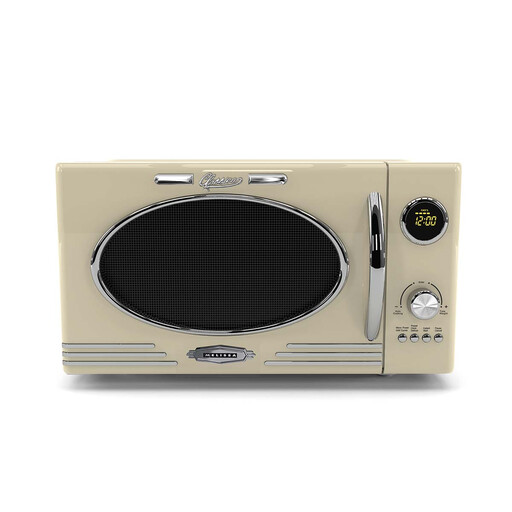
MELISSA microwave with grill, 23 litres
A good fit if you’d like a grill function as well as microwave cooking, and your dish fits on the turntable.
23 litres; 800 W; 270 mm turntable; five microwave power settings; 60-minute timer.
View at Joybuy
 No image available
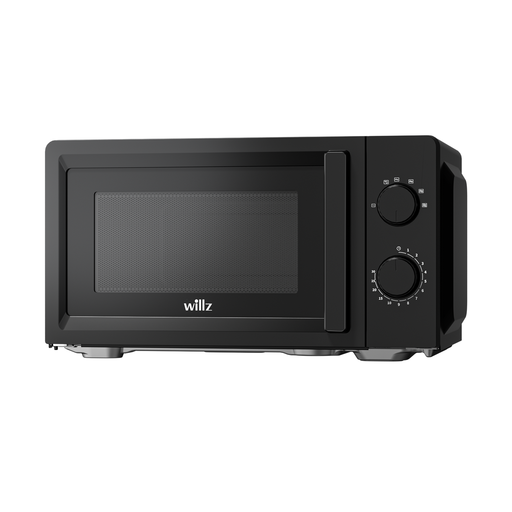
Galanz 20-litre microwave with mechanical rotary control
An option if you’re looking for a model with mechanical controls and a capacity of 20 litres.
The product description mentions a mechanical rotary control and use for heating and defrosting.
View at Joybuy
 No image available
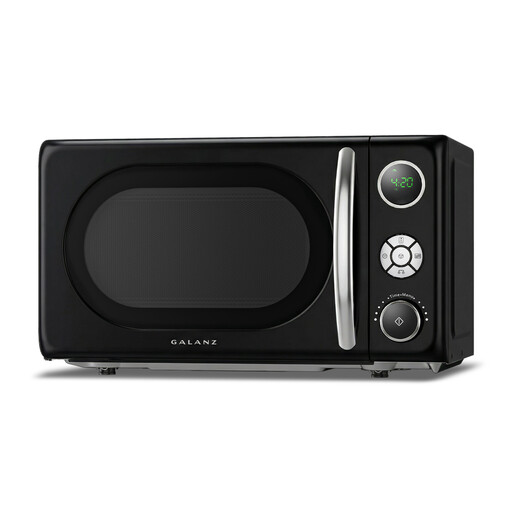
Galanz 20-litre microwave with digital display
A good option if you’d like to compare a 20-litre model with several power settings and a display.
20 litres; six power settings; digital display.
View at Joybuy
 No image available
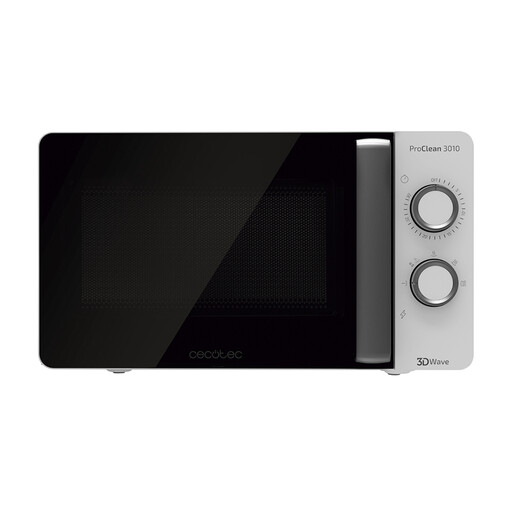
Cecotec 20-litre microwave, 700 W
An option if you’re looking for a 20-litre model with adjustable power settings.
20 litres; 700 W; six power settings.
View at Joybuy
 No image available
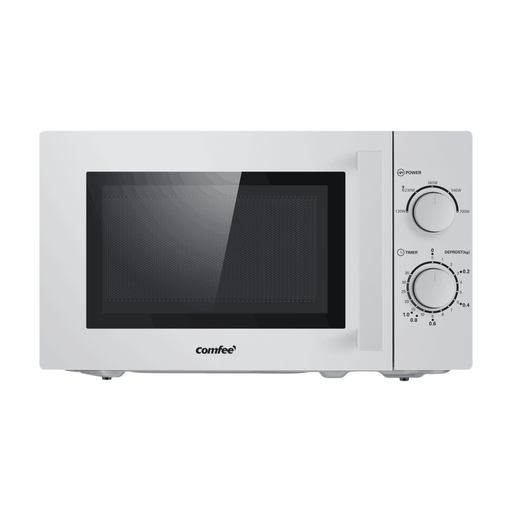
Comfee 20-litre microwave with mechanical controls
A good fit if you want to select the power settings manually and compare your dish size with the turntable.
20 litres; 700 W; five power settings; 255 mm turntable; two rotary controls.
View at Joybuy
Frequently asked questions
How do you warm custard during a cookery workshop?
Use a microwave-safe dish, heat smaller portions if necessary, and pause to stir the custard. The Voedingscentrum stresses that stirring is important even when using a turntable. Follow the instructions on the packaging or in the recipe; there isn’t one set heating time that works for every type of custard. Reheat leftovers until piping hot throughout.
Can you put a carton of custard straight in the microwave?
Don’t assume that you can. Check the instructions and microwave-safe symbol on the packaging, or spoon the portion into suitable crockery. The Voedingscentrum lists glass, glazed earthenware and porcelain as suitable options.
How should you store custard left over after the workshop?
Return the product to a fridge at 4 °C soon after use and use a clean spoon. Check the storage advice for the specific custard and packaging.
What guarantee applies to a private purchase in the Netherlands?
You’re entitled to a product that works properly under the statutory guarantee. According to the Dutch government, there’s no fixed statutory guarantee period in the Netherlands; if a product is faulty, contact the seller. Any manufacturer’s guarantee is separate from this.
Do allergen rules apply if you serve food during a cookery workshop?
If you sell or provide food or drink to customers, the Netherlands Food and Consumer Product Safety Authority says you must tell them about any allergens present. Whether this applies to a particular workshop depends on whether food is sold or provided to customers; don’t treat the rule as a requirement for every private workshop.


