
Vandaag of morgen in huis

Kwaliteit gegarandeerd

Welkomstaanbiedingen ontgrendelen: GRATIS bezorging | Tot 80% korting | Gratis 30 dagen JoyPlus-proefperiode
Download de app
When you search for Want Want snacks online, you’ll quickly come across a wide range of rice crackers, sweet biscuits, jelly, peanut snacks and drinks. That’s convenient, but packaging and flavour names don’t always tell you exactly what you’re buying. A snack might look small, for instance, while a multipack is better suited to sharing. What’s more, allergens or warnings can easily be overlooked.
This guide helps you compare Asian snacks, Chinese snacks and Taiwanese snacks with confidence. That way, you can choose a flavour and pack size that suits your household, your budget and the occasion you’re snacking for.
Words like “tomato”, “seaweed” or “chocolate” often describe the flavour direction, but not necessarily the proportion of that ingredient. For example, in the Want Want Lonely God snack, the tomato content is just 1.4% tomato paste. In the seaweed peanuts, the seaweed flake content is 0.3%, while peanuts make up 34% of the product.
Always check the ingredients list and the quantitative ingredient declaration. That way, you won’t expect a prominent main ingredient that is actually only present as a flavouring.
A bag of 45g, 50g, 56g or 70g is handy for taking on the go or trying a flavour for the first time. For a family, student house or office, a larger pack can be more practical. The Want Want Senbei 520g contains 88 portions, so it’s intended for a different purpose than the 112g version.
When buying snacks online, don’t just compare the unit price – also look at:
Many Want Want rice crackers contain soya or wheat. Depending on the variant, fish, milk, egg, sesame, peanuts or tree nuts may also be relevant. For example, the Seaweed Rice Crackers list soya, wheat and fish. The Chocolate-Filled Wafer Rolls contain wheat, egg, milk and soya, among other ingredients, and are produced on a line that also handles peanuts and tree nuts.
Jelly products also need extra attention. The product information for the apple and orange jelly states that you should chew the jelly carefully and not swallow it whole. These products are not suitable for young children. Always check the current packaging before serving.
Start with the ingredients list. Ingredients are usually listed in descending order by weight. If you’re looking for a savoury snack, you can also compare the salt content. According to the product information, Want Want Senbei contains 4.0g of salt per 100g, while the Seaweed Rice Crackers list 2.5g per 100g.
For sweet snacks, the sugar content is a useful point of comparison. The orange konjac jelly contains 89.4 kcal and 20.5g of sugars per 100g. The chocolate wafer rolls list 41g of sugars per 100g. That makes it clear that “light” or “fruity” doesn’t mean sugar-free.
Rice crackers are usually dry, crunchy and ready to eat straight away. Individual wrappers help with sharing, lunchboxes and keeping the crunchy texture intact. The Original Flavour Snow Cake 150g contains 12 individually wrapped portions. The smaller 84g version is more suited to one person or a quick snack break.
Jelly offers a different eating experience. The Konjac Jelly Orange Flavor comes in a 200g bag and is ready to eat. The Rock Jelly variants (132g) include a separate sachet of powder. You open the pot, add the powder, close the lid and shake before eating.
Most products should be stored in a cool, dry place away from direct sunlight. Once opened, it’s best to eat them quickly to preserve the flavour and texture. This is especially true for crunchy products, as moisture can affect the texture.
For drinks, check the volume and how they are served. The Vittorio Jelly Drink Pineapple Flavor is a 150g sachet that you can drink straight away. The AD Calcium Milk Drink comes in 125ml packs, with 36 small packs in total. According to the product information, this drink contains milk; chilling and shaking before use are recommended.
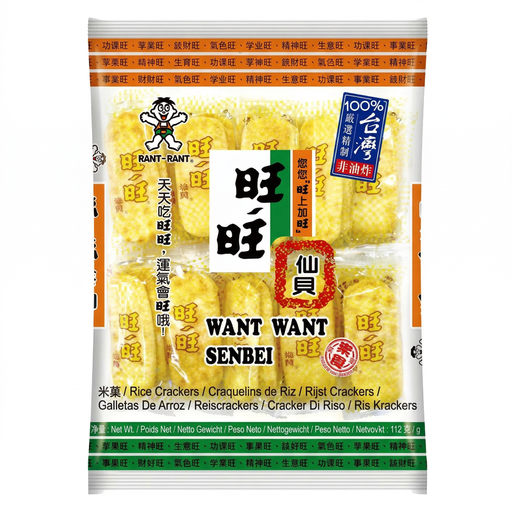
Why this fits the profile: The 112g size is manageable for anyone wanting to try Want Want senbei for the first time without committing to a large bulk pack.
The net weight is clearly stated, so you won’t mistake a small pack for a multipack.
112g, ready to eat and, according to the product information, crunchy with a sweet-savoury flavour. Contains soya and wheat.
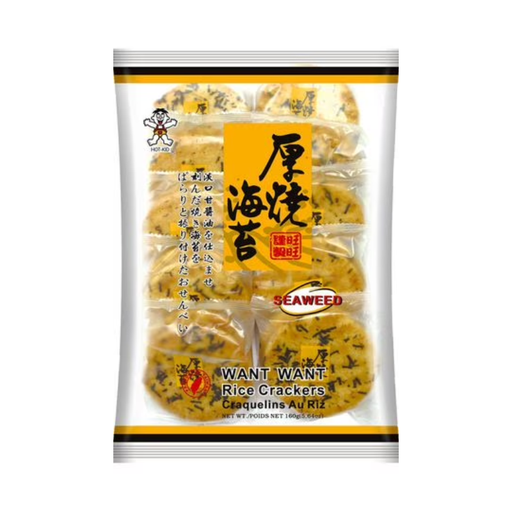
Why this fits the profile: The individual wrappers make this variant ideal for sharing, a drinks party or several snack breaks.
The product information lists not only the flavour, but also the rice content of 51.1% and relevant allergens.
160g, seaweed flavour and individually wrapped. Contains soya, wheat and fish.
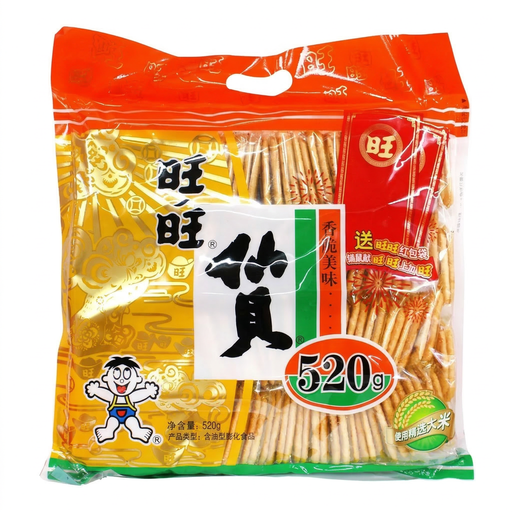
Why this fits the profile: The large pack is practical for families, offices, student houses or fans who eat rice crackers regularly.
The count of 88 packs makes the stock and usage per portion clearer than a single large bag.
520g and 88 packs, designed for sharing. Contains soya and gluten from wheat.
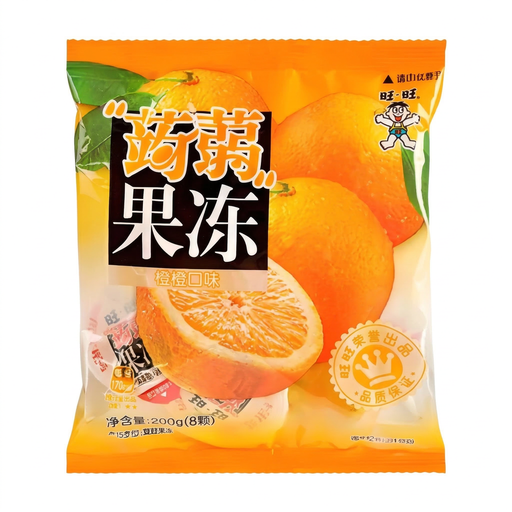
Why this fits the profile: The soft, chewy texture and orange flavour are a departure from classic rice crackers and suit anyone looking for something fruity.
The product information states the sugar content, portion size and the warning to chew carefully.
200g, 89.4 kcal per 100g and ready to eat. Not suitable for young children.
We’ve put together a full, up-to-date list of products that fully meet these strict selection criteria and comply with current European safety regulations.
The Senbei variants are among the most recognisable choices in the range. There is a 112g pack for individual use and a large 520g format with 88 packs. There are also Seaweed Rice Crackers (160g) for anyone looking for a savoury seaweed flavour.
Always check the warning on the packaging. The konjac jelly and Rock Jelly products in this range carry a choking risk warning and are not suitable for young children. Jelly should be chewed carefully and not swallowed whole.
Store dry snacks in a cool, dry place away from sunlight, heat and moisture. Seal an opened pack tightly. Store jelly and drinks according to the product information; some flavours are served chilled. Check the best-before date on the packaging before use.
