
Vandaag of morgen in huis

Kwaliteit gegarandeerd

Welkomstaanbiedingen ontgrendelen: GRATIS bezorging | Tot 80% korting | Gratis 30 dagen JoyPlus-proefperiode
Download de app
A wall-mounted cooker hood might seem like a straightforward purchase at first. But the wrong dimensions, an unsuitable ventilation method and misleading noise figures can all lead to disappointment. A model may look perfect in a modern kitchen, yet still extract too little air, take up too much space or prove difficult to maintain.
That’s why Joybuy’s Product Recommendation Officer is here to help you compare your options sensibly. Look out for these three common pitfalls:
First, measure your hob and the available wall space. Many models come in widths of 60 cm, 80 cm or 90 cm. Ideally, your cooker hood should be at least as wide as your hob. If you cook frequently or have a wide hob, a larger model can help capture more vapour.
Also check:
A slanted cooker hood gives you more headroom because its front panel angles forwards. This can be useful if you’re tall, but check that the underside will still sit at a suitable height above the hob.
Extraction rate is usually measured in m³/h. A higher figure can be useful in an open-plan kitchen or if you do a lot of frying and wok cooking, but check the normal setting too. The intensive setting is designed for short bursts and is often noisier.
A model with a stated maximum noise level of 60 to 64 dB may be acceptable for everyday use, while an intensive setting of around 70 dB will be noticeably louder. If you cook frequently or have an open-plan kitchen, compare both the minimum and maximum figures. A quiet cooker hood is more than a marketing claim: check the actual dB specifications for each setting.
With a ducted cooker hood, vapour is channelled outside through a duct. Check the connection diameter and make sure the existing duct is suitable. A short, straight duct is generally more practical than a long route with lots of bends.
With a recirculating cooker hood, air passes through grease filters and usually carbon filters before being returned to the kitchen. This is useful when external ducting isn’t possible, for example in a flat. However, most cooking moisture stays in the room. Make sure you also ventilate through a window or mechanical ventilation system.
Bear maintenance in mind:
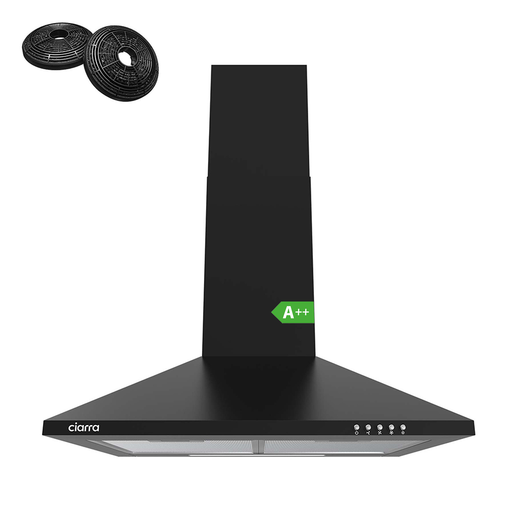
Why it suits this type of buyer: This 60 cm model is designed for standard-sized hobs and offers both ducted extraction and recirculation. Its push-button controls are easy to use every day.
The product specifications list both ventilation methods, so you can check in advance which installation is right for your home.
60 cm wide, three settings, washable aluminium filters and a stated maximum extraction rate of 367 m³/h.
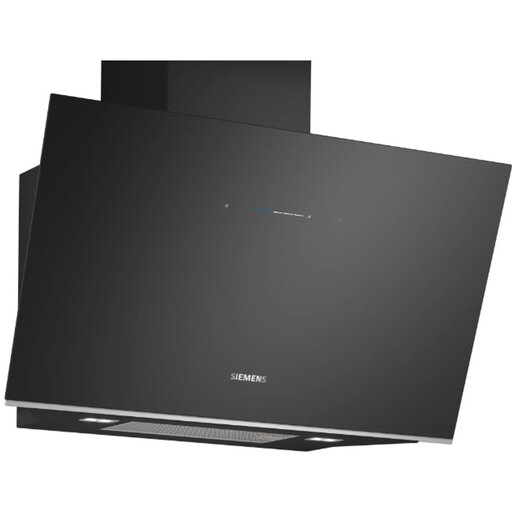
Why it suits this type of buyer: This 90 cm-wide black glass cooker hood is a good fit for spacious, modern kitchens. The product specifications list Home Connect, touchscreen controls, LED lighting and an A+ energy rating.
The listed dimensions, 150 mm connection and suitability for ducted extraction or recirculation let you check the installation requirements in advance.
90 cm wide, stated maximum extraction rate of 1007 m³/h, A+ energy rating and dishwasher-safe filters.
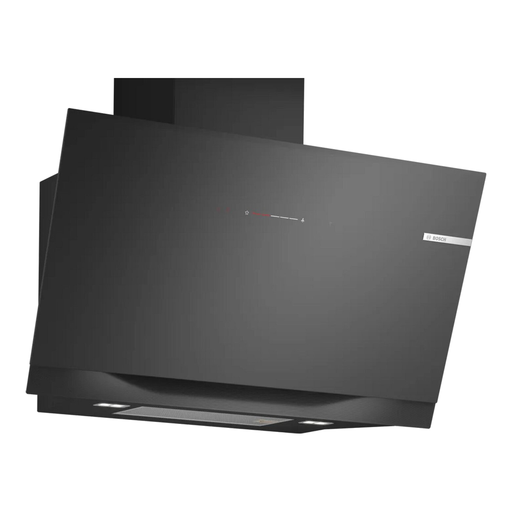
Why it suits this type of buyer: This model is designed for anyone looking for a wide black wall-mounted cooker hood with multiple settings and targeted lighting for regular cooking.
The normal and intensive extraction rates are listed separately: 441 m³/h for normal use and 1007 m³/h on intensive mode. This means you can compare more than just the turbo figure.
Stated minimum noise level of 35 dB, five settings, A+ energy rating and LED lighting with adjustable colour temperature.
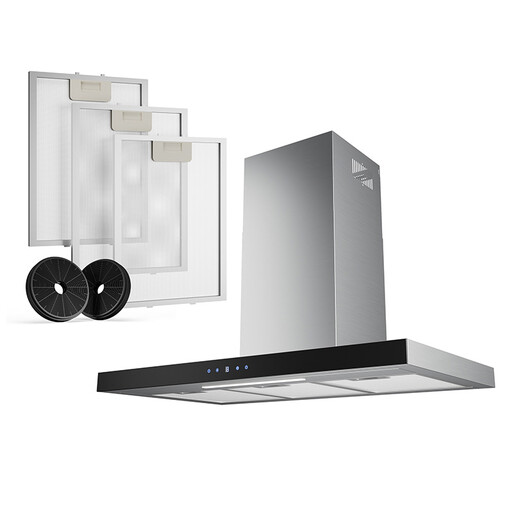
Why it suits this type of buyer: The listed contents include a set of carbon filters, chimney sections and mounting hardware. That’s useful when recirculation is the best option.
The product information covers both ducted extraction and recirculation, and confirms that carbon filters are included.
90 cm wide, stated extraction rate of 564 m³/h, A++ energy rating and dishwasher-safe five-layer aluminium filter.
A cooker hood with LED lighting illuminates the cooking area directly. Check whether you can adjust the colour of the light and operate the lights separately. Touch controls and a cooker hood with a touchscreen have a sleek look, but push buttons can sometimes be easier to use with damp or greasy hands.
You can identify an energy-efficient cooker hood by its energy rating and annual energy consumption. Compare these figures within the same width category. An A++ model with a lower stated extraction rate won’t necessarily cost less to run than an A+ model with a different motor and usage pattern.
We’ve put together a complete, up-to-date list of products that meet these strict selection criteria and comply with current European safety regulations.
Ideally, choose a model that’s at least as wide as your hob. A 60 cm cooker hood is suitable for a 60 cm hob, while an 80 or 90 cm model offers more coverage for a wider cooking zone. Always check the available wall space and the installation instructions.
Neither system suits every kitchen. Ducted extraction vents moisture and cooking smells outside, but requires a suitable duct. Recirculation is easier to install, but requires carbon filters and additional ventilation. Choose based on your home, the existing duct and installation costs.
Clean the grease filters regularly, depending on how often you use them. If you cook frequently, you may need to clean them every two to four weeks. Follow the instructions for your model. Carbon filters for recirculation have a limited lifespan and should be replaced as specified in the product information. Before using the cooker hood, also check that the filters are dry and fitted correctly.
