
Vandaag of morgen in huis

Kwaliteit gegarandeerd

Welkomstaanbiedingen ontgrendelen: GRATIS bezorging | Tot 80% korting | Gratis 30 dagen JoyPlus-proefperiode
Download de app
A wall-mounted cooker hood can remove cooking smells, steam and grease from your kitchen, but not every model is right for every home. Size, installation and noise levels matter more than eye-catching design, especially in an open-plan kitchen, a compact cooking area or a renovation project.
As a Joybuy Product Recommendation Officer, I focus on product information that can be checked against the specifications. This helps you avoid paying for a stylish black cooker hood only to find that its capacity, filters or connection options aren’t right for your kitchen.
A high figure in m³/h sounds appealing, but it doesn’t tell you everything about everyday use. Check which setting the extraction rate applies to, and how noisy the cooker hood is at that level. An intensive setting is usually intended for short periods, such as when stir-frying or frying.
A ducted cooker hood sends air outside through a duct. A recirculating cooker hood passes air through grease and carbon filters before returning it to the kitchen. Recirculation is useful when an external duct isn’t an option, but carbon filters need replacing regularly. Always check whether filters are included and how much replacements cost.
A 60 cm cooker hood suits many standard hobs, but its actual width might be 59.5 or 60 cm, for example. Also measure the height, depth and space available above the hob. Gas hobs often require a greater minimum clearance than electric hobs. Always follow the installation instructions and local regulations.
Choose a cooker hood that’s at least as wide as your hob. A 60 cm cooker hood often suits a small or medium-sized kitchen. An 80 cm cooker hood gives you more coverage above a wider cooking area. A 90 cm cooker hood is a better fit for a wide hob or open-plan kitchen, provided the wall and duct are suitable.
A sloping cooker hood has the practical advantage of leaving more headroom. Check that the sloping front still extends far enough over the rear cooking zones.
Compare the extraction rate in m³/h at each fan setting. A lower setting may be enough for light cooking, while frying intensively may call for more power for a short time. Also check the maximum noise level in dB. A quiet cooker hood is particularly welcome in an open-plan kitchen, but “quiet” only means something when the test setting is clearly stated.
Examples from the product specifications:
If product information conflicts, always check the manual and energy label for the specific model.
A cooker hood with a washable grease filter can reduce long-term maintenance. Aluminium filters can often be removed and cleaned; some models have filters that are dishwasher-safe. Recirculation also requires a cooker hood with a carbon filter. This filter absorbs odours, but is generally a consumable item.
A cooker hood with LED lighting illuminates the hob directly and usually uses little electricity. Controls may include push buttons, touch controls or a touchscreen. A cooker hood with a touchscreen is easy to wipe clean, while mechanical buttons give you immediate, tactile feedback. A Wi-Fi-enabled cooker hood may let you control it through an app, but consider whether you’ll actually use this feature.
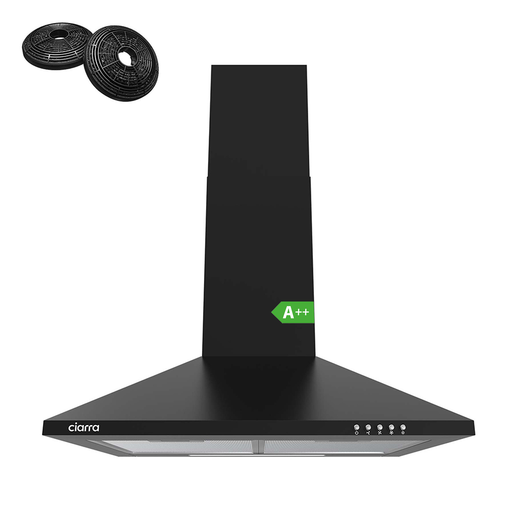
Why it suits this profile: This 60 cm model has simple push-button controls and supports both ducted extraction and recirculation. That makes it suitable for a standard kitchen installation or a rental home where an external duct isn’t readily available.
The product specifications list three extraction settings and their corresponding noise levels. They also specify two washable aluminium grease filters, so you don’t have to judge it by appearance alone.
60 cm wide, rated A++ according to the product information, maximum extraction rate of 367 m³/h, LED lighting and stated annual energy consumption of 9 kWh.
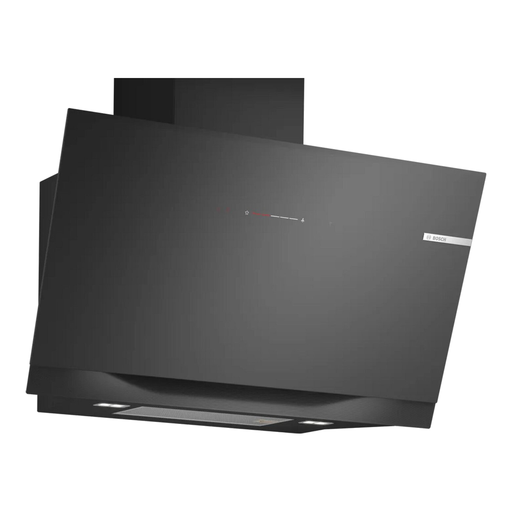
Why it suits this profile: This 90 cm-wide wall-mounted cooker hood is designed for spacious cooking areas and open-plan kitchens. Its stated normal and intensive settings let you ventilate moderately every day, with extra power available when you need it.
The product specifications give separate figures for normal and intensive extraction. According to the description, the recirculation kit is sold separately, so remember to factor this into the cost beforehand.
90 cm wide, rated A+ according to the product information, touchscreen controls, LED lighting and a dishwasher-safe filter.

Why it suits this profile: This wall-mounted cooker hood is designed for people who want to combine recirculation, app control and extra extraction power in a compact kitchen.
The specifications list both recirculation and ducted extraction, and state that black carbon filters are included. This makes the available installation options clearer from the outset.
Maximum extraction rate of 650 m³/h, maximum noise level of 59 dB, rated A+++ according to the product information, LED lighting, four settings including a booster and Wi-Fi control.
We’ve put together a complete, up-to-date list of products that meet these strict selection criteria and the applicable European safety regulations.
When installing your cooker hood, check the minimum distance between the hob and the hood. The exact clearance is given in the model’s manual and may vary depending on the type of hob. For ducted extraction, use a suitable duct with as few sharp bends as possible. A poorly chosen or blocked duct can affect performance and noise levels.
Clean the grease filter regularly. If you cook frequently, you may need to do this more often than once a month. Switch off the power before carrying out maintenance, and don’t use abrasive products on glass or lacquered surfaces. In recirculation mode, replace the carbon filter as instructed in the product manual.
Yes, if an external duct isn’t allowed or isn’t available. The air is then passed through grease and carbon filters. Bear in mind that carbon filters need replacing, which means ongoing costs, and make sure there’s sufficient ventilation in line with the installation instructions.
Ideally, the hood should be at least as wide as the hob. A 60 cm cooker hood suits a standard cooking area. For an 80 or 90 cm hob, a wider hood provides more coverage, as long as the wall and connection are suitable.
It depends on the electrical power, energy rating, length of use and selected setting. Compare the stated annual energy consumption, and if you use recirculation, include the cost of replacement carbon filters too. Frequent use may also consume more electricity than the average shown on the energy label.
