
Vandaag of morgen in huis

Kwaliteit gegarandeerd

Welkomstaanbiedingen ontgrendelen: GRATIS bezorging | Tot 80% korting | Gratis 30 dagen JoyPlus-proefperiode
Download de app
Loose papers, post and bills can quickly take over your desk. A wall-mounted A4 document holder can free up space, but not every model suits every workspace. An awkward layout, fixings that are too weak, or insufficient depth can cause documents to crease or fall out of the holder.
In this guide, you’ll discover what to look for in a wall-mounted A4 file holder, which alternatives work for larger archives, and which models suit different usage scenarios.
A wall organiser for documents with ten pockets may seem handy, but it also takes up more vertical space. So check the total height, pocket height and internal width. A pocket around 7.5 cm high is suitable for loose documents, post and magazines, but may be less practical for thick ring binders.
A metal magazine holder or office document holder can be sturdy itself, but the fixings partly determine safety. A plasterboard wall, brick wall and wooden panel don’t always require the same type of wall plug or screw. Use suitable wall anchors and check that the wall can support the weight of the holder plus its contents.
Terms like “rustproof”, “extra strong” or “durable” need to be read in the right context. According to the product descriptions of the brands mentioned, the metal holders have a powder coating that helps resist oxidation and rust. That is not a guarantee for use in a damp environment. Direct water splashes and prolonged exposure to moisture are not recommended.
For standard paper, A4 compatibility is the first thing to check. Also look at:
A 6-tier or 10-tier wall holder uses wall space efficiently, but needs a sturdy and flat mounting spot. A standalone wall holder can be placed more flexibly, for example next to a desk or by the entrance for incoming post.
Many of the models mentioned are made from metal with a powder coating. According to the product information, the finish is designed to better withstand daily wear and oxidation. A metal construction can also feel more stable than thin plastic, but do consider its own weight and the load-bearing capacity of the wall.
Also check the edges. The product descriptions for several models mention finishing and rounded or smoothly finished parts. That can be pleasant for daily use, but handle the holder carefully during installation.
A wall holder is suitable for documents you consult frequently. For confidential files, larger quantities of paper, or materials you want to lock away, a mobile filing cabinet may be more logical. A rolling cabinet takes up floor space, but offers drawers, castors and, on some models, a lock.
A desk organiser for documents is a good option if you’re not allowed to drill or you change workstations often. So the choice depends on the available space, speed of access and desired security.
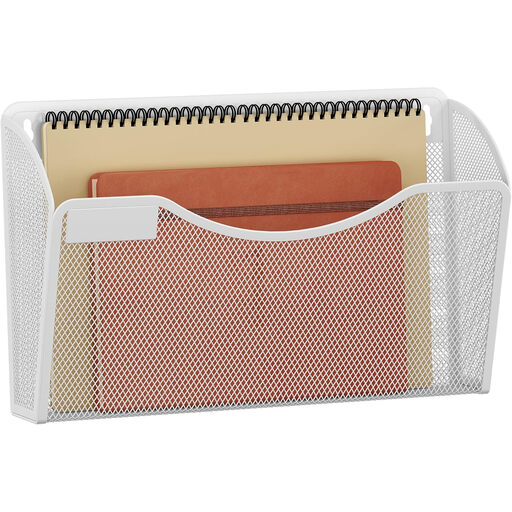
Why this fits the profile: One wide pocket keeps incoming post, current documents or magazines clearly organised. The dimensions are approximately 35.5 × 21.5 × 9.5 cm.
The product information states a metal construction, powder coating and included mounting screws. Do check whether extra wall plugs are needed for your wall type.
Compact single pocket, A4 landscape format and mounts on wall or door. Also available in white.
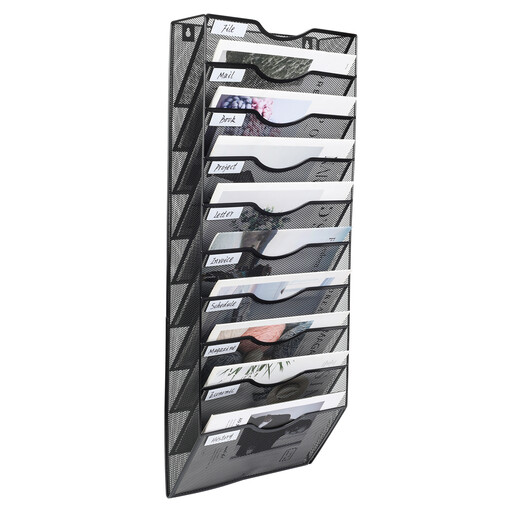
Why this fits the profile: Ten pockets offer space for a fixed layout by client, project, department or document status. The total height is approximately 81.5 cm.
According to the product description, the pockets have label plates. So you don’t have to rely solely on colour or piles for identification.
10 A4 pockets, arched design for access and powder-coated metal. Mounting and checking wall anchors remain essential.
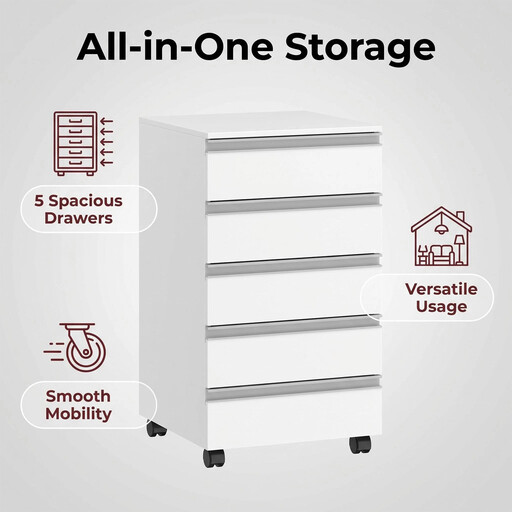
Why this fits the profile: For studios, workshops and offices with larger quantities of paper, drawings, tools or materials, a mobile filing cabinet is more practical than just a wall-mounted A4 file holder.
You’re not limited by narrow wall pockets. The cabinet has five drawers and castors, but according to the product information it must be assembled correctly.
Dimensions approximately 40.5 × 40.5 × 65.5 cm, five drawers and 360° swivel castors. Suitable for mobile storage.
We’ve put together a full, up-to-date list of products that fully meet these strict selection criteria and comply with current European safety regulations.
Use fixing materials suitable for plasterboard and check its maximum load capacity. If there is a stud behind the board, fixing to that stud can provide extra stability. Always follow the product’s installation instructions.
The lifespan depends on load, installation, frequency of use and moisture. According to the product descriptions, several holders feature a powder coating that helps limit oxidation and rust. Regular checks and dry cleaning help keep the finish intact.
A wall holder doesn’t use floor space and is often suitable for loose post and daily-use documents. A mobile filing cabinet requires more space, but offers drawers and sometimes lockability. So don’t just compare the purchase price, but also capacity, installation and the type of documents you want to store.
