If you usually iron one or a few waistcoats, and easy storage or carrying it upstairs matters, a standard steam iron with adjustable steam and a precision tip is a good option. For longer sessions with several cotton garments, a steam generator could be a better fit, provided you have room for the larger appliance and a sturdy ironing board. For every waistcoat, follow the care label for the whole garment, including its lining and trim.
Which option is right for you?
Occasional waistcoat ironing, limited space
You iron one or a few waistcoats and want an appliance that’s easy to put away and carry upstairs. The Dutch Consumers’ Association cites limited storage space as a reason to consider a standard steam iron.
Careful, precise waistcoat ironing
You want to work carefully around seams and buttons, while taking account of a potentially delicate lining or trim. GINETEX advises setting the maximum temperature according to the care label, not just the name of the fibre.
Frequent ironing of sturdy cotton
You regularly iron larger loads of cotton and weigh up extra steam and tank capacity against space, weight and noise. The Dutch Consumers’ Association notes that standard cotton is harder to smooth out than lightweight synthetic fabrics.
What should you look for when buying?
Standard steam iron
Suitable if: you have short ironing sessions, limited storage space or want to work precisely around seams and buttons.
The trade-off: the tank is smaller, and the iron itself may feel heavier in your hand than the iron on a steam generator. The Dutch Consumers’ Association describes this type as more compact.
Steam generator
Suitable if: you regularly iron several cotton garments and have space for a base unit.
The trade-off: the complete appliance is larger and heavier to move, and may be noisier. Check that your ironing board is stable enough, too.
When it comes to waistcoats, care instructions and how much ironing you do both matter. So compare more than just steam output: look at the controls, tank capacity and the size of the complete appliance.
| What to consider |
What to look for |
Who should pay particular attention? |
| Storage and moving the appliance |
Compare the dimensions and total weight. With a generator, check where the base unit can go and whether your ironing board is stable. |
If space is tight and I need to carry the appliance upstairs, I mainly want to know how much room the complete set takes up. Around 33% of consumers prioritise compact storage and ease of moving. |
| Waistcoat details and fabric |
Check the care label for the whole waistcoat, the temperature control, adjustable steam and the shape of the soleplate tip. |
If I’m ironing around seams and buttons, I want to choose a setting that suits both the lining and the trim. Around 25% of consumers prioritise precise ironing without damaging the fabric. |
| Creases in cotton |
Compare continuous steam in g/min with the steam boost, as well as tank capacity and the ability to adjust the steam. |
When ironing several cotton garments in a row, I want to know how often I’ll need to refill the tank and which steam settings are available. Around 25% of consumers prioritise smoothing out stubborn creases in sturdy cotton. |
| Maintenance after buying |
Read the descaling instructions for the exact model and check whether any parts need replacing. |
If I use the appliance regularly, I want to know in advance how much maintenance it needs and what terms apply to my rights. Around 17% of consumers pay particular attention to maintenance and costs after purchase. |
Common ironing and buying mistakes
-
Assuming ‘cotton’ means you can use a high temperature
The care label applies to the whole garment. The lining or trim may have different care limits from the cotton outer fabric.
Read the label before you start. Treat shiny or print-sensitive areas more carefully if needed, for example by using a pressing cloth.
-
Comparing only the weight of the iron
A steam generator has a lightweight iron, but it also comes with a larger base unit that you’ll need to store and move.
Compare the dimensions and total weight of the complete set, and check that your ironing board is stable enough.
-
Assuming an anti-scale feature means no maintenance
An anti-scale system doesn’t remove the need for maintenance; limescale can affect how well the steam works.
Before buying, check how to descale the exact model and whether any parts need replacing.
Allow time for cleaning and, potentially, model-specific replacement parts.
Brands to compare
Braun
The TexStyle 3 SI 3030 is a standard steam iron for short sessions and detailed work.
- Braun lists a precision tip, manual temperature control, self-cleaning and a 270 ml tank for this model.
- With a smaller tank, you may need to refill more often when ironing several garments in a row.
Tefal
The range includes standard irons for detailed work and steam generators for longer sessions.
- For the Ultimate Pure FV9844, Tefal lists a precision tip, adjustable steam and a 350 ml tank. The brand says the Power Pro Compact 200 SV6211 has a separate 1,7 l tank.
- The word ‘compact’ in a model name doesn’t tell you how much space the complete appliance takes up or how heavy it is to move.
Philips
The Philips models mentioned include both a steam generator and a standard steam iron.
- Philips lists 120 g/min continuous steam and a 350 g steam boost for the PSG3000/20.
- Philips lists one setting for ironable fabrics on the DST8070/80. Still check the care label for the whole waistcoat, including any delicate details.
Products on Joybuy
This selection includes handheld and standard steam irons for short sessions and detailed work, plus a steam generator for longer sessions with cotton.
 Image unavailable
Xiaomi BHR9034EU handheld steam iron
The portable design and manual temperature and steam controls may suit short sessions and targeted ironing.
The stated steam output is 22 g/min, the tank capacity is 0,15 l and the weight is 0,77 kg. The small tank may mean more frequent refills during longer sessions.
The product name mentions dual voltage.
View at Joybuy
 Image unavailable
Philips 1000 Series DST1030/20 steam iron
The narrow tip and variable steam may be useful for ironing around buttons and for shorter sessions.
The product name states 2000 W. The product description lists 20 g/min continuous steam, a 90 g/min steam boost and a Calc-Clean function.
According to the product description, steam isn’t available on the synthetic setting.
View at Joybuy
 Image unavailable
Braun FreeStyle 5 SI5037 steam iron
The precision tip may come in handy when ironing around seams and buttons.
The product description lists a steam output of 50 g/min, a 300 ml tank and a self-cleaning system.
View at Joybuy
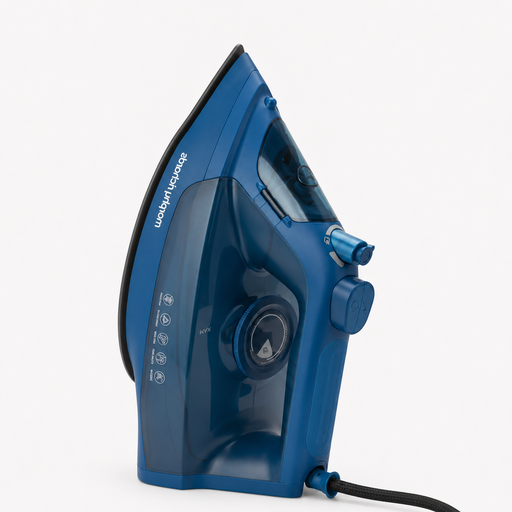 Image unavailable
Morphy Richards Crystal Clear MDH-IRK4V steam iron
The precision tip and variable steam may suit targeted ironing and different types of creases.
The product name states 2800 W and a ceramic soleplate. The product description lists a steam output of 50 g/min, a 350 ml tank, anti-scale protection and self-cleaning.
View at Joybuy
 Image unavailable
Philips 3000 Series PSG3000/20 steam generator, 2400 W
This model may suit longer sessions with several cotton garments, if you have room for the base unit.
The product description lists 120 g/min continuous steam, a 350 g steam boost and a 1,4 l tank.
The instructions say to place the base unit on a flat, stable and heat-resistant surface.
View at Joybuy
Frequently asked questions
Can I always iron the cotton outer fabric of a waistcoat on the highest setting?
No. GINETEX advises setting the maximum temperature according to the care label for the whole garment, not just the cotton fibre. The ironing symbols may indicate maximum temperatures of 200 °C, 150 °C or 110 °C without steam; ‘do not iron’ is also possible. Take the lining and trim into account.
How can I tackle stubborn creases without putting the waistcoat away damp?
Use steam only if the care label allows it. For stubborn creases, the Dutch Consumers’ Association recommends using a steam boost or spray function, then ironing the garment dry. Let it cool completely before putting it away.
How do I descale a steam iron or steam generator?
Follow the instructions for the exact model. An anti-scale system slows the build-up of limescale, but maintenance is still needed. Use vinegar or descaling products only if the manufacturer says they’re suitable for that model.
Who should I contact in the Netherlands if my iron develops a fault?
For your statutory guarantee rights, contact the seller. According to the Dutch Government, there’s no fixed two-year statutory guarantee period in the Netherlands; what you can expect from a product depends, among other things, on the product and the information provided. A manufacturer’s guarantee is in addition to those rights.
Which product safety rules apply to an electric iron in the Netherlands?
Electrical appliances placed on the market in the Netherlands must comply with the relevant European rules. Appliances within the voltage range covered by the Low Voltage Directive must meet the corresponding safety requirements. The responsible economic operator must, among other things, ensure that the relevant CE marking and EU declaration of conformity are in place. A product listing doesn’t independently confirm that an individual item complies.


