
Vandaag of morgen in huis

Kwaliteit gegarandeerd

Welkomstaanbiedingen ontgrendelen: GRATIS bezorging | Tot 80% korting | Gratis 30 dagen JoyPlus-proefperiode
Download de app
As a Joybuy Product Recommendation Officer, I see every day how people want to modernise their cars. Switching from old halogen bulbs to bright, energy-efficient LED lighting is a popular choice. But the search for the right W5W LED Canbus bulb often ends in frustration. A flashing warning light on your dashboard is the last thing you want after an upgrade.
Before you spend any money, it's important to recognise a few common pitfalls. Many manufacturers make promises that don't always hold up in practice.
You don't need to be a mechanic to avoid these problems. Pay attention to a few concrete specifications. This will help you choose a product that works right out of the box and lasts a long time.
Canbus (Controller Area Network) is the system through which the components in your car communicate. Your onboard computer continuously checks if all lights are working by measuring their resistance. A standard halogen bulb has a different resistance than an LED bulb. Without an adjustment, the computer thinks the bulb is broken and displays an error message.
A good T10 Canbus error-free bulb has a built-in resistor or an intelligent IC driver that mimics the power consumption of a halogen bulb. This prevents error messages on most vehicles. Bulbs with an aluminium housing for cooling are often more reliable in this regard, as the resistor generates heat that needs to be dissipated.
Forget wattage. With LED car bulbs, the light output, expressed in Lumen (lm), is the most important value for brightness. A standard W5W halogen bulb produces about 50 lumens. A good LED replacement can easily offer 200 to 450 lumens, a noticeable difference for your LED interior car lights or LED licence plate lights.
The colour temperature, expressed in Kelvin (K), determines the colour of the light:
A wedge-type car bulb may seem simple, but its build quality is crucial for its lifespan. LED chips get hot and need to be able to dissipate that heat. Models with a housing made of aluminium (often called "aviation-grade aluminium") dissipate heat much better than all-plastic models. This ensures stable performance and a longer lifespan, closer to the claimed 15,000 to 60,000 hours. Good construction also ensures that the bulb fits securely in the socket and doesn't vibrate loose.
Not everyone needs the same bulb. Below are a few recommendations, tailored to specific needs.
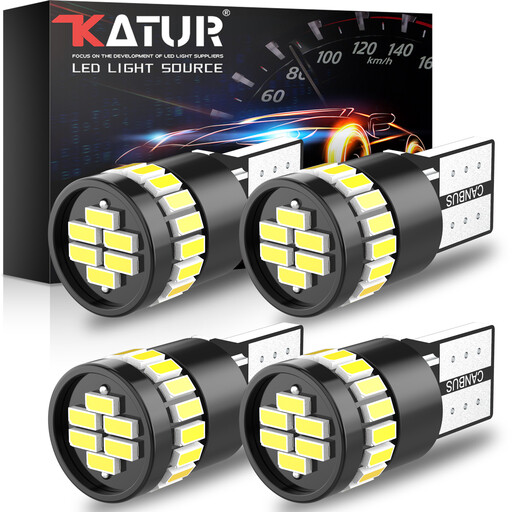
Why This Fits Their Persona: You're looking for a reliable, bright white upgrade for your parking light LEDs or licence plate LEDs. Functionality and a modern, clean look are more important than flashy colours.
This bulb is designed as a direct 'plug-and-play' replacement with a built-in Canbus driver, which minimises the risk of the dreaded "error-free" myth.
Offers a bright, 6000K white light colour that ensures good visibility and a modern appearance. The 360-degree illumination provides even light distribution.
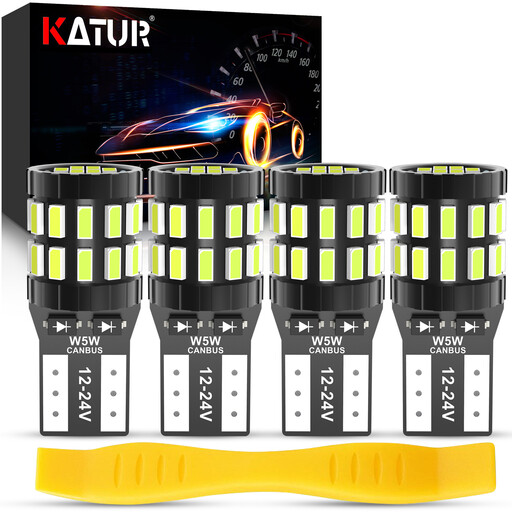
Why This Fits Their Persona: You want to give your LED interior car lighting a unique, stylish look. A standard white bulb isn't enough; you're looking for a striking colour that transforms the car's atmosphere.
The aluminium construction helps prevent overheating. This is important for interior lights that may stay on for longer periods, preventing premature bulb failure.
The 'Ice Blue' colour creates a distinctive and premium ambiance. The Canbus functionality ensures an installation free of error messages that would spoil the clean look.
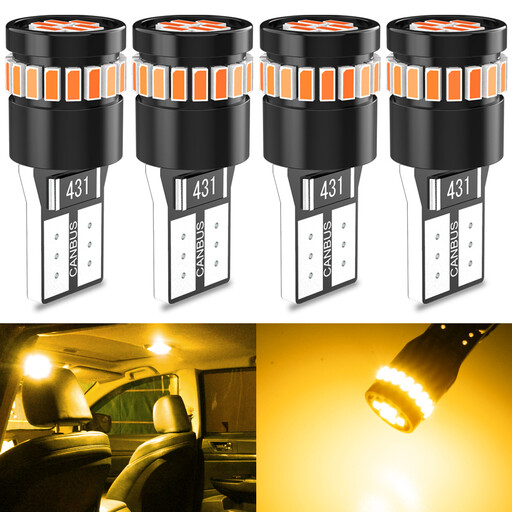
Why This Fits Their Persona: You want to improve the visibility of your turn signals or side markers. A bright, intense colour that immediately catches the eye of other road users is your priority.
According to the manufacturer, these bulbs are up to three times brighter than standard bulbs. This tackles the pitfall of underwhelming brightness, which is crucial for signal lighting.
The vibrant 'Amber Yellow' colour ensures clear signalling. The 'plug-and-play' installation makes it a quick and easy upgrade for a key safety component.
We've compiled a complete, up-to-date list of products that meet these selection criteria and local regulations.
In most cases, it won't. Manufacturers often claim 99% compatibility with modern cars. The built-in resistor or driver is designed to satisfy the onboard computer. However, a small percentage of cars, particularly from certain German brands, have an extremely sensitive Canbus system. In that rare case, an error message may still occur. If this happens, an additional, separate resistor is often the solution.
The lifespan stated by manufacturers varies greatly, from 15,000 to as many as 60,000 operating hours. For comparison, a halogen bulb lasts an average of 1,000 to 2,000 hours. The actual lifespan of a T10 LED depends on the build quality (especially the cooling), how often the bulb is used, and the voltage of the car's electrical system. In general, they last significantly longer than their halogen counterparts.
No, there are legal rules for this. For the exterior lighting of your car, the colours are strictly defined:
Colours such as blue, green, or purple are prohibited for exterior lighting on public roads. They are intended exclusively for LED interior car lighting or for show purposes on private property. Always check your local regulations to avoid a fine.
