
Listener comparing vowels
You listen to Dutch vowel examples and compare them with your own recording. Oefenen.nl and NT2.nl describe practising by repeating examples and listening back.


If you mainly listen to vowel examples and your own recordings, start with headphones that feel comfortable and connect to your playback device. If you want to hear yourself while speaking, check the microphone and monitoring setup too. In a shared space, weigh noise isolation against being able to hear the group.
You listen to Dutch vowel examples and compare them with your own recording. Oefenen.nl and NT2.nl describe practising by repeating examples and listening back.
You record yourself saying examples and want to hear your voice during or after practice. Audio-Technica describes a headset with a microphone, but your device’s connections and monitoring setup still matter.
You practise shortly before a group rehearsal and need to balance focused listening with being able to hear others. Consumentenbond and Sony Netherlands highlight comfort and different listening modes as points to consider.
Vowel practice involves listening, repeating and listening back; Oefenen.nl and NT2.nl describe these practice steps. So first decide whether you only want to listen, record your voice or be able to switch modes during the rehearsal.
A good fit if: you want to compare examples and recordings with focused listening.
Bear in mind: headphones play audio, but won’t record your voice on their own, and may block out surrounding sounds.
A good fit if: you want to record examples and listen back using one device.
Bear in mind: a microphone doesn’t guarantee direct monitoring. Focusrite warns that using direct and software monitoring together can make you hear your voice twice.
A good fit if: you listen to examples in different settings and sometimes want to hear the group.
Bear in mind: check the entire monitoring setup if you want to listen back to your voice wirelessly.
A good fit if: you practise in a quiet room and want to stay aware of your surroundings.
Bear in mind: this design is less suitable if noise isolation or limited sound leakage is important.
| What to consider | What to check | Who should pay particular attention? |
|---|---|---|
| Comparing vowels | Use the same examples and your own recordings; check the fit and connection to your playback source. | I want to compare vowels in examples with my own recordings. Around 33% of consumers prioritise distinguishing between vowels. |
| Hearing your own voice | Check the microphone connection and direct monitoring; avoid duplicate monitoring through software. | If I want to hear my pronunciation while recording, the microphone and monitoring setup are crucial. Around 27% of consumers prioritise direct feedback on their voice. |
| Listening in a shared space | Decide whether you mainly want noise isolation or need to hear the group from time to time; check which listening modes the model offers. | I want to practise with focus while still being able to hear the group’s instructions. Around 20% of consumers prioritise this balance. |
| Fit and connection | Check the fit, cable and plug; find out whether your playback source needs an adapter. | When I practise for longer, I want comfortable headphones that connect to the device I already own. Around 20% of consumers prioritise comfort and connectivity. |
Headphones play audio. To record and listen back to your voice, you’ll also need a microphone and a suitable monitoring setup.
Before buying, decide whether you only want to listen, play back recordings or monitor yourself while speaking.
beyerdynamic lists 32, 80 and 250 ohm versions. Choose the version that suits the source you want to connect it to.
Check the full model name and the connection on your playback device.
Noise isolation can help you concentrate on listening, but you may want to hear others before a rehearsal. Ambient mode is a separate listening mode.
Check which listening modes the specific model has, and switch modes when the situation calls for it.
ACM ConsuWijzer explains that Dutch statutory warranty depends on what you could reasonably expect from the product under normal use; it isn’t simply a fixed period of two years.
Keep your proof of purchase and contact the seller if the product is faulty.
The wired ATH-M40x is a closed-back monitoring option. The ATH-M20xSTS adds a microphone for anyone who also wants to record themselves.
The wired DT 770 PRO is designed for individual listening and studio use.
The wired MDR-7506 is an option for recording, while the wireless WH-1000XM5 offers noise cancelling and ambient mode for a different kind of practice.
The wired, closed-back HD 280 PRO is a monitoring option to include when comparing noise-isolating models.
The wired PRO 4000 is a closed-back, over-ear option to compare with other practical models.
These picks focus on wireless over-ear headphones for listening to vowel examples in different environments. Check the listening modes and any wired connection options for each model.
 No image available
Suitable for playing vowel examples and, with the supplied audio cable, listening over a wired connection.
The product information lists Noise Cancelling, Transparency Mode, 60 hours of battery life and 4 microphones. Check the monitoring setup separately if you want to hear yourself while speaking.
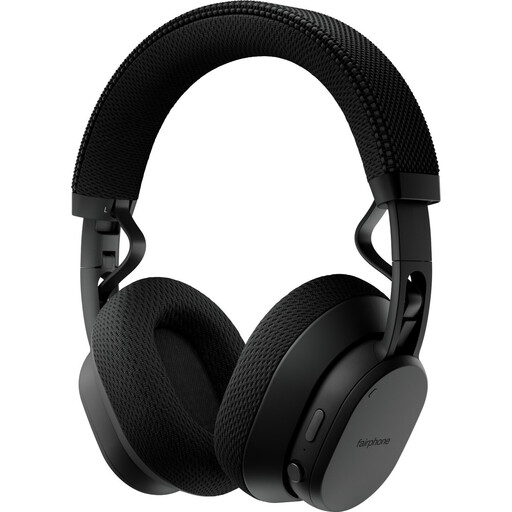 No image available
An option for listening to examples in a shared space and switching between noise isolation and ambient sound.
The product information lists Bluetooth 5.1, Hybrid ANC, an Ambient Sound mode and a foldable design. Check that the available connections suit your practice device.
 No image available
The stated ambient mode may be useful when you want to hear what’s happening around you during practice.
The product information lists active noise cancelling, Aware mode, Bluetooth and supplied USB-C and 3.5mm cables. Check separately whether your device has a microphone input and suitable monitoring.
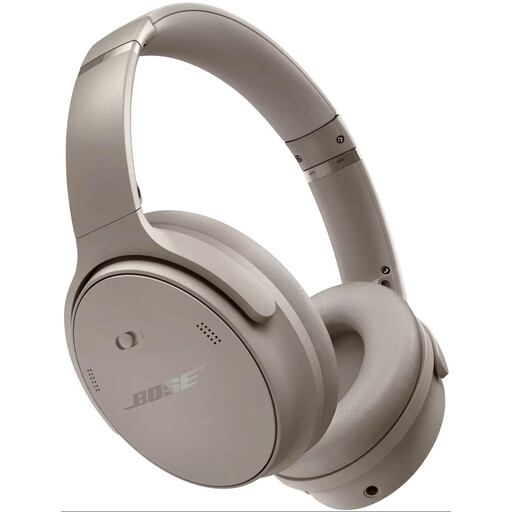 No image available
An option for playing examples and switching between focused listening and transparency mode.
The product information lists Bluetooth, active noise cancelling and transparency modes. Check your device’s connection options if you also want to record or listen over a wired connection.
 No image available
The Bluetooth and cable connections described offer options for playing practice material.
The product information lists active noise cancelling and a detachable cable with USB-C and 3.5mm connections. No charger is supplied; the recommended charger delivers 1.8–2.5 W, and PD fast charging isn’t supported.
Not if you only want to listen. If you want to record your pronunciation or hear it back through a device, you’ll need a working microphone input and a suitable recording or monitoring setup; standard headphones won’t provide these on their own.
With a suitable Focusrite setup, using direct monitoring alongside software monitoring can make both the direct signal and the delayed, processed signal audible. Check which monitoring method you’re using and switch off the duplicate route.
Keep an eye on the volume and how long you listen for. The WHO-ITU standard gives 80 dB for 40 hours a week as a reference for adults; this isn’t a setting that every pair of headphones automatically enforces.
For a qualifying distance purchase from a business, you’ll usually have a 14-day cooling-off period, according to the Dutch government. Statutory warranty also depends on what you could reasonably expect under normal use, as ACM ConsuWijzer explains. Check which rules apply to your purchase.
Radio equipment is covered by an EU framework that includes requirements for safety, health and electromagnetic compatibility. According to the European Commission, the CE marking is a manufacturer’s declaration that products comply with the applicable harmonised rules requiring that marking; it isn’t a separate EU approval certificate.