First, decide how the editorial team will share documents and find earlier versions; the laptop itself won’t do this automatically. Microsoft Support explains that version history in Microsoft 365 is available for files stored in OneDrive or SharePoint, while Google Docs requires editing permissions to access earlier versions. Then compare the screen, keyboard and portability with the way you write and review the handbook.
Who is this choice relevant to?
Handbook editor
You write and revise long documents and want to be able to find changes made by other editors. Start with your shared document workflow, then assess the screen and keyboard. Microsoft Support and Google Docs Editors Help explain the requirements for version history on their platforms.
Writer on the move
You work at meetings or in different locations, and need to balance a compact screen with enough space to read text comfortably. If you sometimes work without an internet connection, check in advance how to set up offline access for your document platform; Google Docs Editors Help explains the specific requirements.
Budget-conscious coordinator
You don’t want to choose a configuration that goes beyond what your workflow requires. Compare the specific model, the software you need and the accessories included, rather than choosing based on the laptop name alone.
What should you look for?
First, agree which document platform the volunteers will use. Then compare laptops for typing comfort, use on the move and the features your workflow requires.
| Consideration |
What should you check? |
Who is this important for? |
| Finding earlier versions |
Check where the shared file is stored and what permissions editors have. Microsoft Support specifies OneDrive or SharePoint for the Microsoft 365 version history described; Google Docs requires editing permissions. |
If I want to find changes made by fellow editors, I start with the shared document workflow. Around 33% of consumers say collaboration and version history are their top purchasing priority. |
| Typing comfort |
Check the screen size, screen resolution and keyboard layout of the exact model. |
If I’m writing and reviewing long chapters, I want the screen and keyboard to suit my workspace. Around 27% of consumers prioritise typing comfort when choosing a laptop. |
| Working on the move |
Balance screen space with portability; set up offline access in advance if you want to use Google Docs without an internet connection. |
If I edit the handbook in different locations, I look for a practical balance between portability and screen space. Around 20% of consumers say working on the move is their top purchasing priority. |
| Choosing the right configuration |
Match the memory to the programmes you use at the same time, and check which software and accessories you need or what’s included. |
If I want to avoid unnecessary hardware, I compare the model with my day-to-day work and check what else I need. Around 20% of consumers say a suitable configuration and the necessary essentials are their top purchasing priority. |
Common buying pitfalls
-
Assuming local Office files automatically have version history
For the version history in Microsoft 365 described by Microsoft, the file must be stored in OneDrive or SharePoint.
Before choosing a laptop, agree where the shared master copy will be stored and who will have access.
-
Choosing based on the model name alone
Specifications can vary between models. Dell notes that changing options in the configurator may result in different specifications; the Lenovo model mentioned comes with an English (EU) keyboard.
Check the full specification, including the keyboard layout, screen, memory and included accessories.
-
Assuming the manufacturer’s warranty covers all your consumer rights
According to the Dutch government, the manufacturer’s warranty is in addition to your statutory rights when buying as a consumer; the seller remains responsible for ensuring the product is fit for purpose.
Read the terms of any additional support and consider it separately from your statutory consumer rights.
Brands to compare
Lenovo
The ThinkPad E14 Gen 7 is a compact business Windows range worth comparing if a 14-inch workspace suits you.
- For model 21T9001TMH, Lenovo specifies a 14-inch anti-glare WUXGA screen, 16 GB of memory and a 512 GB SSD.
- According to Lenovo, this model has an English (EU) keyboard; check that the layout suits your editorial team.
HP
The ProBook 4 G1ah 14 is a business Windows option worth comparing if a compact screen and the listed support are important to you.
- For model C5BW5AT#ABH, HP lists Windows 11 Pro, 16 GB RAM, a 512 GB SSD, a 14-inch WUXGA screen and an included charger.
- The three years of on-site support mentioned is an HP claim for this model, not an independent performance test.
Dell
The Dell 15 D15261 is a configurable Windows laptop worth comparing if you want a larger built-in screen.
- The base configuration viewed lists a 15.3-inch FHD screen, 8 GB RAM and a 512 GB SSD.
- Dell warns that choices in the configurator can change the specifications, so check the full model details.
Apple
The 13-inch MacBook Air M5 is a macOS alternative if it suits your document workflow and peripherals.
- For the 13-inch M5 base model, Apple specifies 16 GB of memory, 512 GB of storage, a 13.6-inch screen and two Thunderbolt 4 ports.
- Before choosing a model, check that your software and peripherals work with macOS.
Joybuy laptops for document work
These Joybuy picks are laptops for writing and reviewing documents. Focus on comparing screen size, memory and keyboard features with your editorial team’s workflow.
 Image unavailable
HP OmniBook 3 AI PC 14-ht0013nd
A model with a 14-inch screen and full-size QWERTY keyboard to consider for document work.
Intel Core 3 304, 8 GB of memory, 512 GB SSD and Windows 11 Home. The screen resolution is 1920 × 1200.
View at Joybuy
 Image unavailable
Auusda T161N
The larger built-in screen may suit a fixed workspace where you review long documents.
16-inch screen with 1920 × 1200 resolution, 16 GB DDR4 memory, 1 TB SSD and i3 1000NG4 processor. The description also lists a backlit keyboard.
View at Joybuy
 Image unavailable
Auusda T156A
An option to compare if you’d like more space on the built-in screen while writing.
15.6-inch FHD IPS screen, 16 GB DDR4 memory, 512 GB SSD and 3050E processor. This model has a backlit keyboard.
View at Joybuy
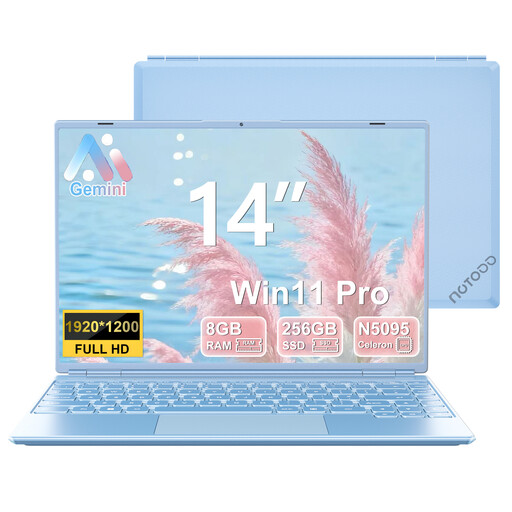 Image unavailable
NOTODD 14-inch laptop with Celeron N5095
A compact model to compare for writing tasks where a 14-inch screen suits you.
8 GB RAM, 256 GB SSD, a screen resolution of 1920 × 1200 and Windows 11.
View at Joybuy
 Image unavailable
MSI Modern 14 F1MG-867NL
A 14-inch model to compare if you’re looking for a compact screen and a backlit keyboard.
Intel Core 7 150U processor, 16 GB DDR4 memory, 512 GB SSD, Full HD anti-glare screen and Windows 11 Home.
View at Joybuy
Frequently asked questions
Does every laptop automatically have version history for the handbook?
No. For the version history in Microsoft 365 described by Microsoft, the file must be stored in OneDrive or SharePoint. Google Docs requires editing permissions to access earlier versions. So decide on your document workflow first, then compare laptops.
Can you carry on working on a document without an internet connection?
Yes, you can use Google Docs if you set up offline access in advance. Google lists requirements including using Chrome or Edge, avoiding a private browsing window, installing the offline extension and having enough storage space. Before you leave, check that the file you need is available offline.
Do you need 16 GB RAM for a volunteer handbook?
No, it isn’t a general requirement for writing a handbook. The Consumers’ Association says 8 GB is enough for light tasks and recommends 16 GB, if possible, for smoother use of several programmes at once. Compare this advice with the programmes you actually use.
What are my rights as a Dutch consumer when I buy a laptop online?
According to the Dutch government, when you buy remotely from a business, you generally have a 14-day cooling-off period in many cases. You are also entitled to a product that is fit for purpose when buying as a consumer; the Netherlands has no fixed statutory warranty period. These consumer rules are not necessarily the same as the terms that apply when an organisation makes a business purchase.
Does the handbook need to comply with privacy rules?
If the organisation processes personal data in the handbook or shared working environment, it must protect that data properly, according to the Dutch Data Protection Authority. Whether this applies depends on the content and working practices. A laptop brand alone cannot make your document workflow GDPR-compliant.


