
Vandaag of morgen in huis

Kwaliteit gegarandeerd

Welkomstaanbiedingen ontgrendelen: GRATIS bezorging | Tot 80% korting | Gratis 30 dagen JoyPlus-proefperiode
Download de app
A volleyball shoe needs to do more than look athletic. During a rally, you make short sprints, land after a jump and change direction frequently and abruptly. A shoe with the wrong fit, insufficient grip or inadequate support can therefore become uncomfortable very quickly.
Even so, marketing copy can be difficult to assess properly. Terms such as “professional volleyball shoes”, “maximum cushioning” and “non-slip” only become meaningful when you also consider the materials, outsole and sizing. Below, you’ll find which features matter for indoor volleyball and which models suit different playing styles based on the available product specifications.
Volleyball is generally played on a smooth sports floor. Running shoes are primarily designed for movement in one direction and do not always have an outsole suitable for quick lateral movements. Therefore, check whether the product description specifies indoor use and whether the outsole is made of rubber.
Cushioned volleyball shoes can feel comfortable during jumps and landings, but cushioning alone does not determine how stable a shoe feels. A soft midsole without a secure fit may actually respond less directly during a blocking movement or lateral step. Therefore, consider the fastening system, heel construction, outsole and overall shape of the shoe together.
Technology brand names are also not an independent guarantee of a particular playing experience. When a brand claims shock absorption or additional comfort, you should read this as a statement from that brand’s product information—not as a guaranteed result for every player.
A shoe that is too small can put pressure on your toes, while an overly spacious shoe allows your foot to move inside the shoe. Keep in mind that sizing can vary between brands and models. Try shoes on while wearing the socks you use for training. Also check that your toes can still move and that your heel does not lift when taking a lateral step.
Look for a rubber outsole that the product description states is intended for indoor sports floors. An outsole with good grip helps you push off and slow down with control, but actual traction also depends on dust, moisture and the condition of the floor.
Avoid unnecessarily dirtying indoor shoes outdoors. Stones and sand can wear down the tread more quickly. Clean the outsole regularly with a lightly damp cloth and let the shoes dry at room temperature.
Models with cushioning may feature terms such as Pulsor, Reactive Ball or Zoom. These are brand-specific designations. According to Joma’s product information, the V.Impulse models feature Pulsor or Reactive Ball cushioning. According to Nike’s product information, the Hyperset 2 uses Zoom cushioning.
The practical choice depends on your preferences:
A regular fit, lace fastening and low-cut design are available across several models in the range. Laces allow you to adjust the tension around the instep. A synthetic or textile upper can provide support and ventilation, but the precise feel varies depending on your foot shape.
For men’s volleyball shoes, it is wise not to rely solely on the “men” label. Measure your foot length and compare it with the size chart for the specific model. Unisex models can also be suitable, provided the width and length fit properly.
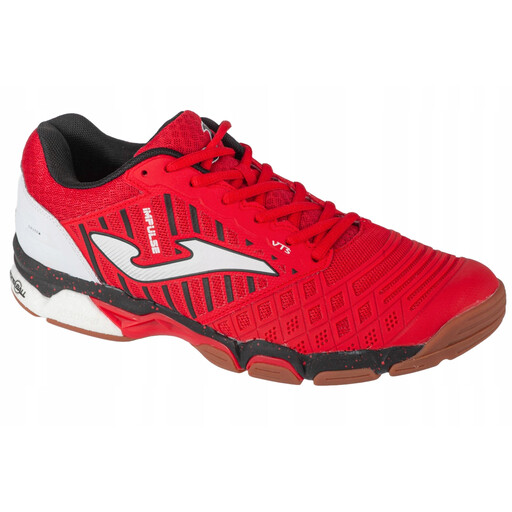
Why it’s a good fit: A practical choice for players who train and compete and are looking for a men’s volleyball shoe with a rubber outsole.
The product information specifies indoor use, a rubber outsole, lace fastening and a regular fit. This lets you assess the key features instead of judging the shoe on appearance alone.
Synthetic upper, polyurethane foam insole and rubber outsole; available in size 43.

Why it’s a good fit: For unisex players looking for a lightweight, breathable upper and a model designed for indoor volleyball.
The product description explicitly states that the shoe is intended for indoor use and has a rubber outsole. The shoe has therefore not been selected on style alone.
Textile upper, Zoom cushioning according to Nike’s product information and a non-marking rubber outsole; available in size 43.
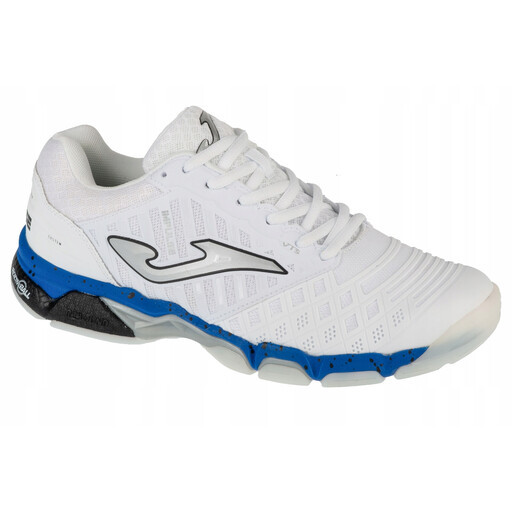
Why it’s a good fit: Designed for men looking for size 46 and a shoe for regular training sessions or matches on indoor courts.
The description mentions Reactive Ball cushioning, Flexo and Durability technologies as branded features. You can compare these claims with the specific materials and size information.
Synthetic upper, polyurethane foam insole, rubber outsole and size 46.
If you’re looking for size 43 volleyball shoes, you can also consider the Nike Hyperset 2 or Joma V.Impulse 2406. For size 45, the Nike Hyperset 2 and Joma V.Impulse 2406 are available in the product selection mentioned above. The Joma V.Impulse 2406 is also listed in sizes 42.5, 43.5 and 44.5. Before ordering, always check the current stock, price and return policy on the product page.
Explore a current selection of men’s volleyball shoes and compare sizes, materials, cushioning and rubber indoor outsoles based on the available product specifications.
This is generally not recommended. According to their product information, the models mentioned are intended for indoor volleyball. Asphalt, sand and moisture can put additional strain on the rubber outsole and upper when used outdoors. For outdoor training, choose shoes specifically designed for that purpose.
There is no fixed lifespan. It depends on how often you play, your playing style, body weight, the court surface and how well you maintain the shoes. Replace them when the outsole becomes visibly smooth, grip begins to deteriorate or the cushioning and fit no longer feel comfortable. Air out indoor shoes after use and avoid placing them near direct heat sources.
Not automatically. According to the product description, cushioning may contribute to shock absorption, but players differ in their preferences and foot shape. Therefore, also consider stability, flexibility, weight and fit. A well-fitting shoe with a dependable rubber outsole is often more important than a long list of technical brand names.
