What should you look for when buying?
First check whether your phone needs PoE, then find out which network features the administrator can support, and finally count the connections you need.
| What to consider |
What should you check? |
Who is this important for? |
| Power for the phone |
Check the phone model, the required PoE standard and the power per port. Also count any other devices that need power from the switch at the same time. |
If I want to power my phone over Ethernet, the switch must meet the phone’s requirements; around 33% of consumers give compatible power delivery top priority. |
| Compatibility with the network |
Ask who manages the uplink and router, and whether a voice VLAN or traffic prioritisation is needed and can be configured. |
I want to avoid my settings conflicting with the shared network, so I’ll agree them with the administrator; for around 27% of consumers, this coordination comes first. |
| Ports for expansion |
Count the uplink and all current and planned devices. Check separately how many of them need PoE. |
If I also need connections for other studio devices, the number of usable ports matters; around 20% of consumers put expandability first. |
| Quiet placement and outages |
Check whether the exact model is fanless, and consider which components need power if it’s important to keep calling during an outage. |
I want to place the switch in a workspace and know in advance what happens during an outage; for around 20% of consumers, quiet placement and handling outages are the main considerations. |
Joybuy products
These product choices are aimed at wired connections in a shared studio, and include both PoE switches and a managed switch without PoE. Check that the features and version suit your phone and the network arrangements.
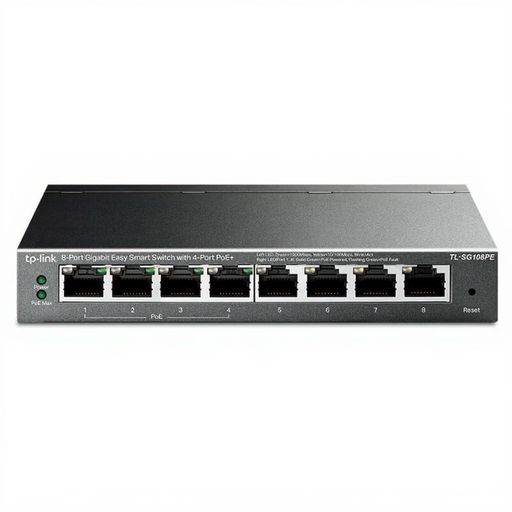 Image unavailable
TP-Link 8-port Gigabit Easy Smart Switch with 4 PoE ports
May be suitable if your phone uses compatible PoE; check the PoE requirements and exact model revision before ordering.
8 gigabit ports; 4 PoE ports.
View at Joybuy
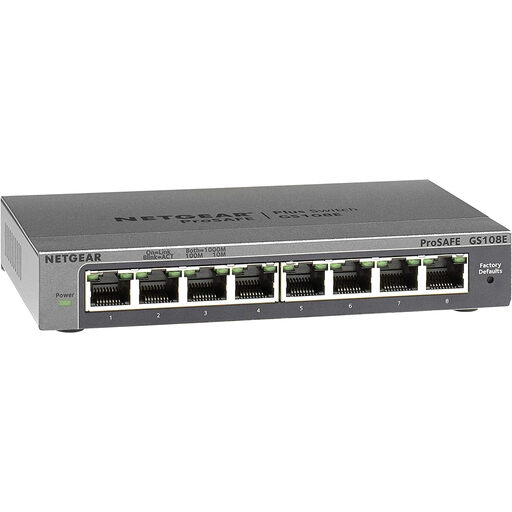 Image unavailable
NETGEAR GS108E-400EUS
A possible choice if your phone has its own power supply and you can agree VLAN or QoS settings with the studio manager. Check that the version on offer suits the existing network configuration.
View at Joybuy
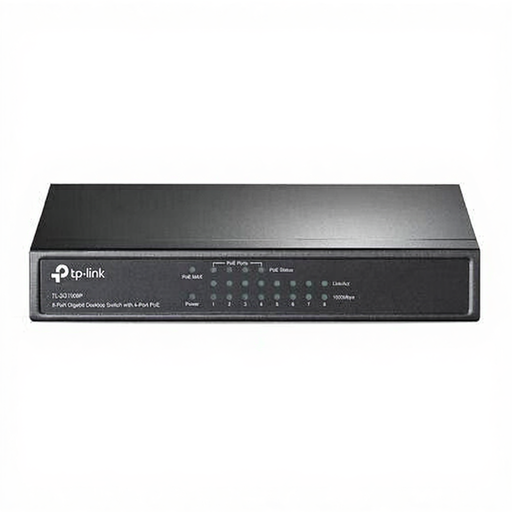 Image unavailable
TP-Link TL-SG1008P unmanaged Gigabit Ethernet switch
May suit a compatible PoE phone if you don’t need local switch management; check your phone’s requirements and which network port will serve as the uplink.
8 gigabit ports; the product name specifies 10/100/1000 Ethernet.
View at Joybuy
 Image unavailable
TP-Link 5-port Gigabit Desktop PoE Switch
The fanless version described may be worth considering if you’re placing the switch in a shared workspace; check that there are enough ports after you connect the uplink.
5 ports; the stated limitation leaves a maximum of 4 ports for devices once connected to the existing network.
View at Joybuy
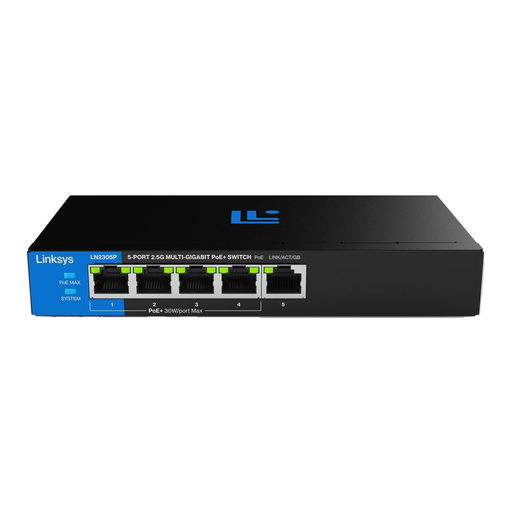 Image unavailable
Linksys 5-port unmanaged PoE switch, 2.5 GB
May suit a compatible PoE+ phone where a fanless casing is preferable; check your phone’s requirements and whether five ports are enough for the uplink and connected devices.
5 ports; the product name specifies 2.5 GB.
View at Joybuy
Frequently asked questions
Does every VoIP phone need a PoE switch?
No, not if the specific phone uses a suitable alternative power supply. If it needs PoE, compare the required standard and power with the switch; don’t rely on the ‘PoE’ label alone.
Can I set up a voice VLAN as soon as the switch supports VLAN?
Not without coordinating with the existing connection and the settings on the phone and other network equipment. Cisco outlines the requirements for configuring voice VLAN and QoS on Cisco equipment; these aren’t universal installation instructions for other brands.
What should I check if there’s a fault or warranty issue?
First establish whether the problem is with your own equipment or with your phone or internet provider. ACM ConsuWijzer explains that a problem with your own equipment doesn’t automatically count as a fault for which the provider must pay compensation; check separately whether that information applies to a business contract.
Do Dutch rules for calling 112 on a mobile mean this fixed VoIP phone will work during an outage?
No. The cited statement and rule from the Authority for Consumers and Markets concern mobile voice services, including 4G and Wi-Fi calling, not the power supply or emergency call functionality of a fixed studio setup. Ask your phone provider and studio manager how the phone will work and what alternative is available during an outage.
What should I look for in terms of product safety in the Netherlands?
According to the Dutch government, CE marking is required for product groups covered by the relevant rules; the manufacturer or importer must establish whether those rules apply. Check the product information for the switch and power adapter on offer. General information about CE marking doesn’t by itself confirm that a specific product listing is compliant.


