
Expressive storytellers
You’re recording a film synopsis with quiet and powerful passages, and want to be able to listen back to or edit the recording.


If your voice shifts between quiet and powerful passages as you record, consider a handheld recorder with a recording mode suited to your editing needs. Zoom and Tascam list 32-bit float recording for the models discussed here. If you mainly want to record quickly and transfer files, a voice recorder with built-in memory may be a better fit. Make a test recording where you plan to record: no recording format can eliminate reflections. Check the storage and accessories required for each model.
You’re recording a film synopsis with quiet and powerful passages, and want to be able to listen back to or edit the recording.
You record in a fixed location and want to assess how the position of the recorder and microphone affects clarity.
You want to record a synopsis without a complicated setup, listen back to it and transfer it to a computer.
Choose this option: if your voice varies greatly in volume and you want to edit the recording afterwards. Zoom and Tascam list this mode for the H1essential and DR-05XP.
Keep in mind: this mode is no substitute for a test recording or careful positioning. Also check the storage, power and connections required for each model.
Choose this option: if recording quickly and transferring files matter more to you than 32-bit float recording. Philips lists built-in memory and MP3 and PCM/WAV recording for the VoiceTracer DVT4110.
Keep in mind: the DVT4110’s listed PCM modes are 16-bit; the 24-bit specification applies to other VoiceTracer models.
Choose this option: if you record in different locations and find these features useful; Roland lists them for the R-07.
Keep in mind: these are Roland’s descriptions and do not demonstrate any proven advantage for voice recording over the other models.
| Factor to consider | What should you check? | Who is this important for? |
|---|---|---|
| Varying voice volume | Check the recording mode of the exact model and listen to a test recording with both quiet and powerful passages. | If I record with a dynamic vocal range, I want to assess how the recording sounds and whether I want to edit it afterwards. Around 36% of consumers prioritise vocal dynamics. |
| Room echo and positioning | Record a short clip in the place you intend to use and compare it with the recorder positioned away from the tabletop. Zoom warns that reflections from a table can affect clarity. | If my room is echoey, I want to hear what a different position does before choosing my setup. Around 29% of consumers prioritise the recording location. |
| Recording and transferring quickly | Check the controls, playback options, file formats, storage and USB connection on the exact model. | If I want to record several versions quickly and transfer them to a computer, I want a workflow that suits this. Around 21% of consumers prioritise a quick workflow. |
| Recording in different locations | Check the power supply, storage required and playback options on the go for each model. | If I record in different places, I want to know in advance what power and storage I’ll need to bring. Around 14% of consumers prioritise mobile recording. |
A recording mode won’t change how sound reflects around a room. Zoom warns that reflections from a table can affect the clarity of a recording.
Start with short test recordings in the place you intend to use, and move the recorder away from the tabletop if necessary.
The Zoom H1essential uses microSD storage, while Philips lists built-in memory for the VoiceTracer DVT4110. Storage requirements therefore vary by model.
Check the storage requirements and what’s included in the box for the specific offer before choosing.
According to Philips, the 24-bit PCM specification applies to the VoiceTracer DVT6110–DVT8110, not the DVT4110.
Compare the full model number with its corresponding recording modes.
The H1essential is designed for anyone looking for a handheld recorder with 32-bit float recording, built-in X/Y microphones and an external microphone input.
According to Tascam, the DR-05XP has built-in stereo microphones and supports several recording formats, including 32-bit float and MP3.
The DVT4110 is a voice recorder for anyone who values built-in memory and MP3 or PCM/WAV recordings.
The R-07 is worth considering if you want to use recording scenes or remote control in different locations.
This selection includes voice recorders and a wireless microphone with internal recording. Check which features, storage and connections suit your recording workflow for each product.
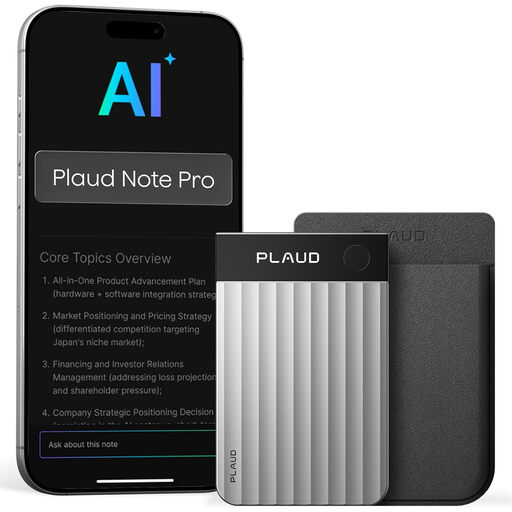 No image available
The product name mentions notes and summaries; check which features and software suit the workflow you want.
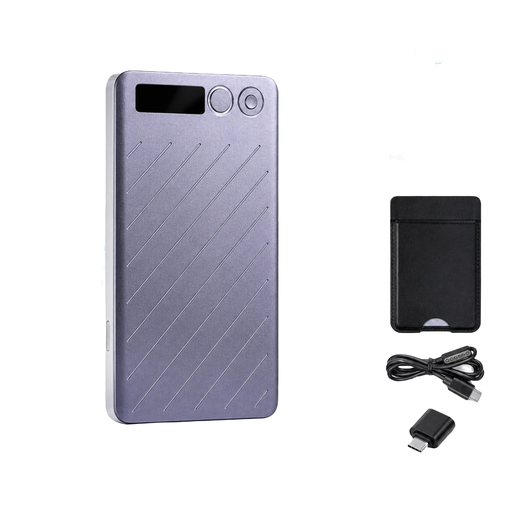 No image available
The product name mentions 64 GB and a transcription function; check which languages and software are supported.
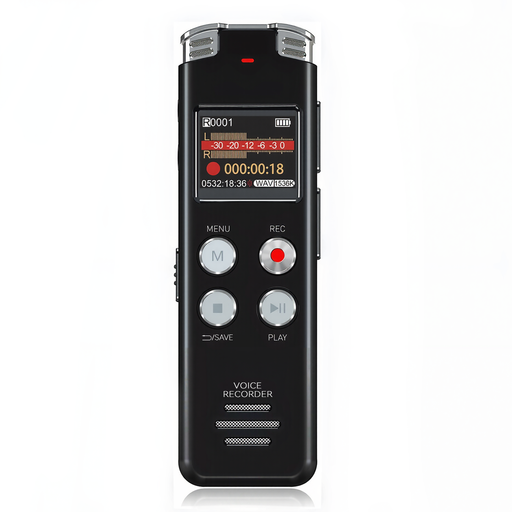 No image available
The product name describes a portable digital voice recorder with 128 GB of storage and an LCD screen.
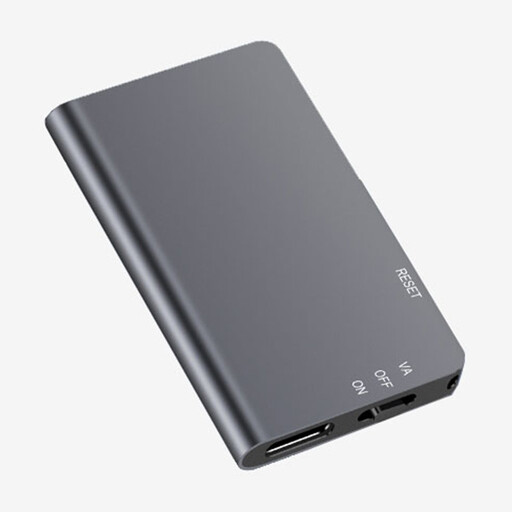 No image available
The product name mentions 64 GB of storage and one-touch recording.
 No image available
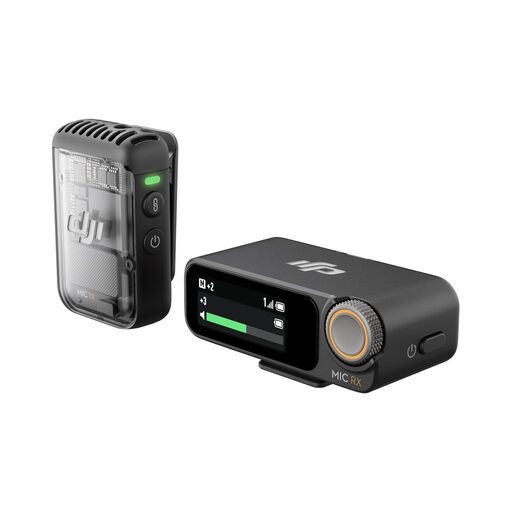
The product name describes a wireless microphone with internal recording, 32-bit float and a set comprising 1 transmitter and 1 receiver.
No. Zoom and Tascam offer this mode on the models mentioned, but your recording location, workflow and test recording also matter. A recording mode won’t correct unwanted reflections caused by your setup.
For the H1essential, Zoom recommends using a tripod, among other things, to position the recorder away from a reflective tabletop. Compare a short test recording before and after moving it in your own recording space.
If you choose a Zoom H1essential, check that you have a suitable microSD card: Zoom describes microSD as the storage for recordings. Check the box contents and power requirements separately for each model.
If there’s a problem, contact the seller. According to the Dutch government, the statutory guarantee entitles you to a product that meets the required standards; the Netherlands has no fixed statutory guarantee period that applies to all products.
Don’t assume you can use copyrighted film audio or music freely. The Dutch government states that permission is generally required; whether a particular clip falls under an exception such as the right to quote depends on how it is used.