
Keeping a diary in an echoey room
You want to record your voice clearly and can adjust the microphone’s position or distance. Shure explains why the distance from the speaker and the recording location matter.


For a spoken diary consisting mainly of short notes, a simple voice recorder is a good fit. Choose a handheld audio recorder if you want more recording settings or an input for an external microphone. In an echoey room, positioning the recorder close to the speaker matters more than a noise-reduction feature: Shure explains that a microphone cannot effectively separate direct speech from reflected sound. Also check how you can save and transfer your recordings.
You want to record your voice clearly and can adjust the microphone’s position or distance. Shure explains why the distance from the speaker and the recording location matter.
You record your thoughts as soon as they occur to you. Simple controls and a practical way to find or transfer recordings can make a difference; Sony and OM SYSTEM describe these kinds of features for specific models.
You record regularly and want to think about storage, power and file transfer. The manuals and product information from Zoom, OM SYSTEM and Philips describe different options for each model.
A good fit if: you mainly make spoken notes and want to start recording, play them back and transfer files quickly. Sony describes automatic voice recording and USB transfer for the ICD-UX570; OM SYSTEM lists a simple mode for the WS-883.
Bear in mind: voice recording settings won’t remove echo when the microphone is far away from you.
A good fit if: you want to choose from more recording settings or consider using an external microphone. The Zoom manual lists a microphone/line input for the H1essential.
Bear in mind: positioning, storage media and power all need consideration. Zoom warns that placing an H1essential directly on a table can pick up reflections.
| What to consider | What to look for when buying | Which consumers might find this especially important? |
|---|---|---|
| Clarity in an echoey room | Can you position the recorder close to your voice and keep it steady? Listen back to a short test recording. | If I’m recording in an echoey room, I want to be able to move the microphone closer and listen back to the result. Around 36% of consumers put clarity first. |
| Being able to record quickly | Check the start controls and how easy it is to find your recordings. | If I want to capture a thought straight away, easy-to-use controls matter to me. Around 29% of consumers prioritise recording instantly. |
| Saving and transferring recordings | Check where files are stored and how you can copy them to your own storage. | If I make diary recordings regularly, I want them to be easy to save and find. Around 21% of consumers prioritise archiving. |
| Recording flexibility | Compare the available recording settings and check which way of working suits you. | If I want to choose between different recording modes, I’m happy to weigh up more settings. Around 14% of consumers prioritise recording flexibility. |
Shure explains that a microphone cannot effectively separate direct speech from reflections in the room. A noise-reduction feature is therefore no substitute for a suitable recording location.
First, consider the microphone’s distance and position. Then decide which recorder features you need.
Zoom warns that reflections from the table can reduce the clarity of a recording made with the H1essential.
Try the recording location and listen back. Consider a different position or an accessory if it improves your test recording.
Storage and file transfer vary by model. A setup that requires extra management can be inconvenient if you record often.
Check where files are stored and how you can transfer them to your own storage for the exact model you’re considering.
Sony describes the ICD-UX570 as a voice recorder with automatic voice recording and direct USB transfer.
OM SYSTEM describes the WS-883 as a voice recorder with a simple mode, built-in storage and USB transfer.
The H1essential is a handheld recorder for anyone considering microphone positioning and recording settings.
For the DR-05XP, Tascam lists features including built-in omnidirectional microphones, 32-bit float recording and a low-cut filter.
For the DVT4115, Philips describes pre-set recording scenes, built-in storage and a rechargeable battery.
These Joybuy picks are aimed at recording spoken diary notes, saving them and finding or processing them later.
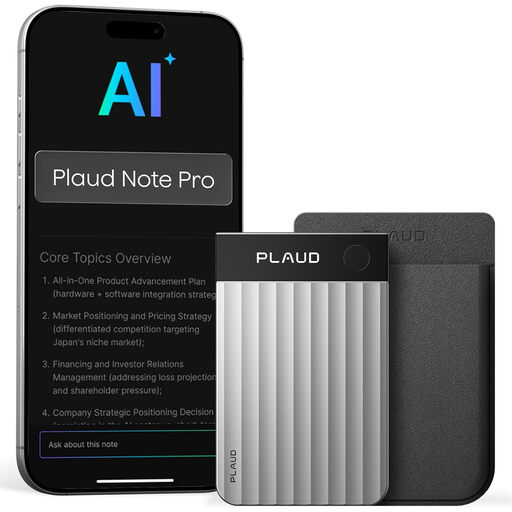 Image unavailable
A good fit if you want to record spoken diary notes and use summaries too.
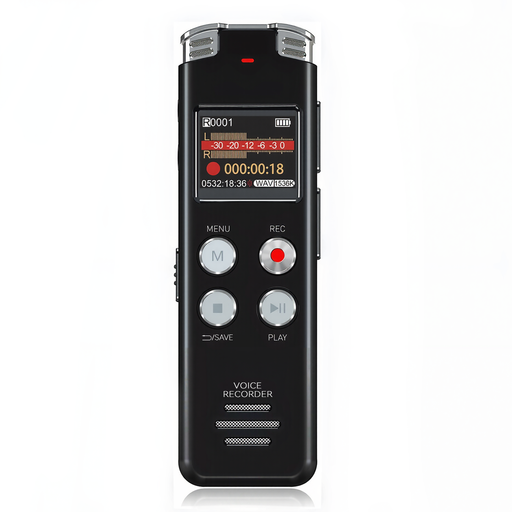 Image unavailable
A good fit if you want to record spoken notes and are looking for a recorder with built-in storage.
The product name specifies 128 GB of storage.
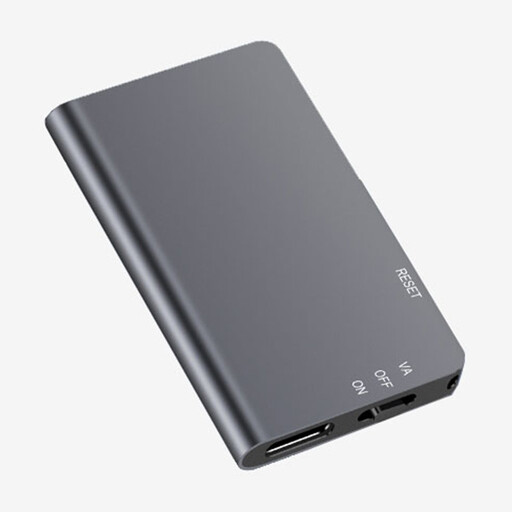 Image unavailable
A good fit if you want to capture a thought using a direct recording control and save your files.
The product name specifies 64 GB of storage and one-touch recording.
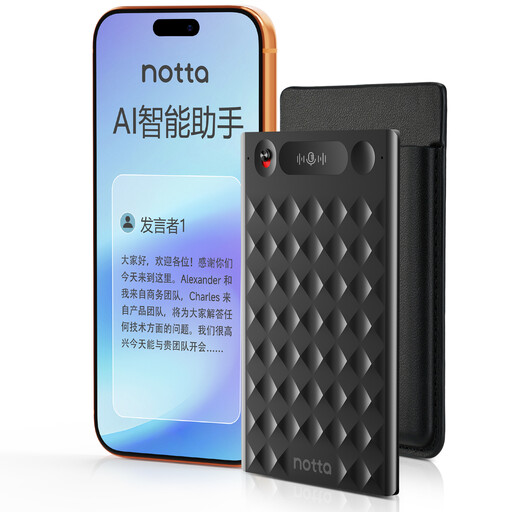 Image unavailable
A good fit if you want to record diary notes and use transcriptions or summaries too.
The product name specifies 32 GB of storage, 30 hours of battery life, transcription, translation in 58 languages and summary templates. File management and cloud synchronisation are handled through the Notta app.
Don’t count on a noise filter to remove room echo. Shure explains that a microphone cannot effectively separate direct speech from reflected speech. Move the microphone closer to you and listen back to a test recording; Zoom also warns about reflections when the H1essential is placed directly on a table.
Try placing it somewhere stable, closer to your voice rather than on the other side of the room. Zoom lists a tripod as an option for the H1essential, helping to create distance from a reflective tabletop. Then listen back to see whether the voice and recording location work well for you.
A voice recorder is a good fit for mostly short voice notes and straightforward controls; consider a handheld audio recorder if you want more recording settings or an external microphone. Neither is a substitute for positioning the microphone appropriately in an echoey room.
For each model, check whether you need a memory card, power supply or microphone, and how you can transfer files to your own storage. According to ACM ConsuWijzer, if a product breaks too soon under normal use, the seller must put it right free of charge under the statutory guarantee.
According to the Dutch Data Protection Authority, the GDPR does not apply to the processing of your own personal data when it is carried out solely for personal or household use. This is not blanket permission to make recordings of other people public: according to the Dutch Data Protection Authority, consent is usually required to publish personal data outside that private sphere. Check the rules again if you record other people or publish your diary.