
Narrator in a reverberant space
Wants a clear, intelligible voice for the tour and should focus on microphone placement and the results of a test recording.


For a single narrator, a recorder you can position close to the speaker and use to play back a test recording is often a sensible place to start. 32-bit float recording can be useful when there are big differences between quiet and loud passages; XLR inputs and extra tracks are mainly relevant if you want to record external microphones or separate sound sources. None of these features can remove reverberation that is already in the recording.
Wants a clear, intelligible voice for the tour and should focus on microphone placement and the results of a test recording.
Deliberately varies between quiet passages and emphatic phrases, and wants to rely less on getting the digital recording level perfectly set in advance.
Wants to record independently or capture separate sounds alongside the narration. The inputs and tracks you need will help determine which type of recorder is right for you.
Start with clarity and where you’ll be recording; then consider whether you need any additional recording features.
| What to consider | What to look for when buying | Who is this important for? |
|---|---|---|
| Clear speech | Can you position the microphone steadily close to the narrator and play back the recording? | If I’m recording in a reverberant space, I want my voice to come through clearly above the room noise. Around 33% of consumers say clarity is their top priority. |
| Varying vocal volume | Check whether the exact model supports 32-bit float recording and whether your editing workflow can handle these files. | When I use quiet sentences and emphatic accents, I don’t want changes in level to make my recording unusable. Around 27% of consumers prioritise capturing changes in vocal volume. |
| Recording independently | Check the storage, power supply and file transfer options on the version you’re buying. | If I record in different locations, I want to be able to record without a computer and transfer my files easily afterwards. Around 20% of consumers prioritise recording independently. |
| Recording additional sources | Check the number of inputs, the connection type and whether your microphone needs phantom power. | If I want to record an external microphone or ambient sound separately, suitable inputs and tracks are important. Around 20% of consumers choose mainly on the basis of separate sound sources. |
Adjusting the file level won’t separate the recorded voice from reflections the microphone has already picked up.
First, make a short test recording in the place where you plan to record the tour.
Allow time for a retake or to adjust the microphone setup.
The added value of a multitrack recorder depends on whether you’ll actually connect or record separate sound sources.
First decide how many voices and separate sound tracks you need; then check the inputs and whether phantom power is available.
An external microphone may also require other accessories.
Tascam has reported potential battery life and date issues with some units with serial numbers from 2630001 to 2642004.
For this model, check the serial number and, if you experience any issues, consult Tascam’s repair process.
Tascam excludes replacement batteries from the repair process described as free of charge; checking or repairing the unit may also take time.
The H1essential mentioned here is designed for compact solo recording; the H4essential adds connections and tracks for recording multiple sources.
The DR-05XP is a standalone recorder with built-in microphones and USB-C; the DR-40XP has adjustable microphones and XLR/TRS inputs.
The LS-P5 is designed for a compact workflow, with internal memory and remote operation.
These Joybuy products include portable voice recorders and a wireless microphone for voice recording. Check that the features described suit the way you record and edit.
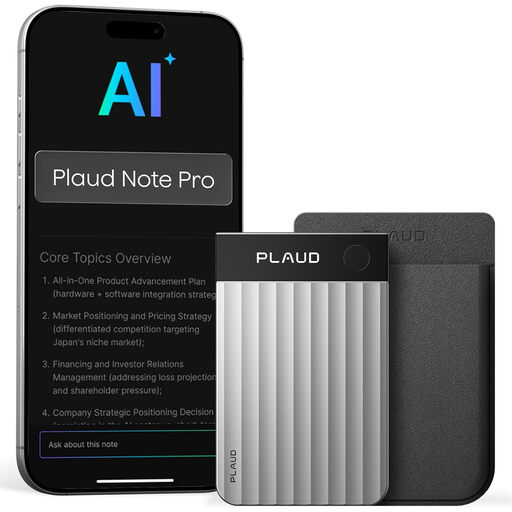 Image unavailable
Worth considering if you want to record speech and include transcription and summaries in your workflow.
64 GB of storage; transcription and summaries in 118 languages are listed.
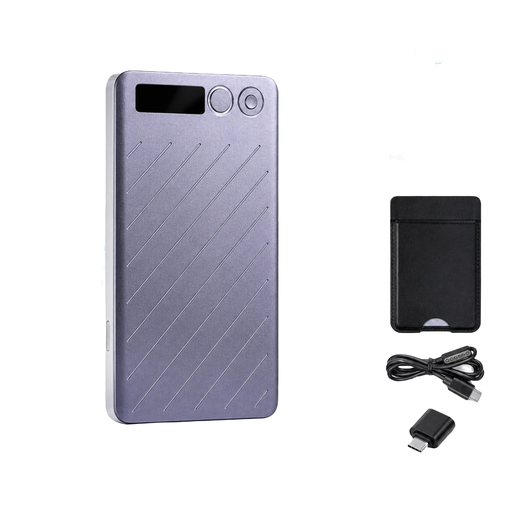 Image unavailable
Worth considering if you’re looking for a portable recorder and want to include transcription in your workflow.
64 GB of storage; transcription function.
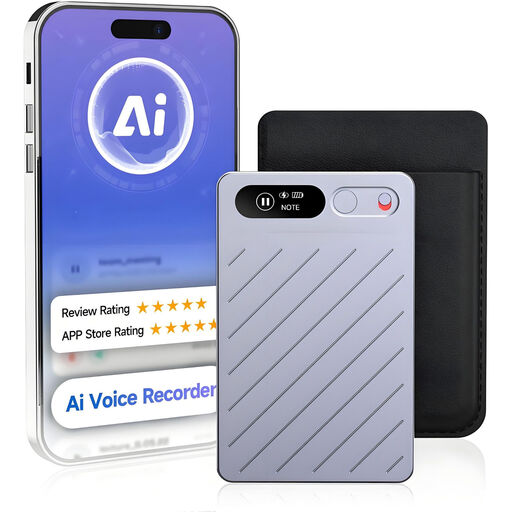 Image unavailable
An option for anyone looking for a portable voice recorder that combines recording and text processing in one workflow.
64 GB of storage; transcription and summaries in 118 languages are listed.
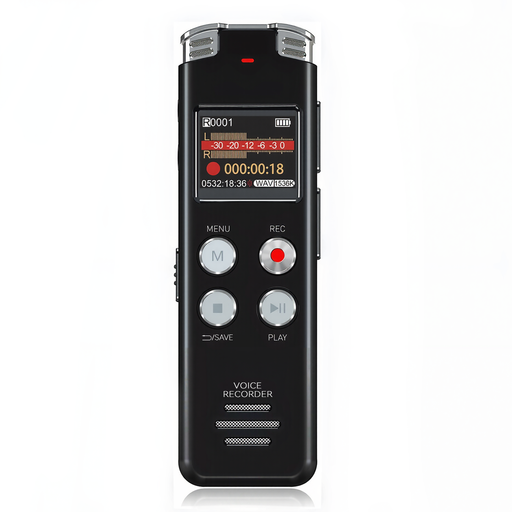 Image unavailable
Worth considering if you want to record speech independently with a portable digital recorder.
128 GB of storage; LCD screen.
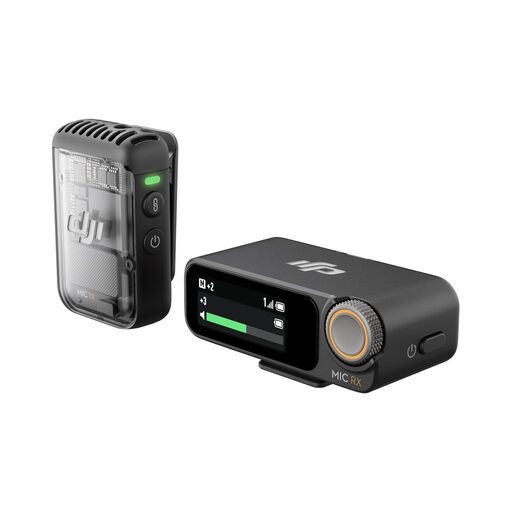 Image unavailable
An option if you want to position a wireless microphone close to the narrator rather than relying solely on a recorder with built-in microphones.
The product name lists 32-bit float internal recording and a set with 1 TX + 1 RX.
No. According to Zoom, 32-bit float recording gives you room to adjust the digital file level afterwards; Shure explains that a microphone can’t effectively separate direct speech from reflections that have already been recorded. Make a test recording with the microphone closer to the narrator.
Position the recorder securely, record a quiet passage and an emphatic one, then listen back before recording the whole tour. Also check the storage and power supply on the exact model.
If a product doesn’t meet your expectations, contact the seller. According to the Dutch government, there is no fixed statutory warranty period for every product in the Netherlands; the appropriate solution depends on the product and the problem.
A sound recording in which someone can be recognised may count as personal data. Processing it requires a lawful basis under the GDPR; according to the Dutch Data Protection Authority, publishing other people’s personal data online is generally only permitted with their consent, subject to relevant exceptions. Assess the specific recording and publication before using it.
According to the Dutch government, you need the creator’s permission to use copyright-protected music or text publicly. Being allowed to copy material for personal use doesn’t mean you can also share it online.