
Actors who want to listen back to quiet lines
If quiet lines get lost during practice, choosing the right microphone position and making a test recording in your own space are important.


For learning your own lines and quickly replaying sections, a voice recorder with handy playback features is a practical option. For scenes with several actors, microphone placement and the option to connect an external microphone matter more. Make a test recording from the intended distance: the recording format and playback features alone can’t guarantee that quiet dialogue will be easy to understand in your rehearsal space.
If quiet lines get lost during practice, choosing the right microphone position and making a test recording in your own space are important.
If you’re learning a passage by going over it repeatedly, features that help you find, repeat or play sections more slowly may be useful.
When actors are in different positions, recording requires a suitable microphone set-up and agreement on how identifiable voices will be shared.
First decide whether you mainly want to listen back to your own lines or record a scene with several actors. Then test the recording from the actual playing distance, and only then check which microphone and playback features you need.
| What to consider | What to look for | Who should pay extra attention? |
|---|---|---|
| Quiet lines | Compare test recordings from the playing distance and try different microphone positions. Check whether an external microphone input suits your set-up. | If I want to be able to make out quiet lines clearly when I listen back, I want to test the recording from my own playing distance. Around 36% of consumers put intelligibility first. |
| Several actors | Try the intended microphone position while actors move around, and compare a recording of the scene with a microphone placed closer to the main voices. | When voices come from different directions, I want to know whether the recorder captures the whole scene appropriately. Around 29% of consumers put several actors and positions at the top of their list. |
| Repeating sections | Check for features such as A-B repeat, search and adjustable playback speed, and see whether the controls suit the way you practise. | If I want to listen to one line repeatedly, I want to find it quickly without having to go through the whole recording each time. Around 21% of consumers prioritise targeted playback. |
| Recording independently | Check the storage and power requirements for each model, and what’s included with the recorder. | When I want to have everything ready before a rehearsal, I want to know whether storage and power are taken care of. Around 14% of consumers put straightforward preparation first. |
A recording format can’t make up for poor microphone placement. Zoom warns that reflections from a table can reduce clarity with the H1essential.
Make a test recording from the actual playing positions before deciding that recording features are the most important factor.
A suitable set-up may require extra preparation or equipment.
Preparation varies by model: Philips lists internal memory for the DVT4115, while the Zoom H1essential uses a microSD card.
Check the storage and power requirements for the exact model, and test the complete set-up before the rehearsal.
The Dutch Data Protection Authority distinguishes between use solely for personal or household purposes and broader processing. A municipal policy from Enschede covers only the situation where the person recording is also taking part in the conversation.
Agree in advance who will record and who the files will be shared with; consider recording and sharing separately.
The H1essential is a portable stereo recorder for rehearsals where built-in microphones or an external lapel microphone are being considered.
The DR-05XP is a portable stereo recorder for anyone wanting to use built-in microphones or an external microphone.
The ICD-UX570 is a compact voice recorder for recording and listening back to lines selectively.
According to Philips, the DVT4115 combines internal memory with a rechargeable battery and remote control.
These voice recorders list recording and transcription features. Before using one for Dutch theatre dialogue, check that the stated features suit your language, recording set-up and way of practising.
 No image available
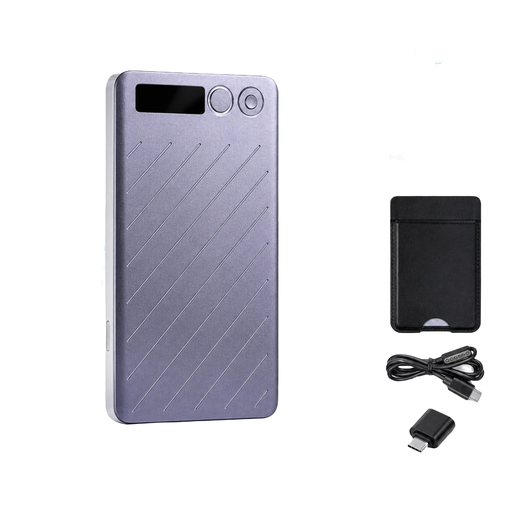
The product title describes a digital voice recorder with a transcription function; check that the feature suits your language and rehearsal routine.
64 GB; transcription function.
 No image available
The product title describes a recorder with a transcription function; check that the listed languages and features are suitable for your rehearsals.
32 GB; 2000h storage; 30h battery; transcription, translation and summaries according to the product title; one-touch recording.
 No image available
The product title lists transcription and summarisation; check that these features suit the way you listen back to and process your dialogue.
64 GB; mini design; transcription and summarisation according to the product title.
 No image available
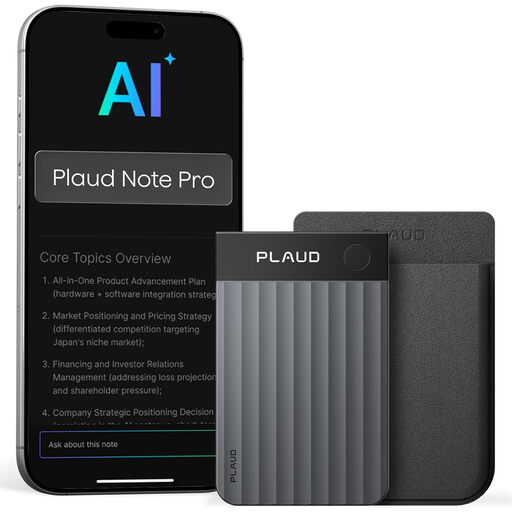
The product title describes an AI voice recorder for notes and summaries; check that it suits the way you practise dialogue.
Colour: Black.
No. First choose a suitable microphone position and listen back to a test recording. In its manual, Zoom advises against placing the H1essential directly on a table if reflections reduce clarity; the recording format can’t make up for an unsuitable set-up.
Test it first with the quietest lines and pauses in your scene. According to the Philips manual, voice activation can automatically pause recording after silence; check that opening words and pauses are preserved in the test recording.
Check the storage and power requirements for the exact model and which accessories are included. Tascam describes using a memory card with the DR-05XP, while Philips lists internal memory for the DVT4115. The Dutch government explains that there is no fixed statutory warranty period for all products in the Netherlands; if a product is faulty, the seller is your point of contact.
The municipality of Enschede’s policy says that recording a conversation you’re taking part in is not, in itself, a criminal offence; these municipal rules are not general rules for theatre. Recording by someone who isn’t part of the conversation, and sharing identifiable voices, require separate consideration. The Dutch Data Protection Authority explains that processing beyond solely personal or household use may require an applicable GDPR legal basis. Agree in advance who will record and who the files will be shared with.