
Record something quickly
Would you like to record a summary as soon as you’ve finished studying and play it back on the device later? According to OM SYSTEM, the WS-883 has a simple mode and playback features.


For short study summaries that you want to record and play back yourself, a simple voice recorder with internal storage is a sensible place to start; OM SYSTEM lists these features for the WS-883. Choose a handheld recorder if you also need an external microphone, computer connectivity or more editing options, and check the memory card and connections for the exact model. No recording format can make up for poor microphone placement or a lack of test recording in your room.
Would you like to record a summary as soon as you’ve finished studying and play it back on the device later? According to OM SYSTEM, the WS-883 has a simple mode and playback features.
If you’re recording in a room with reflective surfaces or unwanted noise, pay attention to the microphone’s position as well as the device itself. Shure recommends taking reflections and noise sources into account when setting up at home.
Would you like to store, share or edit your summaries on a computer? The models mentioned offer different ways of working, including USB transfer, sharing through an app, and use as a USB microphone or audio interface.
First, decide how you want to use your summaries: record them straight away, make sure they’re clear in the room, find the files again or edit them later.
| What to consider | What to look for | Who is this important for? |
|---|---|---|
| Quick recording | Check the recording controls, simple mode, and playback and search features. | If I want to record and play something back quickly after studying, I don’t want to have to work through lots of settings first. Around 36% of consumers prioritise being able to start recording and listen back straight away. |
| Clear speech | Make a test recording where you plan to record and check that the microphone position works for your setup. | If you’re recording at home where reflections or background noise could be an issue, you’ll want to be able to hear your voice clearly. For around 29% of consumers, clear sound in the room is the top priority. |
| Finding files again | Look at internal storage, transfer to your computer, file formats and ways to find your recordings again. | If I want to save and find summaries for different subjects, the files need to fit the way I work. Around 21% of consumers prioritise storage, transfer and being able to find their recordings. |
| Editing | Check the USB function, microphone connection, file formats and any memory card requirements for the exact model. | If you want to edit your recordings later or use the recorder with a computer, the connections and recording options may be important. This is the top priority for around 14% of consumers. |
According to the manual, the Zoom H1essential cannot record or play audio without a microSD card inserted.
Check which storage medium the exact model requires and what’s included in the box.
Recording format and room acoustics are two different things. Microphone placement and reflections still affect what you record.
Choose editing features that you’ll actually use, and listen back to a test recording made where you plan to record.
Philips describes app control and sharing for the VoiceTracer DVT4115. For speech-to-text, Philips refers to separate Sembly cloud software.
Check where the feature you want works: on the device, in the app or through a separate service.
These models illustrate different ways of working. The features listed apply to the relevant product lines and are not an independent assessment of sound quality.
The WS-883 is designed for recording and playing back voice recordings on the device itself.
The VoiceTracer DVT4115 combines recording on the device with control and sharing through a smartphone app.
The H1essential is a handheld recorder for anyone considering an external microphone or using the device as a USB microphone.
The DR-05XP is a handheld recorder with features for recording on its own and working with a computer.
These products are designed for spoken study notes and summaries, from simple recording and playback to models whose product information mentions transcription and summarising.
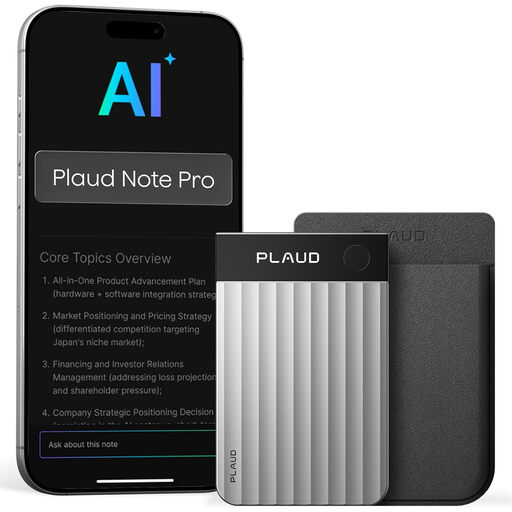 No image available
For anyone who wants to record spoken notes and also use text transcription and summaries.
The product information lists 32 GB of internal storage and transcription and summarising features.
Check the requirements for the features you want before basing your choice on them.
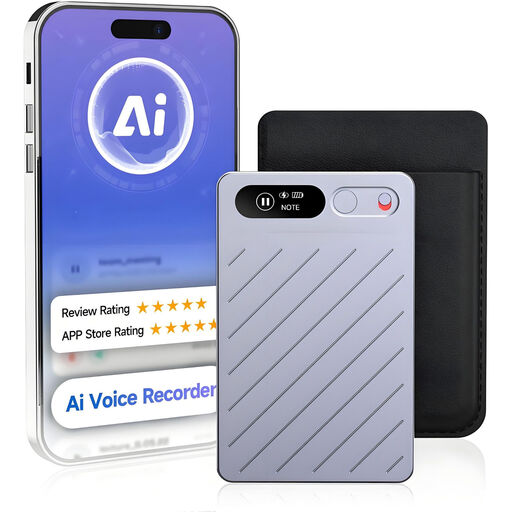 No image available
For spoken study notes when you also want to use text transcription and summaries.
The product title lists 64 GB of storage and support for 118 languages; the product information mentions transcription and summarising.
Check the requirements for the features you want before basing your choice on them.
 No image available
For anyone who wants to combine spoken study recordings with transcription and automatic summaries.
The product information lists 64 GB of internal storage and control through a Bluetooth app.
Check the requirements for the features you want before basing your choice on them.
 No image available
For anyone who wants to record and play back spoken summaries, and transfer files to a computer.
The product information lists MP3 and WAV formats, USB-C file transfer and organisation by timestamp.
It also mentions one-touch recording and repeat, fast-forward and rewind functions.
 No image available
For anyone who wants to record lectures or study summaries quickly, then transfer the files and play them back later.
The product information lists WAV recording, voice activation and file transfer via USB-C.
It also mentions one-touch recording and an included pair of headphones.
It depends on the model. The manufacturers state that the OM SYSTEM WS-883 and Philips VoiceTracer DVT4115 have 8 GB of internal storage. The Zoom H1essential manual says that recording and playback aren’t possible without a microSD card inserted.
Make a test recording where you plan to speak, then listen back to it. For a home setup, Shure recommends paying attention to reflective surfaces and unwanted noise sources; choosing a recording format doesn’t replace checking your microphone placement.
According to the European Commission, the GDPR does not apply when you record only your own voice for purely personal or household activities with no professional or commercial connection. This doesn’t automatically apply to publishing identifiable recordings of other people or using them for another purpose.
In the Netherlands, the retailer is responsible for the statutory guarantee. ACM ConsuWijzer states that the retailer must offer an appropriate solution free of charge if a product breaks sooner than you could reasonably expect during normal use, such as a repair or replacement.