
Storyteller who wants to edit the recording
You’re mainly recording one voice and want to listen back, edit or share the narration later. The recording format, microphone setup and a test recording are all important factors when choosing.


If you’re recording a single storyteller and mainly want to listen back, a compact voice recorder may be enough. If you want to edit the recording, check the recording format and whether you can monitor it during the session. If you want to record two voices separately, inputs for individual microphones are important, but you’ll also need suitable microphones and a more involved setup.
You’re mainly recording one voice and want to listen back, edit or share the narration later. The recording format, microphone setup and a test recording are all important factors when choosing.
You want to record two voices in the same small booth. Decide whether a single combined recording will do, or whether you need separate microphones and tracks.
You want to get started without a complicated setup, save the session and easily find or transfer your files. So check the storage and how you’ll move files to another device.
First decide how many voices you want to record and whether you plan to edit the recording later. Then work out which microphones, tracks and storage will suit your needs.
Choose this option: if you mainly want to record one storyteller and easily save or find your files.
Bear in mind: a voice recorder won’t necessarily support separate microphone tracks or extensive editing.
Choose this option: if you want to start recording a story without separate microphones, then save or edit it later.
Bear in mind: the position of the built-in microphones affects which voices and booth sounds are picked up. Also check the memory card and power supply.
Choose this option: if the storyteller and the person they’re speaking with each need their own microphone and recording track.
Bear in mind: separate microphones, cables and configuration make for a more involved setup; extra inputs won’t make a booth quieter.
| What to consider | What should you check? | Who is this important for? |
|---|---|---|
| Recording for editing | Check whether the exact model supports PCM/WAV and whether you can listen back to the recording during a test. | If you want to edit a single storyteller’s recording later, first check which format and microphone setup will suit your workflow. Around 36% of consumers prioritise recording for editing. |
| Separate tracks for two voices | Check the number of inputs, the connection type and which microphones and cables you’ll need. | If you want to record a storyteller and their conversation partner separately, each voice needs its own microphone and track. Around 29% of consumers prioritise recording two voices separately. |
| Getting started easily | Check whether you need a memory card, how the recorder is powered and whether a short test recording will be saved. | If you want a simple setup and to be able to listen back quickly, find out what preparation the device requires before your session. Around 21% of consumers prioritise getting started easily. |
| Storage and finding files | Check the recording format, available storage and how to transfer and back up files. | If you want to keep your narration for a while and find it again later, storage and file transfer will shape your workflow. Around 14% of consumers prioritise saving and finding files. |
Inputs for external microphones don’t replace choosing and positioning those microphones.
First decide whether you want to record the voices separately. Then check the complete setup, not just the recorder.
You may need suitable external microphones and cables to record voices separately.
According to Zoom, the H1essential won’t record without a microSD card inserted. The Tascam DR-05XP manual also lists a microSD card and power supply as requirements.
Check the card and power supply well before your session, then make a test recording and listen back to it.
Depending on the model, you may need a compatible microSD card and batteries.
A maximum storage or battery life figure doesn’t tell you how much recording time you’ll have with the format and settings you plan to use.
Check the recording time for your chosen mode and power source, and leave room for a test recording.
The H1essential is a handheld recorder with built-in X/Y microphones, while the H4essential is designed for connecting external microphones.
The DR-05XP is a handheld recorder with built-in omnidirectional stereo microphones and an additional mini-jack input.
The VoiceTracer DVT4115 is a voice recorder with internal memory and a choice of stereo MP3 or PCM recording.
The WS-883 is a compact voice recorder with built-in USB for transferring files.
These products are designed for voice recording. Check each model’s recording and transfer features to see whether they’ll suit your storytelling session.
 No image available
Worth considering if you’re looking for a voice recorder for a storytelling session. Check in advance which recording and output options you need.
The product name includes AI Notes & Summary and the Silver variant.
 No image available
Worth considering if you’re looking for a digital voice recorder to capture a storytelling session. Check whether the controls and output options suit your workflow.
The product name includes 64 GB and a transcription function.
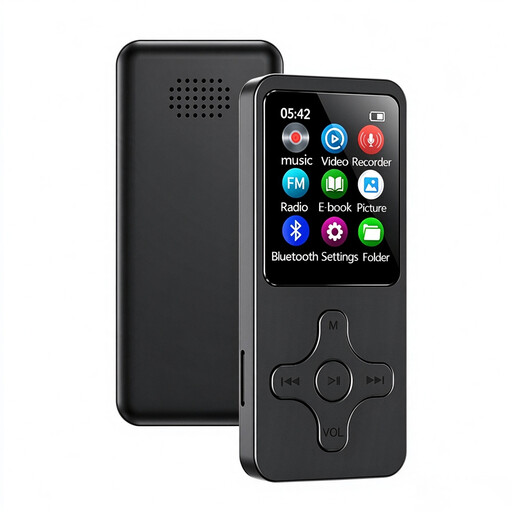 No image available
An option to consider if you’re looking at an audio player with a listed voice recording function. Before your session, check how to start and save a recording.
The product name includes a 1.8-inch screen, Bluetooth and a voice recording function.
 No image available
Worth considering if you’re looking for a mini voice recorder for a storytelling session. Check which features will fit into your recording process without extra steps.
The product name includes 64 GB, transcription and summaries in 118 languages.
 No image available
Worth considering if you’re looking for a digital voice recorder and want to transfer files later. Check the connections and file options to make sure they suit your workflow.
The product name includes 128GB of storage, an LCD screen and the Gray colour variant.
If you want an uncompressed recording option, check whether the exact model supports PCM/WAV. Philips lists PCM for the DVT4115, while Tascam lists PCM/WAV for the DR-05XP. Also check how much storage your chosen mode requires.
Before the session, check which memory card and power supply your model needs. According to Zoom, the H1essential requires a microSD card for recording and playback; the Tascam DR-05XP manual lists a card and power supply as requirements. Make a short test recording from the microphone position you plan to use, then listen back to it.
Transfer the files and make a backup before deleting anything or resetting the recorder. Philips warns in the manual that a factory reset deletes recordings from the internal memory.
If you’ve used it normally, contact the seller. According to ACM ConsuWijzer, statutory guarantee in the Netherlands doesn’t have a fixed term of exactly two years; what you could reasonably expect from the product is what matters.
There isn’t one answer for every situation. It depends, among other things, on how the recording will be used and whether identifiable people will be made public. The Dutch Data Protection Authority distinguishes between use solely for personal or household purposes and processing covered by the GDPR. If the GDPR applies, you must identify a lawful basis for processing. Discuss the recording, how it will be used and any plans to publish it with everyone involved beforehand.