What should you look for when choosing?
Start with your recording setup: moving the microphone closer to your mouth or turning down the fan may help capture your voice more clearly. Then choose a recorder based on how you want to record, listen back and store your files.
| What to consider |
What should you check? |
Who is this important for? |
| Recording your voice clearly |
Make a test recording with the fan on and check whether an external microphone is compatible with the recorder. Shure recommends reducing the noise source or moving the microphone closer to the speaker to deal with background noise. |
If I practise with a fan on, I want to assess my pronunciation clearly, rather than relying on a noise-reduction feature alone. Around 36% of consumers prioritise clear speech when there’s fan noise. |
| Capturing pronunciation details |
Compare a short test recording using the available recording formats and settings. A 32-bit float recording mode does not, by itself, prove that fan noise will be reduced. |
If I want to compare sounds across repeated takes, I want to hear what my recording actually captures. Around 29% of consumers prioritise capturing pronunciation details. |
| Listening back to clips |
Check that the playback and search features suit the length of your practice sessions; features vary by model. |
If I listen to the same words repeatedly, I want to find short clips easily. Around 21% of consumers prioritise listening back and finding clips. |
| Storing and transferring files |
Check the type of storage, whether you’ll need a memory card and which connection you want to use for transferring files. |
If I want to keep or share my practice recordings, I want to know how to get the files onto my computer and whether I’ll need extra storage. Around 14% of consumers prioritise a straightforward file workflow. |
Joybuy products for pronunciation practice
This selection includes voice recorders for recording and listening back to pronunciation practice; storage, playback features and file workflows vary by model.
 No image available
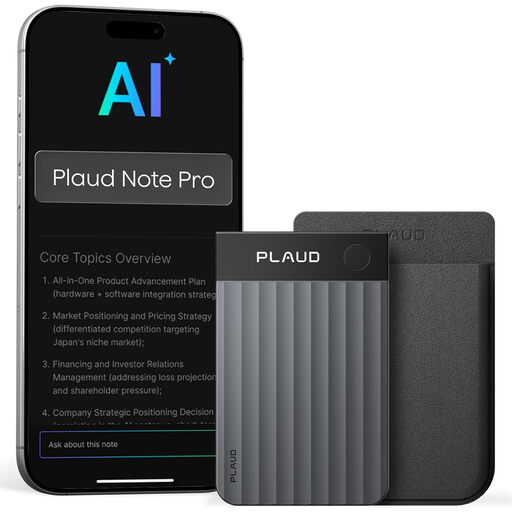
Plaud Note Pro AI Voice Recorder (Black)
An option if you want to record and save audio with the press of a button. The product information lists a microphone array, 32 GB of storage and app synchronisation.
View at Joybuy
 No image available
Rexsun L357 digital voice recorder (128GB)
An option if you want to replay your practice recordings repeatedly. The product information lists A-B repeat, fast-forward and rewind, one-touch recording, and WAV and MP3 formats.
The product title mentions an LCD screen and a noise-reduction feature; this does not guarantee that fan noise will be eliminated.
View at Joybuy
 No image available
notta 32GB AI Voice Recorder with Case
An option if you want to listen back to recordings straight away. The product information lists included headphones, one-touch recording and WAV recording.
The features listed also include voice-activated recording and file transfer via USB-C.
View at Joybuy
Frequently asked questions
Will a 32-bit float recording remove the sound of my fan?
No. 32-bit float is not proof of noise reduction. If possible, turn the fan down or move the microphone closer to your mouth, then assess the results with a test recording.
Where should I place the recorder for a short pronunciation practice session?
Start with a test recording close to the speaker, then compare it with one made from your usual position. For the Zoom H1essential, the manual also recommends keeping the recorder away from a table surface, for example by using a tripod, to reduce unwanted reflections.
Should I buy a memory card straight away?
It depends on the model. The Zoom H1essential uses microSD storage; according to Philips, the Philips VoiceTracer DVT4110 has 8 GB of built-in memory. Check which accessories are included with the version you choose.
What are my rights when buying a recorder online in the Netherlands?
Online purchases generally come with a statutory cooling-off period. ACM ConsuWijzer says this usually ends 14 days after delivery, subject to legal exceptions. Your statutory rights are separate from the manufacturer’s warranty; if a product is faulty, contact the seller.
Can I share a pronunciation practice recording that includes other audible voices?
The Dutch Data Protection Authority (Autoriteit Persoonsgegevens) notes that the GDPR includes an exemption for processing personal data solely for personal or household use. Don’t assume this exemption applies to wider sharing or publication. Consider the purpose and the voices in the recording before sharing it.


