
Pronunciation learner who listens back often
Records short clips and wants to listen to sounds or sentences again easily. Sony lists A-B repeat and adjustable playback speed for the ICD-UX570.


For short pronunciation exercises that you want to listen back to straight away, simple playback features are often more important than extensive studio functions. A handheld recorder is a better choice if you want to position the microphone deliberately or use the recorder as a USB microphone; check that the exact model supports this feature. Make a test recording in your own space: a different recording format will not prevent echo or reflections from a tabletop.
Records short clips and wants to listen to sounds or sentences again easily. Sony lists A-B repeat and adjustable playback speed for the ICD-UX570.
Wants to compare recordings, so considers not only the recording format but also microphone placement and reflections in the room. Zoom warns that placing the H1essential directly on a table can cause reflections.
Wants to transfer files or use a recorder as a USB microphone. Check which connections and workflows each model supports; Tascam lists a USB-C audio interface for the DR-05XP.
First, decide how you want to use your recordings: replaying clips straight away, recording independently or working with audio software. That choice determines which playback and connection features matter for your practice.
Choose this when: you want to record short exercises independently and listen back to the same passage straight away.
Consider: don't assume it has USB audio features without checking the exact model.
Choose this when: you want to position the microphone deliberately or use the recorder as a USB microphone.
Consider: placement, storage and power all need thought; reflections from a table can reduce recording clarity with the Zoom H1essential.
| Consideration | What to look for | Who it matters more to |
|---|---|---|
| Clear voice recording | Make a test recording in your usual spot and pay attention to how the recorder is positioned in relation to a tabletop. | If I want to assess subtle sounds, I need to know what the recording sounds like in my own space. Around 36% of consumers prioritise clear voice recordings. |
| Repeating clips | Check whether the exact model has A-B repeat and adjustable playback speed. | If I want to practise the same sentence repeatedly, I need to be able to listen back to that passage easily. Around 29% of consumers prioritise replaying clips. |
| Recording independently | Compare built-in memory with recording to a memory card, and check how the model is powered. | If I want to record without a computer, I need to be able to use the recorder on its own. Around 21% of consumers prioritise recording directly and independently. |
| Computer workflow | Check whether the exact model has the USB audio feature you need and whether its recording format works with your software. | If I want to record or edit exercises on a computer, I need to know whether the recorder fits into my workflow. Around 14% of consumers prioritise computer use. |
A more advanced recording format will not remove reflections in the room. Zoom warns that reflections from a table can reduce recording clarity with the H1essential.
First, make a test recording with the microphone in a different position and assess the result before comparing recording features.
Transferring files and recording directly into audio software are different features. Zoom and Tascam list USB audio features for the H1essential and DR-05XP.
Check the USB function on the exact model and make sure it suits the way you want to record.
According to their manufacturers, the Sony ICD-UX570 and OM SYSTEM LS-P5 have internal memory; storage options vary by model.
Before buying, check the storage method, power supply and what is included with the exact version.
The ICD-UX570 is worth considering for short speaking exercises that you listen back to frequently.
The H1essential is a handheld recorder for anyone looking to combine built-in microphones and flexible placement with USB microphone use.
The DR-05XP is worth considering if you want to record independently and also work with audio software via USB-C.
The LS-P5 is a standalone PCM recorder for anyone looking for built-in storage and additional control options.
These products are portable voice recorders for recording at home, listening back and, where relevant, working with transcripts. Check that each model's features suit your practice routine.
 No image available
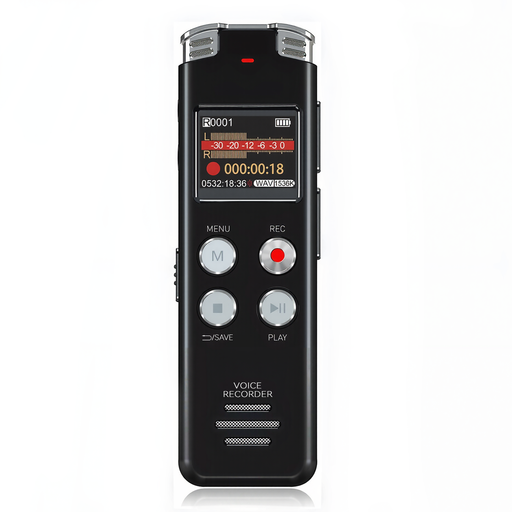
Suitable for short exercises that you want to record independently and listen back to selectively.
The product description lists MP3 and WAV recording, A-B repeat and file transfer via USB-C.
 No image available
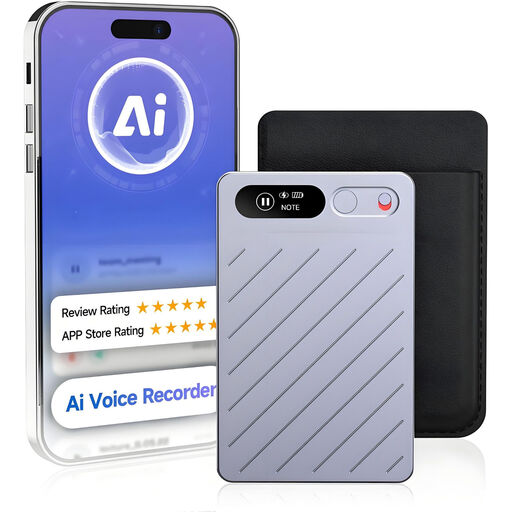
A good option if you also want to work with recordings as text.
The product title lists transcription and summaries in 118 languages.
 No image available
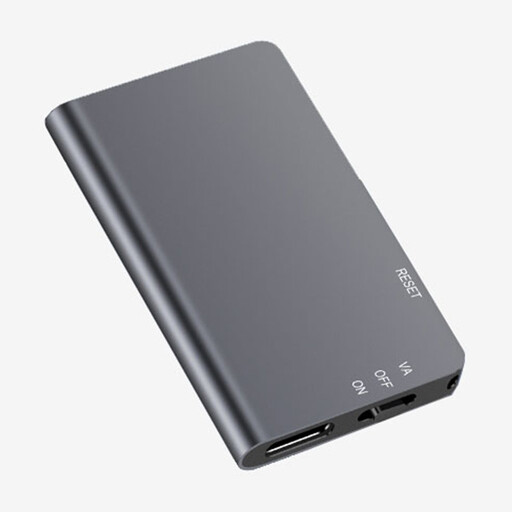
Suitable for recording independently and listening back straight away without a computer.
The product description lists WAV recording, voice activation, file transfer via USB-C and playback with the included headphones.
 No image available
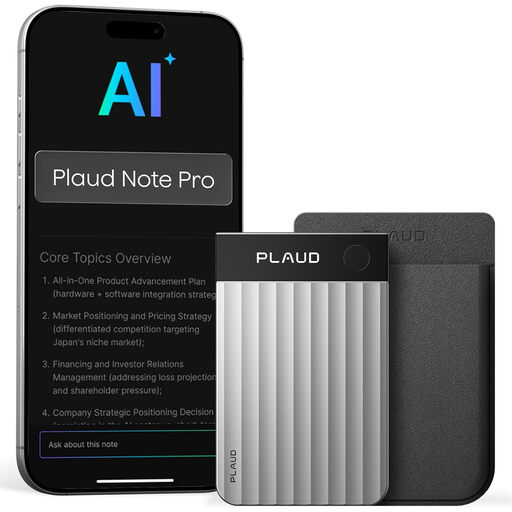
A good option if you want to use transcription and summaries as well as recording.
The product description lists 32 GB of internal storage.
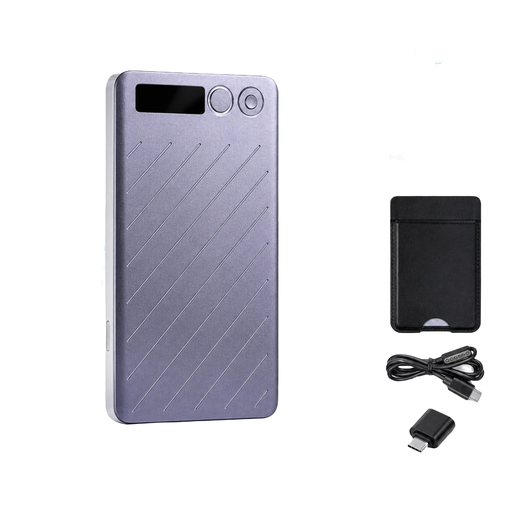 No image available
A good option if you want to work with your recordings as text later.
The product title lists 64 GB of storage and a transcription function.
A-B repeat lets you replay a specific clip; Sony lists this feature for the ICD-UX570. Also check whether the playback speed is adjustable if you want to listen to a passage differently.
First, make a test recording and compare different positions. The manufacturer warns that placing the Zoom H1essential directly on a table can cause reflections; a stand may be an alternative.
No. According to ACM ConsuWijzer, statutory rights also apply in the Netherlands: a product must meet what you could reasonably expect from it under normal use. The retailer is your point of contact, and there is no fixed two-year term for statutory rights.
According to the Dutch Data Protection Authority, processing personal data solely for personal or household use falls outside the GDPR. If you share identifiable recordings of others outside your private life or use them for an organisation, check separately which privacy rules apply.