
Speakers recording long takes
You want to record a complete presentation without interruption. Compare power, available storage and recording format together.


For a long spoken museum presentation, a voice recorder with playback features for revisiting specific passages is a sensible choice. A handheld audio recorder is a better fit if you also want to experiment with microphone placement or an external microphone. Before buying, check the power supply and storage available for the recording format you want to use, and how easy it is to find your recordings. The features mentioned are manufacturer specifications, not independent measurements of how clearly speech can be heard in a museum gallery.
You want to record a complete presentation without interruption. Compare power, available storage and recording format together.
You want to listen back to your sentences and pacing. Sony Netherlands lists A-B repeat and speed control for the ICD-UX570; OM SYSTEM lists language-learning features for the WS-883.
You want to experiment with distance and microphone position. Zoom and Tascam list an external microphone input on their handheld models.
Choose this option: if you mainly want to record spoken takes and listen back to specific passages.
Bear in mind: playback features vary by model; check that it has the repeat and search functions you want.
Choose this option: if you want to try different microphone positions or use a compatible external microphone.
Bear in mind: a microphone input or 32-bit float recording does not guarantee that speech will be clear at every distance.
| What to consider | What to check before buying | Who this matters most to |
|---|---|---|
| Recording a long take | Compare the stated battery life and available recording time using the same recording format; also check how much storage you need. | I want to record my entire presentation in one session so I can assess its structure. Around 33% of consumers make uninterrupted recording their top priority. |
| Recording your voice clearly | Make a test recording in the intended location; check the input and connection if you plan to use an external microphone. | I want to hear how my voice sounds from the spot where I’ll be practising, even if the distance from the recorder changes. Around 27% of consumers prioritise clear speech where they practise. |
| Listening back to specific passages | Check whether the exact model has A-B repeat, speed control or date-based search. | I want to listen to sentences and transitions again without having to play the whole recording each time. Around 20% of consumers prioritise focused playback. |
| Getting started and transferring files easily | Check the controls and USB transfer; see whether using an app is optional for the way you work. | I want to start rehearsing quickly and transfer my recording easily afterwards. Around 20% of consumers make ease of use their top priority. |
Storage and power are separate limits. Available recording time can also depend on the format and recording settings you choose.
Compare battery life and recording time separately, using the format you actually plan to record in.
Zoom and Tascam list 32-bit float recording and microphone inputs, but these features do not show that your voice will be recorded clearly from every position.
First test the microphone position where you’ll be practising, then check whether you need a compatible external microphone.
Recording features and features for finding a particular passage are separate considerations when buying.
Check whether the exact model lets you repeat sentences, adjust playback speed or find recordings.
The ICD-UX570 is a voice recorder for focused playback of specific passages.
The WS-883 combines voice recording with playback and language-learning features.
The VoiceTracer DVT4115 could suit you if you want a fixed position and app-based controls.
The H1essential is a handheld alternative that lets you explore different microphone positions.
The DR-05XP is a handheld recorder for spoken recordings, with a choice of recording formats.
These Joybuy picks are designed for spoken recordings and could suit a portable rehearsal set-up. For each model, check that its features and stated recording time fit the way you plan to record and listen back.
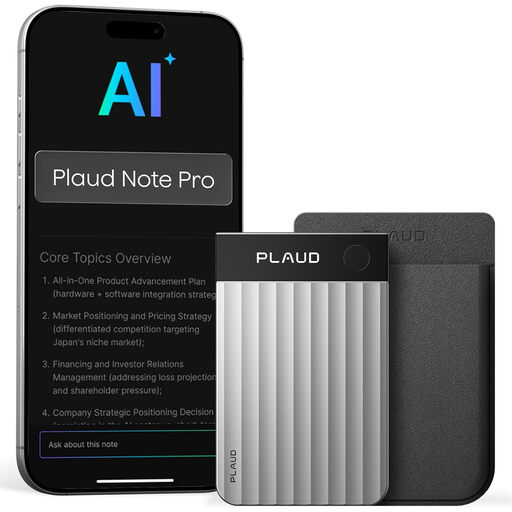 No image available
Could suit you if you also want to process a spoken recording using transcription and summarisation features.
The product description lists 32 GB of storage and transcription and summarisation features.
 No image available
Could suit you if you want to record a spoken rehearsal and then process it using transcription or summarisation features.
The product description lists 64 GB of storage and a maximum stated battery life of 36 hours; this is not guaranteed for every setting.
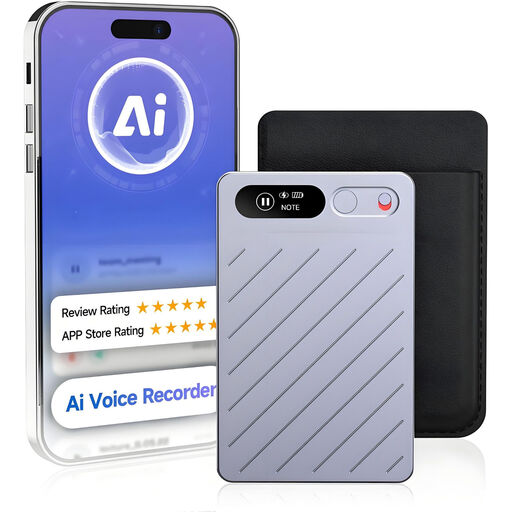 No image available
Could suit you if you want to combine portable recording with features for processing your recording later.
The product description lists 64 GB of storage and transcription and summarisation features.
 No image available
Could suit you if you want to find and repeat specific passages while practising.
The product description lists 128 GB of storage, up to 35 hours of continuous recording and A-B repeat.
 No image available
Could suit you if you want to play back a recording using the supplied headphones.
The product description lists 64 GB of storage, up to 22 hours of continuous recording, WAV recording and voice activation.
Before you rehearse, check the power supply and available storage, then make a test recording for the intended length of time. A manufacturer’s maximum battery or storage figure does not automatically apply to every setting.
Transfer the files and make a backup before clearing the memory or resetting the device. Philips warns that a factory reset on the DVT4115 deletes recordings; OM SYSTEM lists built-in USB transfer for the WS-883.
Contact the seller. According to the Dutch government, the seller must provide a solution if there is a problem with a product; there is no fixed statutory guarantee period covering all products in the Netherlands.
A sound recording in which someone can be identified may count as personal data. The Dutch Data Protection Authority distinguishes between purely personal or household use and processing that requires a lawful basis under the GDPR. Ask the museum about the rules for the specific space and intended use; if in doubt, record only yourself.