
Interviewers speaking to two people
If you’re sitting at a table with someone you’re interviewing, you’ll want to hear both voices clearly. Sprekende Geschiedenis recommends paying attention to the distance and positioning of the microphones.


Start with the set-up: choose a recorder you can place between the speakers and close enough to both, then check the sound with a short test recording. A simple voice recorder is a good fit if you mainly want to record and listen back; a handheld recorder is worth considering if you want extra recording options or an external microphone input. Then check that the recording format, storage and power supply suit the length of your interview and your archiving plans.
If you’re sitting at a table with someone you’re interviewing, you’ll want to hear both voices clearly. Sprekende Geschiedenis recommends paying attention to the distance and positioning of the microphones.
If you’re recording memories for future use, you’ll want to keep the original audio file. Sprekende Geschiedenis distinguishes between an original source file and a version adapted for publication.
If you mainly want to record quickly and listen back, ease of use and checking the recording during the conversation are practical considerations. Choose features you’ll actually use.
First check that both speakers can be heard clearly. Then compare the file storage and features with the way you record and archive interviews.
| What to consider | What should you check? | Who is this important for? |
|---|---|---|
| Both voices are clear | Check the microphone positioning and make a short test recording from both seats. Listen back using headphones. | If I want to record both people clearly at the same table, I’ll focus on distance and positioning. Around 33% of consumers prioritise being able to hear both voices clearly. |
| Keeping the original file | Check whether the model can record in WAV/PCM, how much storage is available and how you can transfer the original file. | If I want to reuse or edit local memories later, I’ll want to keep the original file. Around 27% of consumers make archiving their top priority. |
| Easy recording and playback | Before the interview, try the record button, recording indicator and playback controls. | If I want to get started without complicated preparation and check the recording straight away, I prefer simple controls. Around 20% of consumers prioritise this. |
| Interview length and power | Check the available storage and power supply for the format you’ve chosen and the intended recording length. See whether you’ll need a memory card or spare batteries. | If I want to record a long conversation without interruption, I’ll check the power supply and available space in advance. Around 20% of consumers prioritise uninterrupted recording. |
A recording format is no substitute for keeping the microphones close or checking the sound. An interview that’s difficult to hear may mean extra work later to make sense of it or transcribe it.
Make a test recording before the conversation and listen back from both seats.
How much storage you need depends on the recording format you choose. The maximum recording time quoted by Philips does not automatically apply to WAV recordings.
Check the remaining recording time on the device using the format you plan to record in.
Long recordings in a larger file format may need extra storage.
Keeping an interview and making it available later are different purposes. An agreement to keep a recording does not automatically mean that publication has been agreed.
Agree with the interviewee how the recording will be kept and whether it may be made available, and under what conditions.
The DR-05XP is a handheld recorder worth comparing if you’re looking for built-in omnidirectional microphones, several recording formats and an external microphone input.
The H1essential is a handheld recorder worth comparing if you want to use X/Y microphones, headphone monitoring and a lavalier microphone input.
The VoiceTracer DVT4115 is worth considering if you’re looking for a voice recorder with built-in storage and a choice of MP3 or PCM/WAV.
The ICD-UX570 series is worth considering if you’re comparing compact voice recorders for recording and playback.
This selection focuses on digital voice recorders for interviews.
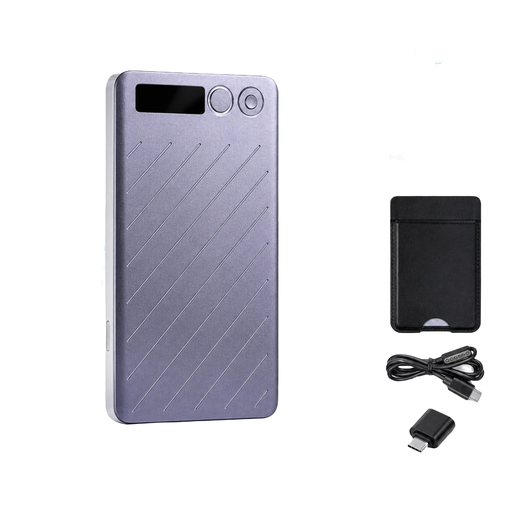 No image available
Worth a look if you’re looking for a digital voice recorder for interviews.
The product name lists 64 GB and a transcription function.
If you’re using the built-in microphones, place the recorder between the speakers and close enough to both. Sprekende Geschiedenis recommends making a short test recording; listen back to check how clearly both voices come through.
Keep the original source file. Sprekende Geschiedenis recommends WAV or BWF for an audio archive file; keep a version adapted for publication separate from it.
Don’t assume that you can. According to the Dutch Data Protection Authority, consent is required in most cases to publish personal data online; the regulator also describes a limited exception for purely personal or household use. Agree in advance what has been decided about making the recording available.
According to ACM ConsuWijzer, the seller is responsible for the statutory guarantee if a product is faulty. With normal use, you may be entitled to a free solution, such as a repair or replacement; a manufacturer’s guarantee does not replace this right.