Start with a quiet spot and a microphone close enough to your voice: Shure says a microphone cannot effectively separate direct speech from room reverberation. For recording on your own, a recorder with built-in microphones may be sufficient; extra inputs are mainly useful if you want to use a suitable external microphone. Before choosing, record a soft passage and a powerful one, then listen back to both.
Who is this buying guide for?
Speaker with an expressive voice
You’re recording a gallery label with soft and powerful passages and want to listen back to both. Zoom and Tascam describe models with 32-bit float recording; also check the microphone placement, as the recording format won’t remove reverberation.
Speaker without a quiet studio
You need to find a suitable spot and microphone distance before extra recording features can make much difference. Shure explains that a microphone cannot effectively separate direct speech from reverberation.
Creator of multiple audio labels
You record passages again, listen back and transfer files for editing. Sony lists linear PCM and 4 GB of internal memory for the ICD-UX570 series; Philips lists PCM-WAV and 8 GB of internal memory for the VoiceTracer DVT4115.
What should you consider when choosing?
First, choose a recording space and microphone setup that capture your voice clearly. Then decide whether you need internal memory, an external microphone or extra connections.
| Consideration |
What to look for |
Who is this important for? |
| Soft and powerful passages |
Compare the model’s recording settings and test a soft and a powerful sentence. A recording format is no substitute for good placement. |
If I want to assess both extremes of my delivery naturally, I look at the recording settings and make a test recording. Around 29% of consumers give vocal variation top priority. |
| Clarity in the room |
Test the microphone distance in the intended space and listen to both your voice and the reverberation. |
When I can’t record in a quiet studio, I first want to know whether my voice will be clear in the space available. Around 29% of consumers prioritise clarity in the room. |
| Managing recordings |
Check the file format, storage, transfer options and what’s included in the package you’re considering. |
When recording multiple audio labels, I want to be able to listen back to takes, save them and transfer them for editing. Around 24% of consumers consider recording management their main priority. |
| Using a different microphone |
Check the input type, power requirements and number of separate inputs. |
If I want to use a specific external microphone, I want to know in advance whether it will connect to the recorder. Around 18% of consumers put expandability first. |
Common pitfalls
-
Assuming 32-bit float will fix a reverberant room
A recording format won’t change the acoustics. A microphone cannot effectively separate direct speech from reverberation.
Make a short test recording in the intended space, with the microphone closer to your voice, and listen back before recording the full text.
An unsuitable space or setup could mean having to record a passage again.
-
Assuming storage and power are always included
The Dutch listings checked for the Zoom H1essential and Tascam DR-05XP don’t list a memory card or batteries as included. This doesn’t necessarily apply to other sales packages.
Before ordering, check what’s included in the exact package and which storage media the model supports.
You may need to buy a suitable memory card or batteries separately.
-
Choosing a microphone based on the input alone
A 3.5mm input and an XLR/TRS input with phantom power offer different connection options.
Check the input and power requirements of your chosen microphone and make sure they match the recorder.
An incompatible microphone, cable or power supply may mean you need a different setup.
Brands to consider
Zoom
The H1essential is a compact recorder with built-in X/Y microphones; the H4essential adds XLR/TRS inputs for external microphones.
- Zoom lists 32-bit float WAV and a 3.5mm microphone/line input for the H1essential. The H4essential has four tracks and phantom power for its XLR/TRS inputs.
- Check which input type is suitable for your microphone. Extra recording features won’t remove room reverberation.
Tascam
The DR-05XP is a standalone handheld recorder with built-in omnidirectional microphones, for use in a carefully chosen recording space.
- Tascam lists 32-bit float recording, a range of WAV settings and use as a USB-C audio interface.
- Check whether a memory card and AA batteries are included in each sales package.
Sony
The ICD-UX570 series is a compact voice recorder with internal memory and a direct USB connection.
- Sony lists linear PCM and 4 GB of internal memory for this series.
- Sony’s claims about background noise relate to the manufacturer’s recording features; they aren’t based on an independent test in a gallery.
Philips VoiceTracer
The DVT4115 combines internal memory with PCM-WAV for anyone who wants to get started without a separate memory card.
- The product information lists 8 GB of internal memory, MP3 and PCM, and a rechargeable battery.
- Assess the recording quality in your own recording space; a product claim about microphone quality isn’t an independent test.
RØDE
The Interview PRO is a handheld microphone with standalone recording, for anyone who wants to hold the microphone while recording.
- RØDE states that the microphone can record on its own.
- According to RØDE, wireless transmission requires a compatible Series IV receiver or another compatible product; standalone recording doesn’t require a receiver.
Voice recorders on Joybuy
This selection on Joybuy features digital voice recorders for recording and listening back to spoken texts; some product names also mention transcription.
 No image available
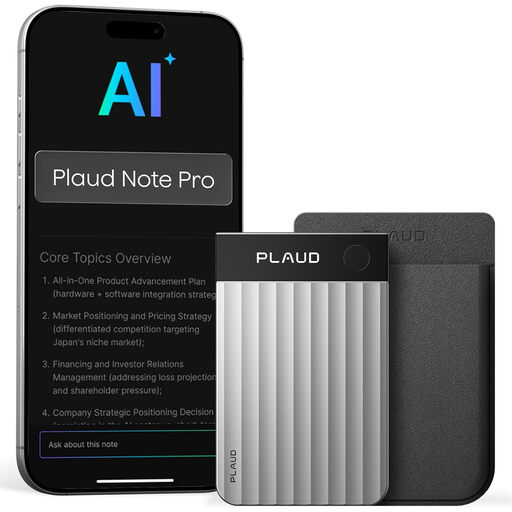
Plaud Note Pro AI voice recorder, silver
The product name positions this model for voice notes and summaries; check that the features listed suit the way you work on a gallery label.
Joybuy
 No image available
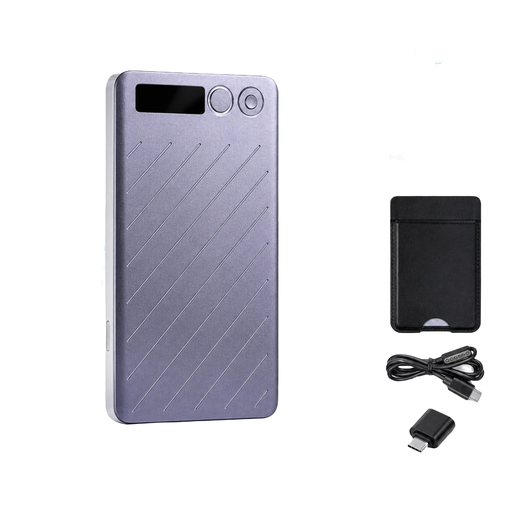
Digital voice recorder, 64 GB, with transcription feature
The product name lists 64 GB and a transcription feature; before buying, check which languages it supports and how it works with your text.
Joybuy
 No image available
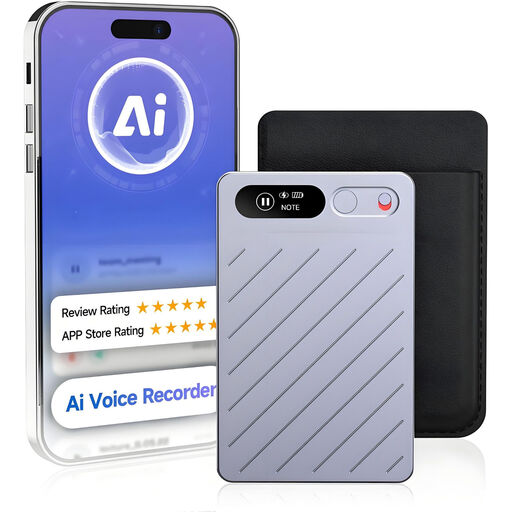
Mini AI voice recorder, 64 GB, with transcription and summary
The product name lists 64 GB, with transcription and summaries in 118 languages. Check that the features and languages listed suit your recording and editing process.
Joybuy
 No image available
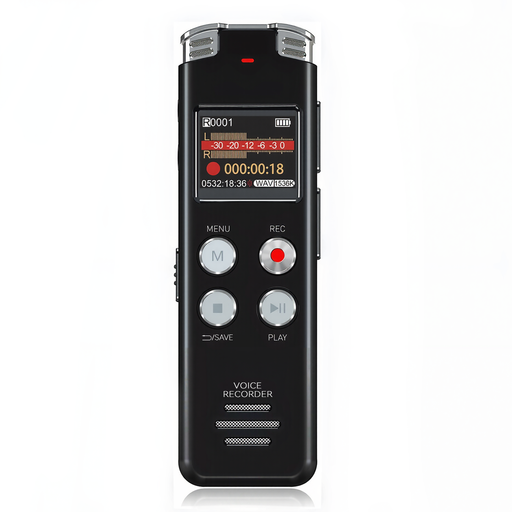
Rexsun L357 portable digital voice recorder, 128 GB
The product name describes a portable digital voice recorder with 128 GB. It may suit you if you want to save and listen back to passages; check that the file format and transfer options work for your editing process.
Joybuy
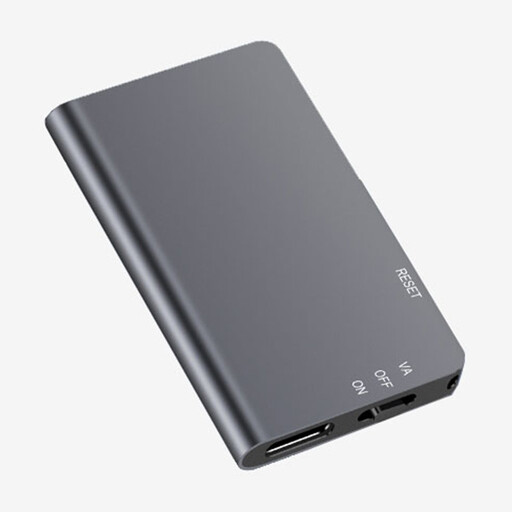 No image available
Rexsun L810 digital voice recorder, 64 GB, with one-touch recording
The product name lists 64 GB and one-touch recording. Check which recording settings and transfer options are available for the way you work.
Joybuy
Frequently asked questions
What should I test before recording a full gallery label?
Record a short soft passage and a powerful one in the intended space, then listen back for clarity, reverberation and distracting sounds. A microphone can’t improve the room’s acoustics.
Can I connect an external condenser microphone to any recorder?
No. Check the input and power requirements of the specific microphone. The Zoom H4essential provides phantom power through its XLR/TRS inputs; the Zoom H1essential has a 3.5mm microphone/line input. Don’t assume a microphone is compatible just because the recorder has a microphone input.
What extra equipment do I need to get started?
It depends on the model and sales package. In the Dutch listing checked for the Zoom H1essential, the microSD card and AAA batteries aren’t included; the Tascam DR-05XP listing also says that the memory card and AA batteries aren’t included. Check the contents of the specific order.
Can I include recognisable voices of other people in a published gallery label?
First consider whether you’re processing other people’s personal data and what legal basis applies. The Dutch Data Protection Authority says organisations need a valid reason to process personal data and that consent is required in most cases to publish personal data online.
Do I have a cooling-off period for an online purchase?
For distance purchases from a business, you generally have 14 days to change your mind, according to the Dutch Government. There are exceptions, so check the terms that apply to your specific purchase.


