
Speaker next to a fan
You want the appeal to remain clear while the fan is on. You may still be able to adjust the microphone position or the sound source.


If the fan has to stay on, choose a set-up that keeps the microphone close to the speaker; a recorder placed further away won’t remove background noise by itself. A lavalier microphone is suitable for a speaker who is moving, while a handheld recorder can work if you can place it close to a speaker who is staying in one spot. Make a test recording in the room and check the storage, power supply and permission to use identifiable voices.
You want the appeal to remain clear while the fan is on. You may still be able to adjust the microphone position or the sound source.
You’re speaking while walking or moving in shot, and want to keep the microphone close to your voice without holding a handheld recorder.
You want to keep set-up to a minimum and be able to find a usable file easily afterwards.
Choose this option when: one speaker is moving and can wear the microphone on their clothing. Zoom describes the F2 as a recorder supplied with a lavalier microphone.
Bear in mind: attachment, contact with clothing, power and transferring the file. 32-bit float recording won’t prevent fan noise.
Choose this option when: the speaker stays in one spot and you can place the recorder close to their voice. The Zoom H1essential and Tascam DR-05XP also have an input for a compatible external microphone.
Bear in mind: built-in microphones also pick up sound from the room. A low-cut filter reduces low frequencies, but not all fan noise.
Choose this option when: recording independently and storing files are important, and a test recording at your chosen distance sounds clear.
Bear in mind: a feature called ‘Noise Cut’ doesn’t tell you how much fan noise will remain in your room.
Choose this option when: you’re filming the appeal, the speaker is moving or you want to record two speakers separately. The RØDE Wireless PRO transmitters can record locally.
Bear in mind: this involves more equipment than a standalone recorder. According to the RØDE manual, 32-bit float applies to recordings on the transmitters; it doesn’t automatically apply to the audio captured by a connected camera.
Start by placing the microphone as close to the speaker as possible, then compare a short recording with the fan set to its usual speed.
| What to consider | What to look for when buying | Who is this important for? |
|---|---|---|
| Clear speech | Compare a test recording at the intended distance with one made close to the speaker. If you’re using an external microphone, also check the connection and power requirements. | If the fan has to stay on, I want the voice to be easy to follow and I can move the microphone closer. Clear speech is the top priority for around 36% of consumers. |
| Freedom of movement | Test the microphone with the clothing you’ll be wearing and check how to start and transfer local recordings. | When I’m moving during the appeal, I want to keep the microphone close to my voice without holding a recorder. Around 29% of consumers give freedom of movement the highest priority. |
| Capturing the recording | Check the storage and power requirements, confirm the recording status and play back a short test file. | I want to know before the appeal that storage and power are ready and that the file has been recorded. Recording reliability is the top priority for around 21% of consumers. |
| Ease of use | Run through the whole process beforehand: starting, stopping, playing back and transferring the file. | If I have little time to work out the settings, I want to keep recording and finding files simple. Ease of use is the top priority for around 14% of consumers. |
This recording format won’t automatically make the speaker’s voice easier to distinguish from a fan. Shure recommends improving the balance between the sound you want and background noise by placing the microphone close to the speaker.
First, compare microphone positions with a test recording. Then decide whether the recording format will be useful for your post-production.
A low-cut filter reduces low frequencies; a feature name such as ‘Noise Cut’ doesn’t tell you how much fan noise will remain in your room.
Test with the fan set to its usual speed and listen to both the background noise and the sound of the speaker’s voice.
Missing or unsuitable storage, insufficient power or a recording that hasn’t started properly can make the session unusable.
Check that the required storage and power are available, then play back a test file from the same device before the appeal.
Depending on the model and package, you may need a compatible memory card, batteries or a suitable external microphone.
These brands and product ranges suit different recording set-ups; their inclusion doesn’t mean every model is available.
The F2 is a portable recorder supplied with a lavalier microphone; the H1essential is a handheld recorder with built-in microphones and an input for an external microphone.
The DR-05XP is a handheld recorder with built-in microphones and a connection for a compatible external microphone.
The ICD-UX570 is a compact voice recorder for anyone who values internal memory and standalone recording.
The Wireless PRO is a wireless set with local recording on both transmitters, for example, for filming or recording two speakers.
The DVT4115 is a standalone recorder with internal memory and app control, designed for anyone who wants to store and share files.
These product options are intended for recording speech with a portable recorder or wireless microphone. Check the microphone placement and make a test recording in the room where you plan to record the appeal.
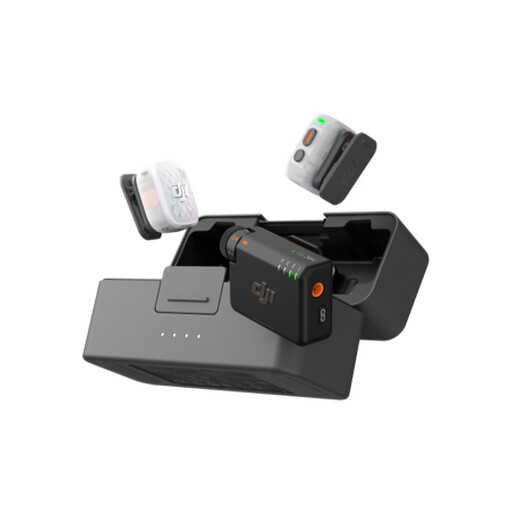 Image unavailable
Could suit a speaker on the move who wants to attach the microphone to their clothing.
The product title lists 2 TX, 1 RX and a charging case. The product description mentions internal recording; test the speaker’s voice and fan noise with your intended set-up.
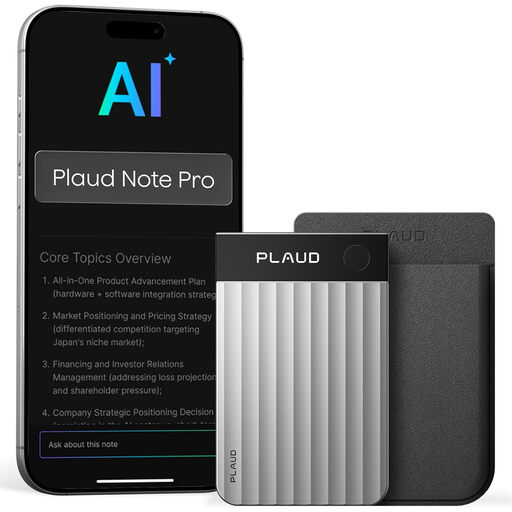 Image unavailable
Could suit you if you want to process text as well as make a recording.
The product information lists 32 GB of built-in storage and transcription and summary features. Check that this workflow suits the way you plan to process the appeal.
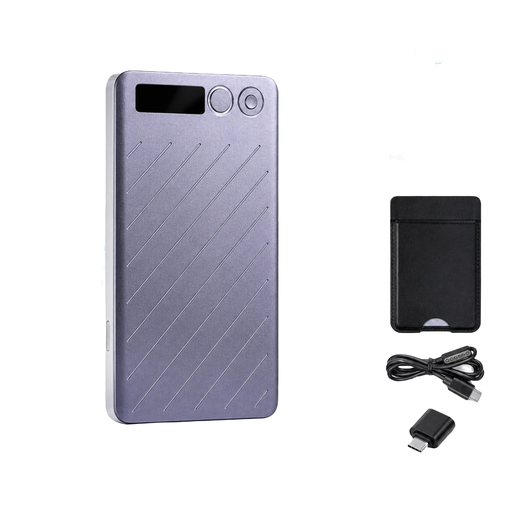 Image unavailable
Could suit you if you want to record speech and use a transcription feature as well.
The product title lists 64 GB and a transcription feature. Assess speech clarity with a test recording next to the fan.
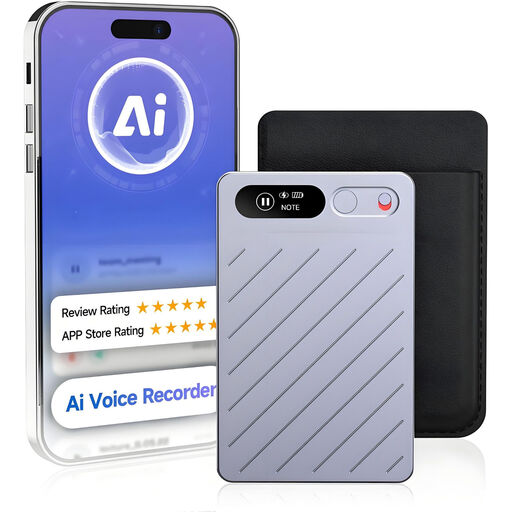 Image unavailable
Could suit you if you also want to transcribe and summarise recorded speech.
The product title lists 64 GB, transcription and summaries. Make a test recording to assess how clearly you can hear the speaker in your room.
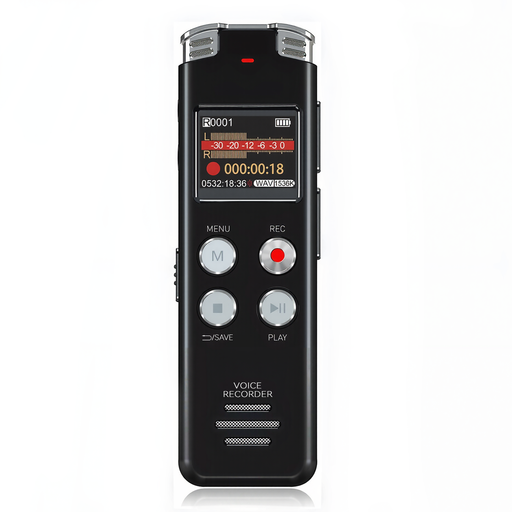 Image unavailable
Could suit you if you want to record independently and play back or transfer files later.
The product title lists 128 GB and an LCD screen; the product description mentions USB-C file transfer. Test recording and playback in your intended location beforehand.
A low-cut filter reduces low frequencies, including those that may be part of the speaker’s voice. Make a test recording to judge whether it makes the fan sufficiently quieter in your room; recording closer to the speaker or turning the fan down is still important.
Position the microphone as you would for the actual recording, check the power and storage, record a short clip and play it back. For the Zoom H1essential, the manual explains how to insert and test a compatible microSD card.
Not necessarily. According to the Dutch government, consumer purchases in the Netherlands are covered by a legal guarantee, and the seller is your point of contact if there’s a problem with the product. Compare any extended warranty with the rights you already have and check what additional cover it provides.
Don’t assume that you can. According to the Dutch Data Protection Authority, a sound recording in which someone is identifiable may be personal data; an organisation needs a lawful basis under the GDPR to process it. The regulator says that consent is required in most cases to publish something online, although exceptions depend on the circumstances. The applicable lawful basis or exception depends on the recording, the participants and how it is published.