Who is this for?

Recording next to a fan

You want to record travel scripts clearly while a fan is still running. Shure explains how moving a microphone closer to the speaker can improve the balance between voice and background noise. A test recording can help you find the best position for your setup.

Recording on the go

You want to record independently and easily play back or transfer your files. According to Sony, the ICD-UX570 has built-in memory and supports PCM and MP3 recording. These features may be useful if you don't want to carry a full recording setup.

Making longer voice-overs

You want to edit longer recordings or connect an external microphone later. Check the recording format, power supply and connections that suit your microphone. According to Zoom, the H4essential has two XLR/TRS inputs.

What should you look for when buying?

Compact voice recorder with built-in storage

Best for: recording independently, playing back audio and transferring files without a separate memory card.

Bear in mind: automatic voice settings don't guarantee that fan noise will disappear.

Portable recorder with built-in microphones

Best for: a standalone recorder you can position close to yourself. The Zoom H1essential and Tascam DR-05XP offer 32-bit float recording.

Bear in mind: the recording format won't remove fan noise, and the built-in microphones will also pick up sound from the room.

Recorder with an external microphone input

Best for: positioning a microphone closer to your mouth than the recorder, for example by using a compatible lavalier microphone.

Bear in mind: the microphone and input need to be compatible, and extra equipment makes your setup less straightforward.

What to consider What should you check? Who is this important for?
Clear voice recording Make a test recording where you plan to record and compare the microphone's distance and direction. If I can't turn off the fan, I want to know whether my voice will come through clearly above the background noise. Around 36% of consumers rank fan noise as their main buying concern.
Easy recording on the go Check the controls, storage, playback and file transfer options. If I want to record scripts while I'm out and about, I want to be able to start quickly and play back or transfer my recording later. Around 29% of consumers prioritise easy, portable recording.
Editing and expandability Compare recording formats, storage, power supply and the exact type of microphone input. If I want to edit longer sections or connect a microphone later, I'll look at the recording format and compatible connections. Around 21% of consumers put editing and expandability first.
Components you'll need Check the storage requirements for each version and find out which microphone, cable or power supply you'll need. If I want to start recording straight away, I want to know in advance which components are compatible with my setup. Around 14% of consumers want to keep the number of additional components to a minimum.

Common buying mistakes

  • Assuming noise reduction guarantees a quiet recording

    A filter or automatic voice setting doesn't prove that fan noise will disappear where you plan to record. The microphone's distance and the room also affect what gets picked up.

    Make short recordings with the fan on and compare different microphone positions. Listen back to assess the effect of a filter.

  • Forgetting to check whether you need separate storage

    The Zoom H1essential requires a compatible microSD card. Without a suitable card, you won't be able to record as intended.

    Before you set off, check what storage your recorder needs and make a test recording at home.

  • Focusing only on the recording format

    A built-in omnidirectional microphone can pick up more sound from the room. The distance between the microphone and the speaker matters too.

    First decide where you can position the microphone, then check that the recorder has the input you need.

Brands to compare

Zoom

The H1essential is a compact recorder with a 3.5 mm microphone/line input, while the H4essential has two XLR/TRS inputs.

  • Zoom lists 32-bit float recording for both models; the H4essential offers more connection options.
  • 32-bit float recording isn't proof that fan noise will be reduced.
  • The H1essential requires a compatible microSD card.

Tascam

The DR-05XP has built-in omnidirectional microphones, an external mini-jack input and low-cut options.

  • Tascam lists 32-bit float recording and power from two AA batteries.
  • Built-in omnidirectional microphones also pick up ambient sound; these features aren't an independent test of fan noise.

Sony

The ICD-UX570 is a compact voice recorder with built-in memory and features for playing back and transferring recordings.

  • Sony lists 4 GB of built-in memory and PCM and MP3 recording.
  • Sony describes Auto Voice Recording as a way to adjust settings for voice recording. This doesn't prove that the feature will reduce fan noise enough in every location.

Philips VoiceTracer

The DVT4110 range gives you a choice of a directional zoom microphone or omnidirectional microphones, with PCM/WAV and MP3 recording.

  • The manual explains the choice of microphone types and a noise-cut setting.
  • The effect on a specific fan hasn't been independently established. Check the exact version: the manual covers several VoiceTracer models.

Joybuy products

This selection focuses on portable voice recorders for spoken content, with features for recording independently and storing your files. Features vary by model.
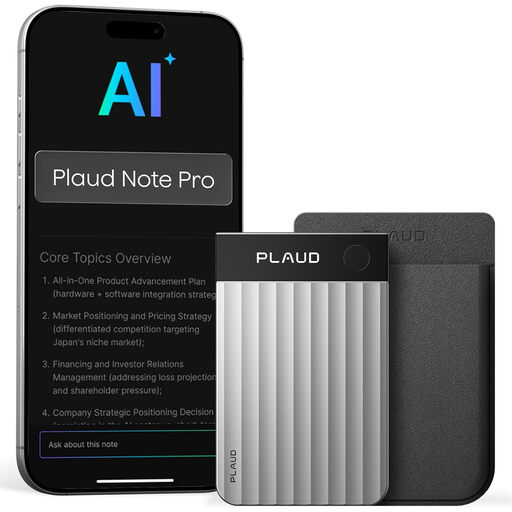
Plaud Note Pro AI Notes and Summary Voice Recorder, Silver

Plaud Note Pro AI Notes & Summary Voice Recorder (Silver)

The product description mentions one-button audio recording for use on the go.

32 GB of built-in storage.

Joybuy
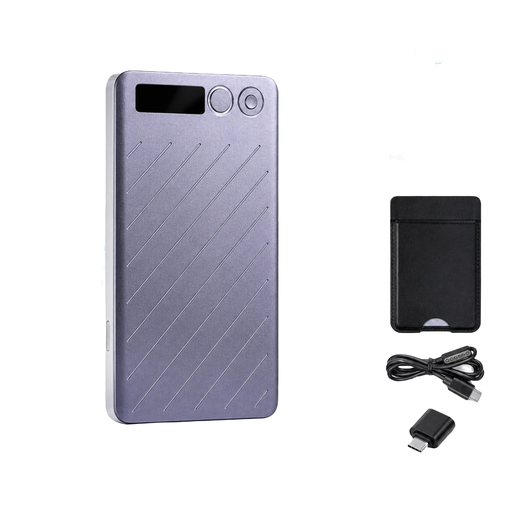
Digital Voice Recorder, 64 GB

Digital Voice Recorder, 64 GB

The product description mentions voice recording and transcription on a portable recorder.

64 GB of internal storage and a stated battery life of 36 hours.

The description mentions control via a Bluetooth app.

Joybuy
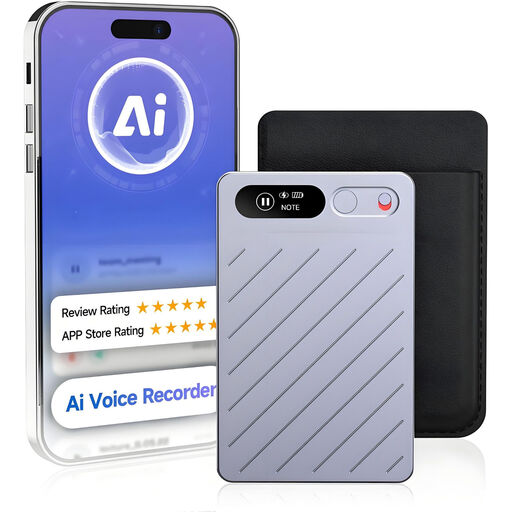
AI Dictation Device, 64 GB, Mini Voice Recorder

AI Dictation Device, 64 GB, Mini Voice Recorder

The product description mentions audio recording and speech-to-text conversion.

64 GB of internal storage.

Joybuy
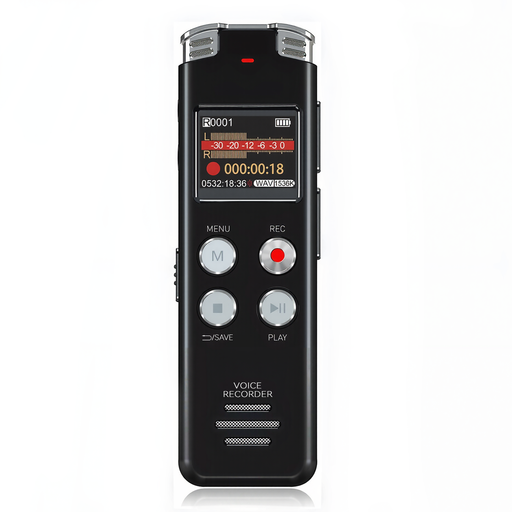
Rexsun L357 Portable Digital Voice Recorder, 128 GB

Rexsun L357 Portable Digital Voice Recorder, 128 GB

The description mentions one-button operation and playback features.

128 GB of storage and MP3 and WAV recording.

The product description mentions file transfer via USB-C.

Joybuy
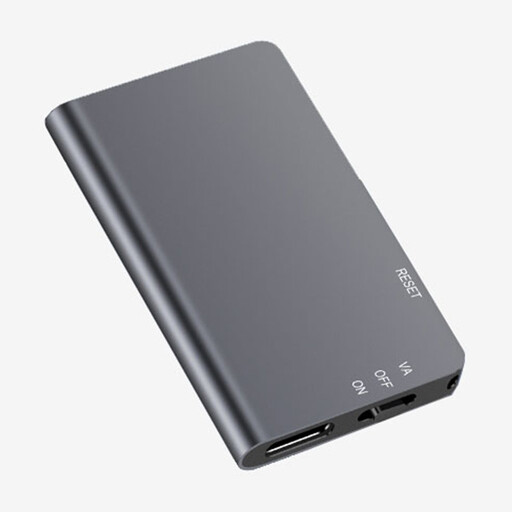
Rexsun L810 Digital Voice Recorder, 64 GB

Rexsun L810 Digital Voice Recorder, 64 GB

The product description mentions one-button recording and playback through the supplied headphones.

64 GB of built-in storage and WAV recording.

The description mentions file transfer via USB-C.

Joybuy

Frequently asked questions

Does 32-bit float recording remove fan noise?

No. 32-bit float recording is about capturing and editing sound levels, not separating your voice from the fan. Turn down the noise source where possible, and make a test recording with the microphone closer to your mouth.

What should you check before recording a long chapter?

Check storage and power, record a short section and listen back with the fan set to its usual speed. The Zoom H1essential requires a compatible microSD card; according to Sony, the ICD-UX570 has built-in memory.

Who can help if a recorder bought in the Netherlands breaks too soon during normal use?

According to ACM ConsuWijzer, the seller is responsible under the legal guarantee if the product doesn't perform as you could reasonably expect. Depending on the situation, this may mean a free repair, replacement or refund. A manufacturer's guarantee doesn't replace this right.

Can you use recognisable voices of other people in a published travel guide recording?

A sound recording in which someone is recognisable may contain personal data. Under the GDPR, you need an applicable legal basis to publish other people's personal data. The Dutch Data Protection Authority states that consent is required in most cases. Whether a background voice is recognisable and which legal basis applies depends on the recording and how it's used.
