
Practising with fan noise
You want to assess your voice while the fan is running. Microphone placement and the limits of a noise filter are important here.


Start by positioning the microphone and making a test recording with the fan running. Only then consider a low-cut filter or other noise features. For pronunciation and transitions between languages, easy playback controls matter. If your speaking volume varies, also consider the recording format and level control. None of these features guarantees that fan noise will disappear.
You want to assess your voice while the fan is running. Microphone placement and the limits of a noise filter are important here.
You listen to passages in both languages repeatedly and want to find words or transitions quickly. Sony describes Easy Search on the ICD-UX570, which lets you skip short sections.
You practise quieter and more emphatic passages and want to see how your recording handles them. Zoom and Tascam describe 32-bit float recording for their respective models; this does not remove fan noise.
Start with a test recording where you practise. Then decide whether playback controls, changing speaking volume or storage matters most to you.
| Concern | What should you look for? | Who is this important for? |
|---|---|---|
| Keeping your voice clear | Make a test recording with the fan running and compare different microphone positions, with and without any available noise feature. OM SYSTEM describes a low-cut filter on the WS-883 for sounds below 300 Hz; Philips describes adjustable microphone sensitivity. | If I practise my speech with the fan on, I want to hear my articulation without relying on a single filter. Around 36% of consumers prioritise keeping their voice clear over fan noise. |
| Listening back to passages | Check how to replay a passage and whether the feature you need is available on the exact model. Sony describes Easy Search on the ICD-UX570, which lets you skip back a short distance. | I want to replay words and transitions between the two languages quickly so I can assess pronunciation and pace. Around 29% of consumers prioritise listening back to bilingual passages repeatedly. |
| Changing speaking volume | Listen to both quiet and loud passages. Zoom explains that the waveform in a 32-bit float WAV file can sometimes be adjusted afterwards; this does not repair microphone overload. | If my voice gets quieter and more emphatic as I practise, I want to be able to assess both types of passage. Around 21% of consumers prioritise handling changes in volume. |
| Recording and managing files | Check how to start, save and transfer recordings, and which storage and power options apply to the exact version. Zoom lists microSDHC cards from 4–32 GB and microSDXC cards from 64 GB–1 TB as suitable media for the H1essential. | I want to start and save a practice session easily, then find it again later without any uncertainty about storage or transferring files. Around 14% of consumers prioritise simple operation and file transfer. |
A low-cut filter targets low frequencies; it doesn’t tell you how much noise your fan makes or how clear the recording will be in your room.
Make a test recording and assess the combination of placement and settings, not just the feature name.
The format can give you scope to adjust the level of a saved file afterwards, but it won’t remove background noise or repair microphone overload.
Listen to both quiet and loud passages, and check the microphone position before recording a full practice session.
The H1essential uses microSD storage. You’ll also need to check that an external microphone and its mount are compatible.
Check exactly what storage and accessories are included in the listing, and make sure the connections are compatible.
OM SYSTEM’s Dutch product description mentions both the WS-883 and the WS-882, so pay particular attention to the model number in a listing.
Compare the full model number in the listing, on the packaging and in the product specifications.
The WS-883 is a voice recorder with playback features for language practice and a low-cut filter.
The H1essential is a handheld recorder with 32-bit float WAV, microSD storage and an input for an external microphone.
According to Tascam, the DR-05XP combines 32-bit float recording with built-in microphones and an input for an external microphone.
The ICD-UX570 series is designed for voice recordings, with features to find passages and transfer files.
The DVT4110 series is worth considering if you want to adjust microphone sensitivity and recording profiles, and use a limiter.
These Joybuy products are recorders for capturing speech and listening back to or processing spoken content. Check whether the features of each model suit your bilingual practice session.
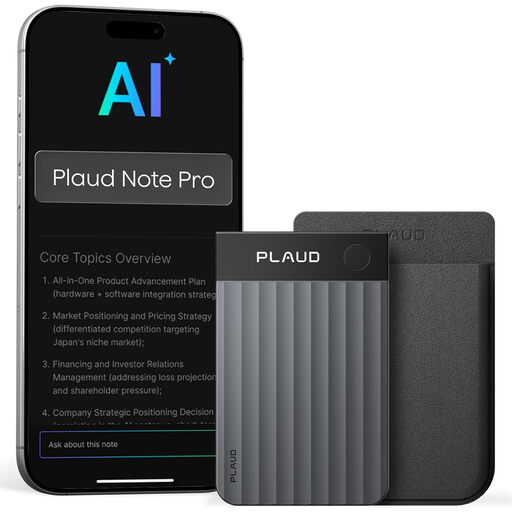 Image unavailable
Could suit anyone who also wants to turn a voice recording into text; check that the transcription and language options work for both languages in your speech.
The product title mentions AI recording for notes and summaries.
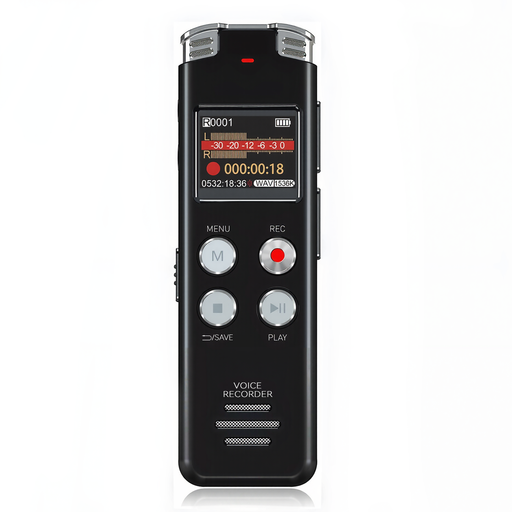 Image unavailable
Could suit anyone who wants to record speech passages and listen back to specific sections later; check the playback controls before repeating a word or transition.
The product title lists 128GB, an LCD screen and model L357. Assess any noise features with a test recording in your own room.
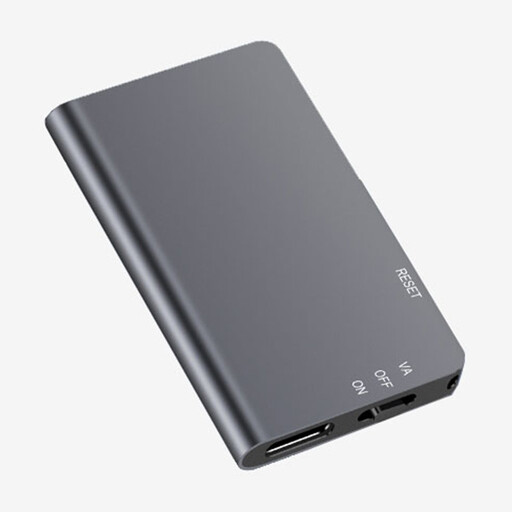 Image unavailable
Could suit anyone who wants to start a recording and listen back on the device; check that the controls are comfortable to use when replaying passages.
The product title lists 64GB, one-touch operation and model L810.
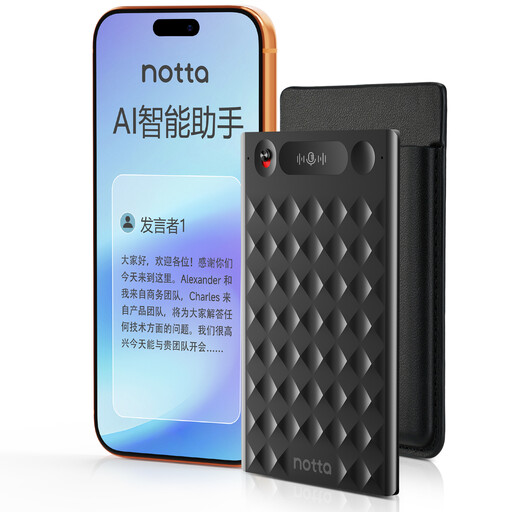 Image unavailable
Could suit anyone who wants to record a speech and is also considering transcription or translation; check that the available languages suit your bilingual text.
The product title lists 32GB and AI transcription. Before buying, check which features and language options come with this version.
Not necessarily; start with a short test recording in the setup you’ll actually use. OM SYSTEM describes a filter on the WS-883 for sounds below 300 Hz, while Philips describes adjustable microphone sensitivity. Neither description guarantees that your fan will disappear completely.
Test the recorder where you plan to use it and listen to check that your voice comes through clearly. Zoom warns that reflections from a table can affect clarity on the H1essential and suggests a tripod as one possible solution.
Zoom lists microSDHC cards from 4–32 GB and microSDXC cards from 64 GB–1 TB as supported storage media. Check whether a suitable card is included with the specific listing, and test the recording before practising your speech.
For a faulty product bought by a consumer in the Netherlands, the retailer is your point of contact. The Dutch government states that the Netherlands has no fixed statutory warranty period; the expected lifespan depends on the product.
A recording in which someone can be identified may contain personal data. The Dutch Data Protection Authority describes an exception for use solely for personal or household purposes, but not for professional or public sharing. Whether a particular recording can be made or shared depends on the circumstances.