
Family archivist
You want to capture a long conversation easily, listen back later and keep the files without setting up a full studio.


For family conversations at home, a simple voice recorder is enough if you mainly want to record and listen back. Choose a handheld recorder with built-in stereo microphones if you want a self-contained setup, or a model with separate microphone inputs if each speaker needs their own microphone; Zoom lists two XLR/TRS inputs for the H4essential. Always make a test recording from the seats: a recording format or extra input won’t compensate for poor microphone placement.
You want to capture a long conversation easily, listen back later and keep the files without setting up a full studio.
You’re recording a conversation where people speak at different volumes, and want to check with a test recording that everyone is easy to hear from the chosen position.
You want to record the interviewer and storyteller through separate microphone inputs, and are happy to use more equipment and spend longer setting up.
For family conversations at home, first decide whether ease of use, clarity, separate microphones or storing long recordings matters most to you.
| What to consider | What should you check? | Who is this important for? |
|---|---|---|
| Clarity and placement | Make a test recording from the seats; check that both voices sound clear and that the recorder isn’t poorly positioned on the table. | If I want to hear the storyteller and interviewer clearly when I listen back, I test the positioning before the conversation. Around 29% of consumers prioritise clarity. |
| Easy recording and playback | Check that recording, listening back and finding files are straightforward; see which controls and search features the exact model offers. | For an impromptu conversation, I want to be able to record and find specific passages without having to adjust lots of settings. Around 29% of consumers prioritise ease of use. |
| Separate microphones | Check the number and type of inputs; a mini-jack isn’t the same as two separate XLR/TRS inputs. | If the interviewer and storyteller each need their own microphone, I check that the recorder has suitable inputs. Around 21% of consumers prioritise recording voices separately. |
| Storing long recordings | Check the available storage, free space, power supply and file transfer method for the exact model. | For a long family conversation, I want to be able to save the recording and transfer it later. Around 21% of consumers prioritise storage and archiving. |
A suitable format won’t automatically make a speaker who was recorded too quietly or unclearly easier to hear. Zoom warns that a recorder placed directly on a table can pick up reflections.
Record a short sample with both speakers in their intended positions and listen back before recording the whole conversation.
A disappointing recording may mean you have to record the conversation again.
A socket for an external microphone doesn’t automatically provide two separate inputs for recording the interviewer and storyteller independently.
First decide whether you need separate microphones, then check the type and number of inputs on the exact model.
The Dutch Data Protection Authority distinguishes between personal or household use and sharing publicly; the private-use exemption doesn’t automatically apply to publishing something for everyone to see.
Agree with the storyteller how you’ll use the recording, and review the privacy rules again before sharing it publicly.
The ICD-UX570 is a voice recorder for recording, playback and file transfer.
According to OM SYSTEM, the WS-883 is suitable for notes, interviews and conversations, among other uses.
The H1essential is a handheld recorder; the H4essential is another option if you need two XLR/TRS microphone inputs.
The DR-05XP is a handheld recorder with built-in microphones and a stereo mini-jack for a compatible external source.
The products below are digital voice recorders for capturing conversations. Compare their controls and the recording or transcription features listed with what you need to record family stories.
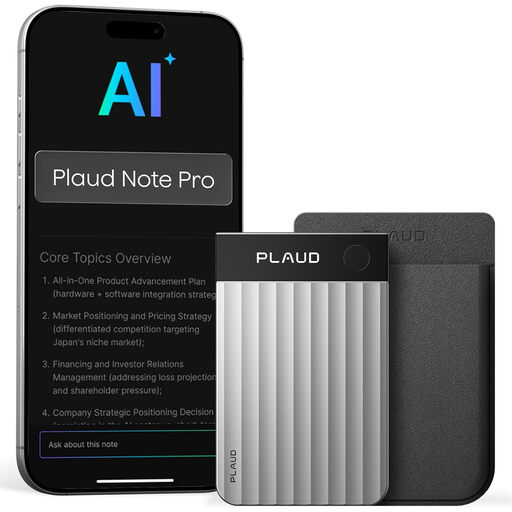 No image available
The product name mentions AI-powered notes and summaries; check which features are included and what terms apply before choosing it for family conversations.
 No image available
The product name mentions 64 GB and a transcription function. Compare these features with your needs for recording and playback, and check what’s required to use transcription.
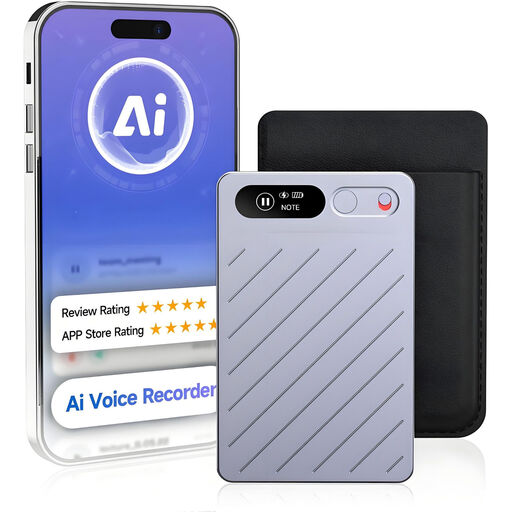 No image available
The product name mentions a 64 GB mini voice recorder with transcription, summaries and a typing function. Check that the stated language and feature support suits how you plan to use it.
 No image available
The product name specifies a 128 GB digital voice recorder. Before making a long recording, check the available space, controls and file transfer options for the exact model.
 No image available
The product name mentions 64 GB and one-touch recording. Check that the controls, storage and transfer options suit how you want to capture family conversations.
The Dutch Data Protection Authority states that processing carried out solely for personal or household use falls outside the GDPR and doesn’t require a GDPR legal basis. This isn’t a general statement about other rules or sharing recordings publicly. Discuss with the storyteller what you’re recording and who you intend to share it with.
The exemption for personal or household use doesn’t automatically apply to publishing something publicly. The Dutch Data Protection Authority says that publishing personal data publicly will usually require consent, although consent isn’t the only possible legal basis under the GDPR. Consider the intended publication separately before sharing it.
First, record a short sample with both speakers in their intended positions and listen back. Zoom warns that placing the H4essential directly on a table can cause reflections, and suggests using a tripod as one way to keep the recorder off the table.
Check the power supply, available storage and file transfer options for the exact model in advance. For the H4essential, Zoom specifies support for microSDHC and microSDXC cards and recommends testing the card beforehand; other recorders mentioned also have built-in memory.
No. According to the Dutch Government, there is no fixed statutory warranty period in the Netherlands. A manufacturer’s warranty is an extra benefit; if a product is faulty, the retailer is your point of contact for a solution, depending on the circumstances and what you could reasonably expect from the product.