For short pronunciation exercises, a recorder with simple controls and useful playback features is a sensible choice. A clearly specified A-B repeat function is particularly useful if you want to listen to the same passage repeatedly. A handheld audio recorder may suit you if you also want more control over recording settings or microphone options, but no feature can replace a test recording from your usual seat.
Who is this relevant to?
Learners practising individual sounds
You record short words or sentences and want to replay a tricky passage and compare it with an example. Taalunie describes voice recording and comparison as part of pronunciation practice; Sony documents A-B repeat on the ICD-PX470.
Home learners with a regular seat
You practise at the table and want to make and listen back to a clear test recording quickly. Philips lists adjustable microphone sensitivity among the features of the VoiceTracer DVT2110.
Teachers and advanced learners
You want more control over the recording format or microphone options, and don’t mind setting up the recorder in advance. Zoom and Tascam document different microphone and recording options for the models mentioned here.
What should you look for when choosing?
Voice recorder with targeted repeat
Suitable if: you mainly want to replay words or sentences; Sony documents A-B repeat on the ICD-PX470.
Bear in mind: check how the repeat function works and what recording format the exact model supports. The feature alone says nothing about sound quality in your room.
Simple recorder with built-in memory
Suitable if: you want to get started without a separate memory card and transfer files via USB. Philips specifies 8 GB of built-in memory and USB-C for the VoiceTracer DVT2110.
Bear in mind: Philips lists file repeat for this model, but not A-B repeat; recording time depends on the format and settings.
Handheld audio recorder
Suitable if: you want to compare recording settings or additional microphone options. The Zoom H1essential manual lists A-B repeat; Tascam specifies, among other things, an external microphone input for the DR-05XP.
Bear in mind: extra recording options don’t remove the need for good positioning and a test recording; also check what storage media and accessories you’ll need.
| Consideration |
What should you check? |
Who is this important for? |
| Replaying a short passage |
Check whether the exact model has A-B repeat and whether you can easily set the start and end points. |
Want to listen to a tricky word or phrase repeatedly? Around 36% of consumers say targeted repeat is their top priority. |
| Recording your voice clearly |
Make a test recording in the intended spot; check whether you need adjustable microphone sensitivity or an external microphone input. |
If you mainly want to assess how your voice sounds in your usual practice spot, make your test recording there. Around 29% of consumers prioritise clear playback. |
| Starting an exercise quickly |
Compare the recording button, file navigation and playback controls on the exact device. |
Want to start short practice sessions without much preparation? Around 21% of consumers say recording and listening back quickly is their main buying consideration. |
| Saving and transferring practice recordings |
Check the storage, required card type, connection and preferred file format. |
Want to find, compare or share recordings later? Around 14% of consumers put saving and transferring at the top of their list of considerations. |
Common buying mistakes
-
Assuming 32-bit float guarantees a clear recording
A stated recording format doesn’t automatically tell you how your voice will sound in the chosen spot in your room.
Make a test recording and listen for the sounds you want to practise. Choose extra recording features only if you need them.
-
Confusing every repeat function with A-B repeat
Repeating an entire file is different from replaying a passage you’ve selected yourself. Sony and Zoom document A-B repeat for the models mentioned here; the Philips DVT2110 specifications we consulted list file repeat.
Check the manual for the exact model for a function that repeats a selected passage.
-
Treating the longest recording time as a fixed capacity
The recording time of the Philips DVT2110 varies according to file format and quality settings. Zoom describes how to manage microSD cards on the H1essential.
Compare recording times for the format you want to use, and check which storage medium your chosen recorder takes.
If you choose a recorder that uses microSD, remember to allow for a suitable memory card too.
Brands to compare
Sony
The ICD-PX470 is worth considering if you want to record spoken passages and listen back to specific sections.
- Sony documents A-B repeat and adjustable playback speed for this model.
- Assess the recording from your own seat; these features don’t prove superior recording quality.
Philips VoiceTracer
The DVT2110 suits those who value built-in memory, file controls and USB-C transfer.
- Philips specifies 8 GB of built-in memory, MP3 and PCM/WAV, as well as adjustable microphone sensitivity.
- The specifications listed describe file repeat, but don’t explicitly state that this model has A-B repeat.
Zoom
The H1essential is worth considering if you’re looking for a handheld recorder with playback features and additional microphone options.
- Zoom documents built-in X/Y microphones, a microphone input, a built-in speaker and A-B repeat.
- Zoom’s descriptions of recording quality are manufacturer claims, not an independent comparison with voice recorders.
Tascam
The DR-05XP is an option if recording formats, built-in microphones and an external microphone connection matter to you.
- Tascam specifies, among other things, 32-bit float mode, MP3 and an external microphone input.
- These specifications show what the recorder can do, but don’t prove that it will automatically sound better when recording someone speaking while seated.
Joybuy products
These Joybuy products are voice recorders that may suit recording and storing spoken practice material. Check which features fit your practice routine for each model.
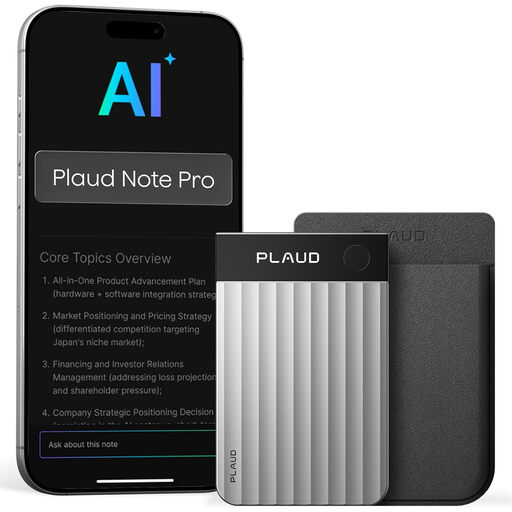 No image available
Plaud Note Pro AI Notes & Summary Voice Recorder (Silver)
May suit you if you’re looking for a voice recorder for spoken practice material.
Joybuy
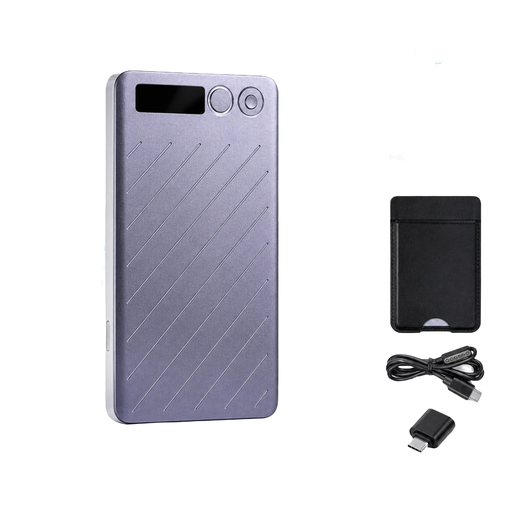 No image available
Digital Voice Recorder, 64 GB, with Transcription Function
May suit you if you’re looking for a digital recorder for speaking practice; check that the listed features work with the way you like to listen back.
The product name lists 64 GB and a transcription function.
Joybuy
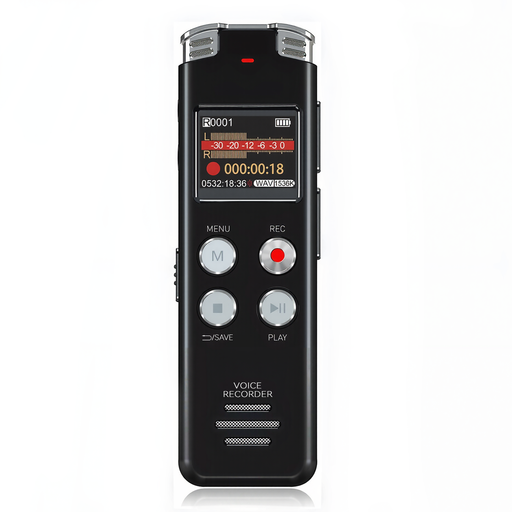 No image available
Rexsun L357 128 GB Digital Voice Recorder
May suit you if you’re looking for a digital recorder and want to take storage capacity into account.
The product name lists 128 GB.
Joybuy
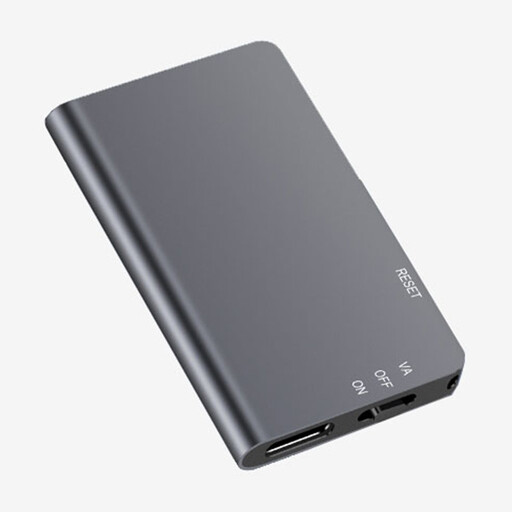 No image available
Rexsun L810 64 GB Digital Voice Recorder
May suit you if you’re looking for a digital recorder and the stated storage capacity is relevant to your practice files.
The product name lists 64 GB.
Joybuy
Frequently asked questions
Is A-B repeat essential for pronunciation practice?
No, but it’s useful if you want to listen to the same word or phrase repeatedly. Sony documents this feature for the ICD-PX470, and the Zoom manual lists it for the H1essential. Check the exact model you’re considering.
How do you start recording when the speaker is sitting at a table?
Put the recorder in the intended spot, record a short practice sentence and listen back before recording a full session. Philips says in the DVT2110 manual that you can adjust the microphone sensitivity to suit factors including distance and background noise.
Can the longest stated recording times be compared?
Not without comparing the settings. For the DVT2110 with 8 GB of built-in memory, Philips lists different recording times for different MP3 bit rates and PCM settings. So first decide which format you want to use.
What if the recorder breaks too soon during normal use?
According to ACM ConsuWijzer, a product bought by a consumer must meet the standard you can reasonably expect. If it stops doing so too soon during normal use, the seller is responsible for providing an appropriate solution; a shorter manufacturer’s warranty doesn’t remove your statutory rights.
Can you record or share other people’s pronunciation practice in the Netherlands?
This depends, among other things, on the purpose and how you use the recordings. According to the Dutch Data Protection Authority, the processing of personal data purely for personal or household use is not covered by the GDPR. If you use the recordings outside that private setting, you’ll need to consider which lawful basis applies; consent is one possible basis, but not automatically the only one.


