If you can hear your neighbours or room echo in a test recording, start with a set-up that lets you sing comfortably close to the microphone, with the rear of a cardioid mic facing the source of the unwanted noise. A dynamic vocal microphone with XLR can be a practical choice. A condenser microphone is another option if you can make the room quieter and want to capture more tonal detail. Neither type will silence a noisy room, so also check whether you want to record directly via USB or already have a suitable XLR interface.
Who is this guide for?
Singers who can hear their neighbours
For anyone who wants to record their voice as directly as possible and can sing comfortably close to the microphone. Shure describes close placement or isolation as possible ways to address background noise affecting a recording.
Singers without an audio interface
For anyone who wants to record straight to a computer and needs to consider USB connectivity, compatibility and monitoring when choosing. According to RØDE, the NT1 5th Generation offers USB-C and XLR.
Singers who can adapt their room
For anyone who can reduce unwanted noise first, then decide how much detail and room sound they want in the recording. Shure and Audio-Technica describe cardioid microphones for vocal recording; that alone doesn’t determine how much sound the room adds.
What should you look for when choosing?
First, test the microphone where and at the distance you’ll actually sing. Then decide whether the room, the sound you want or the connection will be the deciding factor.
| What to consider |
What to look for |
Who should pay particular attention? |
| Background noise and room echo |
Check the cardioid pattern, placement options and how the microphone performs in a test recording in your own room. |
If I can hear my neighbours, I want to know whether I can sing comfortably close to the mic and position the source of the unwanted noise behind it. Around 42% of consumers prioritise background noise when choosing. |
| Connecting without an interface |
Check whether the model uses USB or XLR, and how you’ll monitor your voice while recording. |
Anyone who wants to record to a computer without a separate interface should focus on connectivity and monitoring. Around 25% of consumers give connecting without an interface top priority. |
| Vocal detail and sound |
If possible, compare a test recording using your own voice; a microphone’s stated self-noise rating doesn’t measure noise from your neighbours. |
If I can make the room quieter, I want to assess the vocal sound without confusing external noise with the microphone’s self-noise. Around 17% of consumers put vocal detail and sound first. |
| What you’ll need for your set-up |
Check the exact connections, power requirements and any included cables or accessories. |
Anyone who wants to know in advance what they’ll need besides the microphone should consider the complete recording chain and the specific model. Around 16% of consumers make the complete set-up their main consideration. |
How to avoid common buying mistakes
-
Assuming a dynamic microphone automatically blocks out noise
Even a directional microphone can pick up sounds from its surroundings. Placement and distance still matter.
Make a test recording where and at the distance you’ll actually sing before choosing a model.
Changing the placement or improving the recording space may take extra time.
-
Confusing low self-noise with blocking out your neighbours
Self-noise describes a microphone characteristic, not the external noise in your room.
Assess background noise separately with a test recording, and use the self-noise rating only to compare microphones on that feature.
-
Focusing only on the microphone and forgetting about the connection
XLR isn’t the same as recording directly via USB. An XLR set-up may require a suitable interface and, depending on the model, phantom power.
Check the connection, power requirements, cables and included accessories for the exact model.
Depending on the equipment you already have, your set-up may also need an interface, cable or phantom power.
-
Assuming USB processing is also available via XLR
Shure states that the MV7+’s digital processing is available via USB, but not via the XLR output.
Check which output you’ll be recording through before relying on a built-in feature.
Brands to compare
Shure
Shure offers both dynamic XLR vocal microphones and models with USB and XLR.
- Shure specifies a cardioid polar pattern and built-in pop filter for the SM58.
- According to Shure, the MV7+’s digital processing isn’t available via XLR; this alone doesn’t tell you how it will perform for vocals in your room.
Sennheiser
The e 835-S is a dynamic cardioid vocal microphone with an XLR connection.
- The manufacturer lists home recording as one possible use.
- The S version has a switch; recording to a computer requires a suitable XLR signal chain.
RØDE
The NT1 5th Generation is a cardioid condenser microphone with USB-C and XLR connectivity.
- RØDE lists cables, a shock mount and a pop filter as included.
- The stated self-noise rating of 4 dBA doesn’t indicate how much noise from your neighbours will end up in your recording.
Audio-Technica
The AT2020 is a cardioid condenser microphone with XLR for use in a suitable recording chain.
- Audio-Technica describes the microphone as suitable for home-recorded vocals.
- According to the manufacturer, the XLR version requires 48 V phantom power; don’t confuse it with a USB version.
Joybuy products
This selection includes USB and wireless microphones. Check each model to make sure its connection and stated use are suitable for recording solo vocals in your space.
 No image available
USB condenser microphone with cardioid polar pattern
The stated USB connection may suit anyone who wants to record without an XLR interface; assess the results with a test recording in your own room.
The product name specifies a condenser microphone, a cardioid pattern and monitoring. The description mentions a USB cable and headphone monitoring.
View at Joybuy
 No image available
DJI Mic 3 (1 TX + 1 RX)
This wireless set is described as being for solo creators and video recording; check that the receiver and connection are compatible with your recording equipment.
The product name specifies one transmitter and one receiver. The description mentions internal 32-bit float recording and a USB-C adapter for connecting to a phone.
View at Joybuy
 No image available
DJI Mic 3 (2 TX + 1 RX + Charging Case)
The description mentions interviews and video recording. Check that this wireless set is compatible with your connection and the way you want to record solo vocals.
The product name specifies two transmitters, one receiver and a charging case. The description mentions compatibility with cameras, smartphones and computers.
View at Joybuy
 No image available
Razer Seiren V3 Mini White
The USB connection may suit a desktop set-up; make a test recording to assess how the microphone sounds in your room.
The product name mentions USB and tap-to-mute. The description lists a supercardioid pattern and compatibility with PC and Mac.
View at Joybuy
 No image available
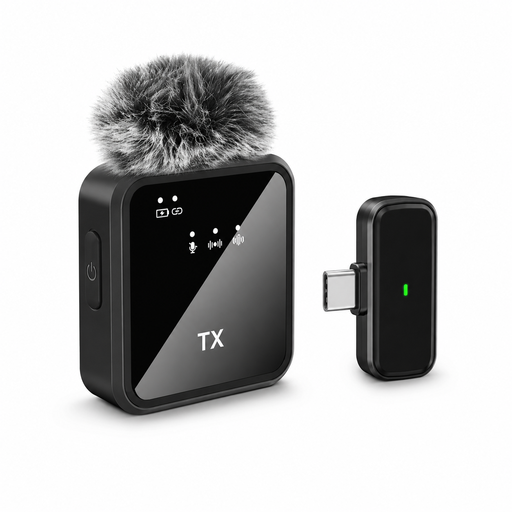
Verbex ST5 wireless lapel microphone
The description mentions recording, livestreams and video conferences. Before buying, check that this portable set-up suits the way you sing.
The product name specifies a lapel microphone; the description mentions a battery and Bluetooth 5.0.
View at Joybuy
Frequently asked questions
Can a microphone completely remove noise from your neighbours from a vocal recording?
No, don’t count on it. Start with a short test recording, try a comfortable shorter distance from the microphone, and if the unwanted noise is still audible, change the direction or the time you record.
What do I need to connect an XLR condenser microphone?
You’ll need a suitable XLR signal chain, and you should check the power requirements for the exact model. According to the manufacturer, the XLR version of the Audio-Technica AT2020 requires 48 V phantom power; the RØDE NT1 5th Generation also offers a separate USB-C connection.
How can I reduce plosive sounds and hear my voice while recording?
Position and angle the microphone carefully, and check whether a pop filter is included with your model. Focusrite recommends closed-back headphones so you can hear your voice more clearly while recording.
What are my rights when buying online or if a product is faulty?
For online consumer purchases, you generally have a statutory 14-day cooling-off period from the day after delivery, although exceptions may apply. A product must also meet the standards you’re entitled to expect: according to the ACM, the seller must resolve the issue free of charge if a product breaks too soon during normal use.
What rules should I bear in mind when recording vocals at home?
Check the rules set by your local council if noise nuisance could be an issue. The Dutch government states that disturbance caused by neighbours may be covered by local rules in the General Local Regulation; how these apply depends on the circumstances in your area.


