
Vandaag of morgen in huis

Kwaliteit gegarandeerd

Welkomstaanbiedingen ontgrendelen: GRATIS bezorging | Tot 80% korting | Gratis 30 dagen JoyPlus-proefperiode
Download de app
A pot of vitamins for children may seem like an easy choice: cheerful packaging, a familiar flavour and a promise of better immunity or energy. Yet children’s vitamins can vary considerably in recommended age, dosage, ingredients and format. A gummy suitable for a 5-year-old is not automatically right for a toddler. And a multivitamin is not always necessary if you are really only looking for vitamin D for children.
As a Joybuy Product Recommendation Officer, I filter the most important product information down to practical points. This helps you avoid paying mainly for the packaging or accidentally combining different supplements.
Gummies and chewable tablets often taste pleasant, but that does not automatically make them suitable for young children. Always check the minimum age and make sure your child can chew them safely. Several products recommend supervision by an adult.
Also pay attention to the amount per day. One gummy may be enough, while another product recommends one to two chewable tablets. Taking more than stated on the label does not automatically increase the benefits.
Sugar-free vitamins for children often contain sweeteners such as sorbitol, xylitol or maltitol. According to product information, consuming large amounts may have a laxative effect. Gummies containing sugar or glucose may, in turn, require extra attention to oral hygiene.
Also check the source of the ingredients. Gelatine may come from beef or pork. A product containing perilla oil may be vegan, while a gummy containing gelatine is not. “Vegetarian”, “vegan”, “gluten-free” and “lactose-free” are therefore not interchangeable terms.
When a brand states that a vitamin contributes to the normal function of the immune system, this is an authorised nutrition claim about the nutrient. It is not a guarantee that a child will get ill less often.
Extra caution is advisable with sleep gummies for children. Some products contain herbs such as camomile, passionflower or lemon balm. According to VALDISPERT product information, the health claim for camomile is still awaiting European approval. Therefore, do not use such products as a substitute for a consistent sleep routine or medical advice.
The age stated on the packaging is an essential first filter. For vitamins for children aged 3 and over, different products are available than for children aged 1 or 2. Products for children’s vitamins aged 3–12 often have a broader formulation, but the dosage may still vary by age or product.
Vitamin D is a particular consideration in the Netherlands. The Health Council recommends an additional 10 micrograms of vitamin D daily for children up to 4 years old. For children aged 4 and over, this advice applies, among other situations, when they spend little time outdoors or have dark skin. If you are unsure, discuss your child’s individual circumstances with your GP or pharmacist, particularly if they are already taking another supplement.
Do not just compare the number of vitamins. Pay particular attention to the amount in each daily serving. A multivitamin may contain vitamin A, C and B vitamins, as well as zinc, iodine, iron or magnesium.
Watch out for overlapping ingredients. A child given a multivitamin for children, separate vitamin D, omega 3 for children and magnesium for children may receive the same nutrients from several products. Keep track of the total daily intake and follow the instructions on the packaging.
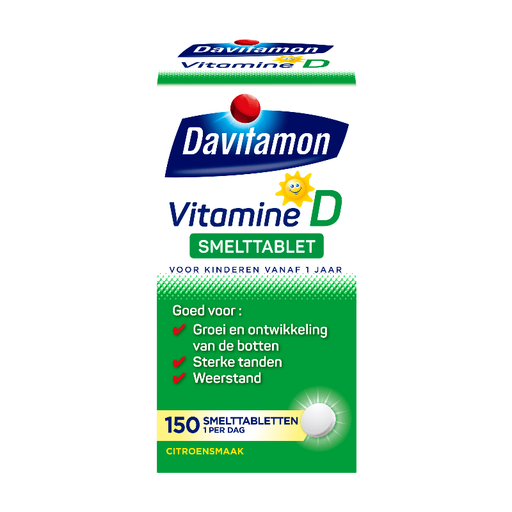
Why this suits the profile: A targeted choice when you are only looking for vitamin D for children aged 1 and over, without a broad multivitamin formula.
The dosage is straightforward: according to the label, one dissolvable tablet provides 10 µg of vitamin D3. This helps you avoid buying a complete multivitamin unnecessarily.
150 tablets, lemon flavour, gluten-free and lactose-free; suitable for vegetarians according to the product information.
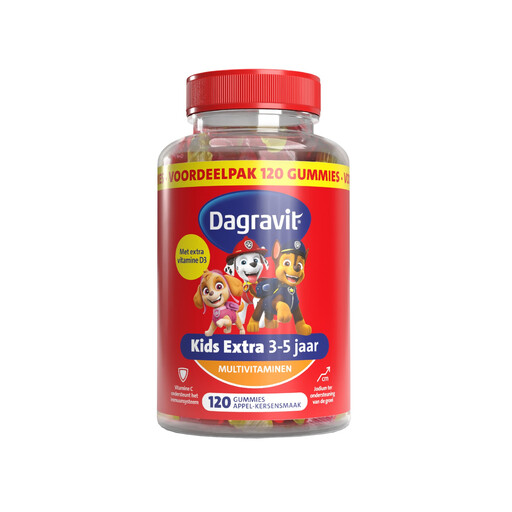
Why this suits the profile: Ideal for parents looking for an age-specific multivitamin with a fixed dosage and a child-friendly gummy format.
The product information clearly states 3 years and over, 1–2 gummies per day and 10 µg of vitamin D per daily serving of 2 gummies.
120 gummies, apple and cherry flavour and, according to the product description, no artificial colours or flavourings.
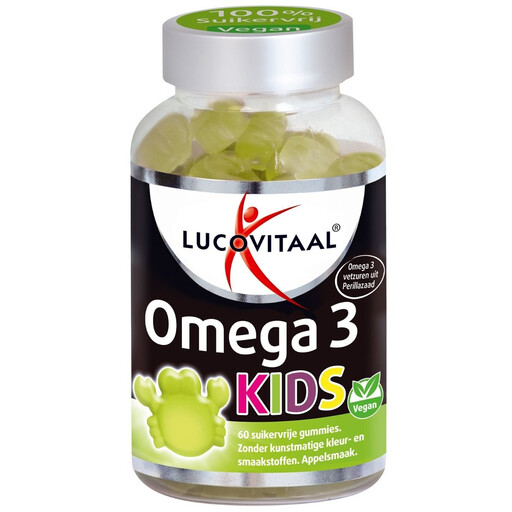
Why this suits the profile: For parents who specifically want to add omega 3 and are looking for a plant-based gummy format for children aged 5 and over.
The source is stated: perilla seed oil containing ALA. This is not a fish oil product, so check whether this format meets your purchasing needs.
According to the label, 4 gummies provide 360 mg of omega 3 as ALA; the product is sugar-free and vegan according to the product details.
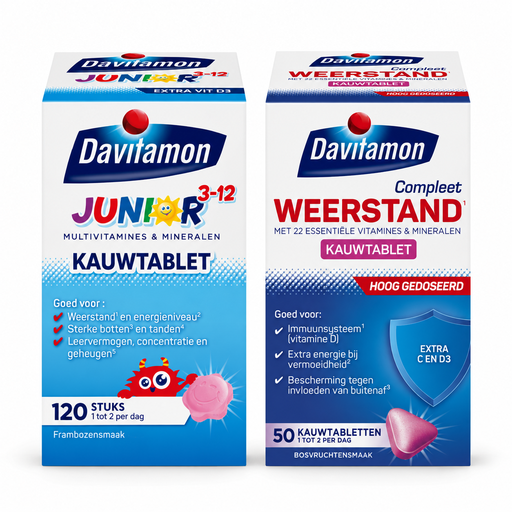
Why this suits the profile: Handy if you want to combine your supplies, but only if you follow the dosage instructions for each pack separately.
The two supplements are packaged separately and each has its own usage instructions. Do not automatically take them together on the same day.
120 Junior chewable tablets and 50 Compleet Weerstand tablets; gluten-free and lactose-free according to the stated product information.
We have put together a complete, up-to-date list of products that fully meet these strict selection criteria and the applicable European safety regulations.
That depends on their age, diet and personal circumstances. In the Netherlands, vitamin D receives extra attention for young children and for children who spend little time outdoors or have dark skin. A multivitamin can be a useful supplement, but it does not replace a varied diet. First check whether a targeted product is sufficient.
No. Some gummies are suitable from the age of 3, while others are only suitable from the age of 5 or 6. Always check the age indication, recommended dosage and warnings. Make sure your child chews the gummy properly and keep the packaging out of reach, as the flavour may resemble sweets.
The expiry date is shown on the packaging. Once opened, additional instructions may apply, such as using the product within 60 days or storing it in a cool, dry place. Check the dosage regularly and make sure the supplement is still suitable for your child’s age and circumstances. If your child takes medication, has a medical condition or you are unsure, it is advisable to consult your GP or pharmacist.
