
Vandaag of morgen in huis

Kwaliteit gegarandeerd

Welkomstaanbiedingen ontgrendelen: GRATIS bezorging | Tot 80% korting | Gratis 30 dagen JoyPlus-proefperiode
Download de app
A pot of children's vitamins often looks appealing: colourful packaging, fruit flavours and claims about immunity, energy or growth. Yet a cheerful package says little about whether it's suitable for your child. Age, daily dosage and ingredients determine whether a product is a good fit.
As Joybuy Product Recommendation Officer, I focus on verifiable information on the label. That way, you avoid paying for a format or ingredient that doesn't suit your home use.
Not every children's multivitamin is suitable for babies, toddlers and young children. Gummies and chewable tablets are generally intended for children who can chew well. So don't give a product for children aged 3 and over to a 2-year-old toddler.
Pay attention to the exact age indication:
A product name with "junior" doesn't automatically mean it's suitable for every age.
Many multivitamins already contain vitamin D. If you combine such a product with separate vitamin D drops or chewable tablets, the total daily amount can unintentionally add up. So first check the amount of vitamin D3 per daily dose and add up all supplements.
The recommended amount can vary depending on age and personal circumstances. Therefore, check the current information from the Dutch Nutrition Centre or the Dutch government, and if in doubt, consult your GP, pharmacist or child health clinic.
A gummy may be easily accepted, but it sometimes contains sugar, glucose syrup or gelatine. A sugar-free chewable tablet may contain sweeteners such as sorbitol, xylitol or maltitol. With excessive use, some sweeteners can have a laxative effect.
Also check for:
Don't just compare the number of tablets in the pack. Look at the daily dosage. A pot with 120 tablets could last 60 or 120 days, depending on whether one or two tablets per day are recommended.
With Davitamon Junior 3-12 Multivitamin and Minerals, the product information states a usage of 1 to 2 chewable tablets per day. With Davitamon Junior 3-12 Multivitamin Gummies Strawberry, it's 1 gummy per day. This makes the contents per pack and the cost per day easier to compare.
Note the difference between the amount per tablet and per daily dose. With some products, one tablet provides 5 micrograms of vitamin D3, while the maximum daily dose of two tablets contains 10 micrograms.
For young children, liquid drops are practical. Davitamon Vitamin D Drops states 10 micrograms of vitamin D3 per 5 drops on the label. Davitamon Vitamin D Oil Baby and Child states the same amount per 10 drops. So the right choice depends not only on the number of micrograms, but also on how easily you can dose accurately.
A liquid is handy for babies and children who cannot yet chew. Melt-in-the-mouth tablets dissolve without water, while gummies and chewable tablets are mainly suitable for children who can chew safely.
Take the product preferably during or after a meal if stated on the label. Never give more than the recommended dose. Supplements do not replace a varied diet.
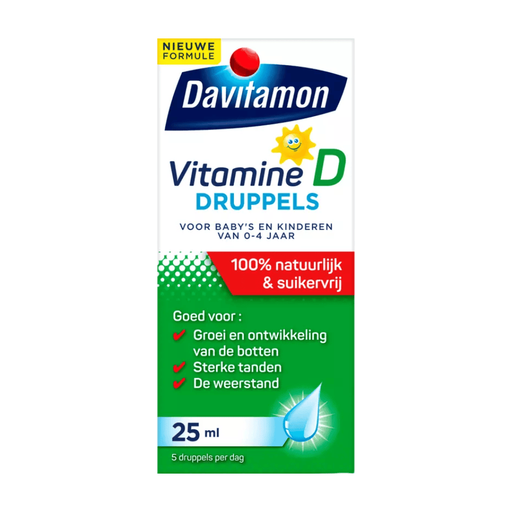
Why this fits the profile: A simple formula with vitamin D3 and sunflower oil, intended for children aged 0 to 4 years according to the product information.
The age and dosage are clearly stated. This makes it easier to avoid double vitamin D alongside a multivitamin.
Liquid format, 25 ml content and 10 micrograms of vitamin D3 per 5 drops according to the label.
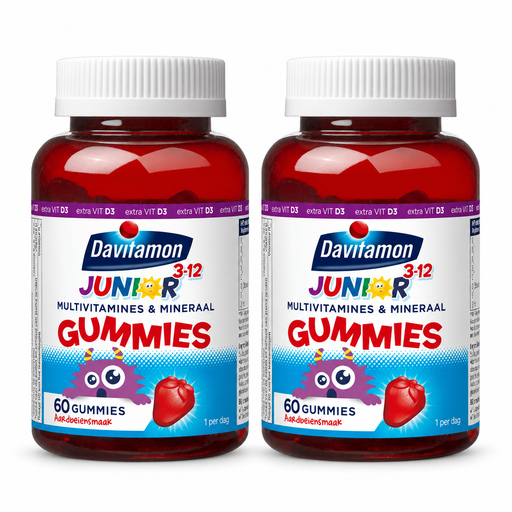
Why this fits the profile: For children aged 3 to 12 who appreciate a fixed, simple daily routine with one gummy.
The recommended amount is 1 gummy per day. The packaging also states the age limit of 3 years and older.
Strawberry flavour, 1 gummy per day and, according to the product information, gluten-free and lactose-free.
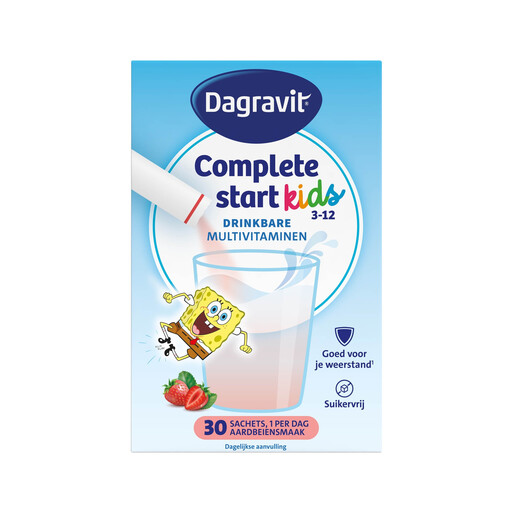
Why this fits the profile: For families with children aged 3 to 12 who prefer a drink rather than chewing a tablet or gummy.
The sachets have a fixed portion. You dissolve one sachet in 200 ml of water, so measuring with a separate spoon isn't necessary.
30 individual sachets, strawberry flavour and, according to the product information, free from sugar, lactose and gluten.
We've put together a full, up-to-date list of products that fully meet these strict selection criteria and comply with current European safety regulations.
Check these points before ordering:
Brand names such as Davitamon Junior, Dagravit Kids and Lucovitaal children's vitamins can help with your search, but always compare the current product packaging. Ingredients and usage advice can vary between variants.
Vitamin D receives particular attention in the Netherlands for young children and in certain situations from age 4. The exact recommendation depends on age, skin type and sun exposure. Check current government information and discuss any doubts with a healthcare professional.
Not automatically. Many vitamin gummies for children are only suitable from age 3, because a child needs to be able to chew the gummy properly. For babies and young toddlers, drops or a liquid product are often more practical, provided the packaging states this age group.
That depends on the contents and the daily dosage. Divide the number of pieces by the recommended number per day. With one gummy per day, 120 gummies theoretically last 120 days; with two chewable tablets per day, that's 60 days. Also check the expiry date and usage period after opening.
