
Vandaag of morgen in huis

Kwaliteit gegarandeerd

Welkomstaanbiedingen ontgrendelen: GRATIS bezorging | Tot 80% korting | Gratis 30 dagen JoyPlus-proefperiode
Download de app
When buying vitamins and food supplements, you will quickly notice major differences in dosage, format and price. A tub containing 365 capsules may seem like good value, for example, while a smaller pack may be more convenient if you want to try a product first and see whether it suits you. Words such as “complex”, “forte” and “detox” also say little about the formulation on their own.
This guide helps you compare supplements based on verifiable information: ingredient, dosage, target group, format and duration of use.
A higher amount of vitamin D3, biotin, vitamin C or zinc does not automatically make a product more suitable. First, check the recommended daily dosage and the percentage of the reference intake (RI). Also check whether you are already getting the same nutrient from a multivitamin or another product.
For example, Lucovitaal Vitamin D3 25 mcg contains 25 mcg of vitamin D3 per capsule, equivalent to 500% RI. The recommended amount is one capsule per day. The 75 mcg version contains three times as much vitamin D3 and, according to the product information, is not suitable for children under 10. Always compare the exact variant, rather than just the product name.
Claims about antioxidants, chlorella, green tea or herbs are not always generally approved under European regulations. Ymea Silhouet, for example, explicitly states that certain health claims about sage and green tea are still awaiting European approval. Therefore, treat such statements as information from the brand, rather than as a guaranteed effect.
The product description for Lucovitaal Antioxidant Complex states that green tea, vitamin C and vitamin E help protect cells. When considering this product, check the ingredients, dosage and warnings. According to the label, it is not suitable for children under 18, pregnant women or women who are breastfeeding.
Capsules are practical for adults who want to take a supplement once a day. Chewable tablets, gummies and effervescent tablets may be more convenient if you find swallowing difficult. However, check for sweeteners, sugar, gelatine and allergens.
According to the product information, Davitamon Junior gummies contain, among other ingredients, beef gelatine. They are therefore not vegetarian or vegan. Lucovitaal Multi+ KIDS, on the other hand, is described as vegetarian and sugar-free, but contains maltitol. Excessive consumption may have a laxative effect.
Calculate the cost per day rather than looking only at the price of the pack. A tub containing 365 capsules may last around a year if you take one capsule per day. A pack of 30 capsules is often intended to last a month, depending on the dosage.
Also check:
Do not take several products containing the same vitamins and minerals without checking your total intake. This is particularly important for vitamin D3, zinc, selenium, vitamin A and biotin.
If you are looking for vegan supplements, you need to look beyond the word “plant-based” in a product title. Gelatine may be used in capsules or gummies. Lucovitaal 3-in-1 Bioticomel Pre, Pro & Post Biotics is described as vegan and, according to the product information, contains 20 billion live bacteria, prebiotics and postbiotics per daily dosage. The recommended intake is one capsule per day.
Lucovitaal Prebiotics & Probiotics also lists a formula containing 20 billion bacteria and eight bacterial strains. However, the product information contains conflicting details about its vegan status. Always check the current label before buying, particularly if you follow a vegan diet.
For omega 3 and fish oil, the amount of EPA and DHA is more important than the total amount of fish oil alone. Lucovitaal Fish Oil Super Omega 3 states that two capsules provide 2,000 mg of fish oil, including 1,204 mg of omega 3, 600 mg of EPA and 400 mg of DHA. The capsules also contain evening primrose oil and vitamin E.
This product is not vegan and contains fish. According to the product information, it is not suitable for pregnant women or women who are breastfeeding. If you are looking for a fish-free alternative, search specifically for an algae oil product and compare its EPA and DHA values.
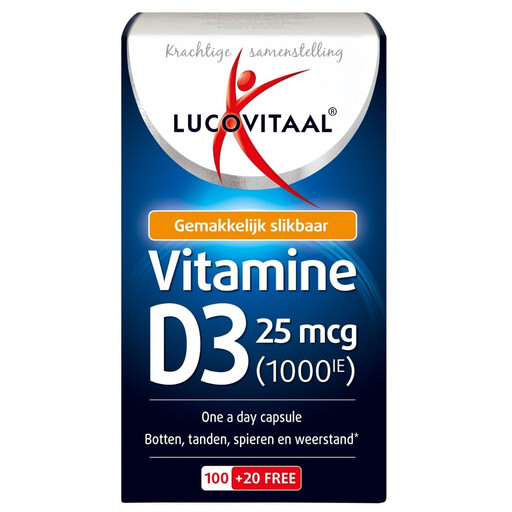
Why it suits this profile: A straightforward choice for adults who want to top up one specific nutrient without a complex combination formula. The pack contains 120 capsules, with one capsule per day recommended.
The dosage and number of capsules are clearly stated. This makes it easy to compare the cost per day with a pack of 365 capsules.
25 mcg of vitamin D3 per capsule, 120 capsules and a compact size that is described as easy to swallow.
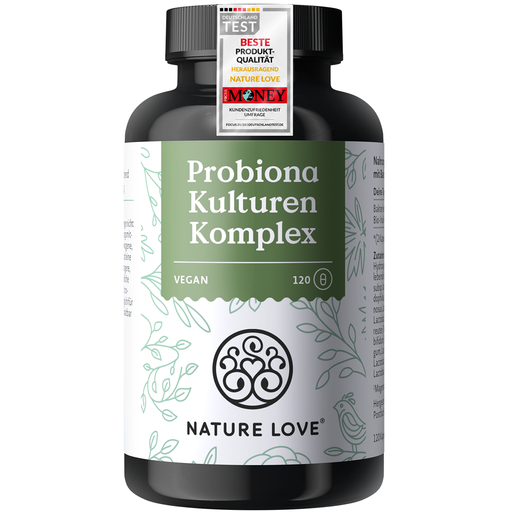
Why it suits this profile: For adults looking for a vegan formula, multiple bacterial strains and an acid-resistant capsule.
The product information states that it contains 20 bacterial cultures, 20 billion CFU per daily dosage, organic inulin and a vegan capsule.
120 capsules, two capsules per day, a vegan formulation and a capsule described as resistant to stomach acid.
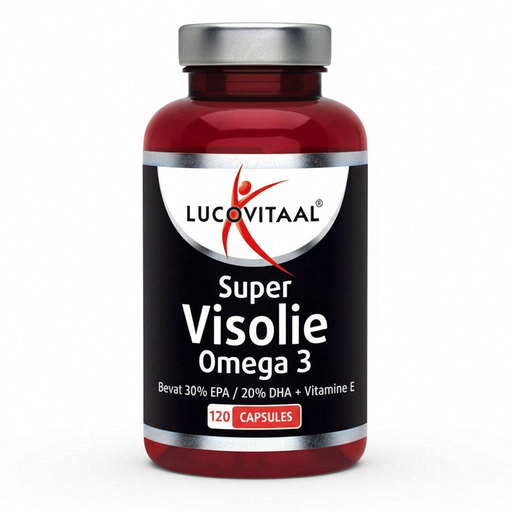
Why it suits this profile: For adults who want to compare omega 3 supplements based specifically on EPA, DHA and the total amount of fish oil per daily dosage.
The formulation lists 600 mg of EPA and 400 mg of DHA separately per two capsules. This means you do not have to rely solely on the term “super omega 3”.
120 capsules, 1,204 mg of omega 3 per daily dosage and added vitamin E. Contains fish and is not vegan.
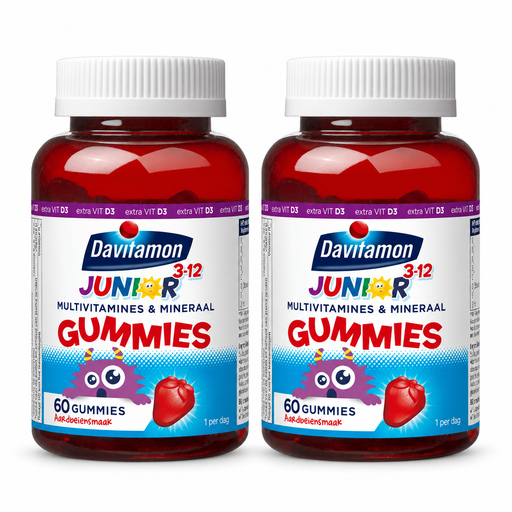
Why it suits this profile: A chewable format for children aged 3 to 12 inclusive, with one gummy per day according to the product information and under adult supervision.
The age limit, daily amount and ingredients are clearly stated. However, the gummies contain beef gelatine, which is important to consider when choosing a product.
According to the label, it contains vitamin D3, vitamin C, B vitamins, biotin and zinc. The formula is gluten-free and lactose-free.
A multivitamin can be a convenient option if you want to combine several vitamins and minerals in one product. However, check that the formula is suitable for the intended group. Supplements for children have different age recommendations from supplements for adults. A children’s product is therefore not automatically suitable for the whole family.
There are targeted formulas for women going through the menopause, containing ingredients such as vitamin D3, zinc, vitamin B6, B12 and plant extracts. Ymea Silhouet includes warnings relating to medication, pregnancy, breastfeeding and hormone-sensitive conditions, among other things. Speak to a doctor or pharmacist before using it if any of these points apply to you.
We have put together a complete, up-to-date list of products that fully meet these strict selection criteria and the applicable European safety requirements.
Check the best-before date on the packaging and follow the storage instructions. In most cases, store capsules, tablets and gummies in a dry, sealed place, out of the reach of young children. Probiotics may have additional requirements, such as refrigeration after opening. Always follow the label for the specific product.
Sometimes, but first check whether the same nutrients appear in more than one formula. Pay particular attention to combinations of multivitamins with separate vitamin D3, zinc, biotin, vitamin C or omega 3 supplements. If you take medication, are pregnant or breastfeeding, or have a medical condition, it is advisable to consult a doctor or pharmacist.
Gummies can make supplements easier to take, particularly for children or people who find capsules difficult to swallow. However, the nutritional value varies from product to product. Compare the dosage, sweeteners, allergens and age limit. Do not choose based solely on flavour or format; always check the full formulation.
