
Vandaag of morgen in huis

Kwaliteit gegarandeerd

Welkomstaanbiedingen ontgrendelen: GRATIS bezorging | Tot 80% korting | Gratis 30 dagen JoyPlus-proefperiode
Download de app
A vitamin D3 supplement may seem simple to choose. However, products vary considerably in dosage, ingredients, age recommendations and frequency of use. A low price per pack also tells you little if you choose an unsuitable form or use several supplements at the same time.
The main pitfalls:
Vitamin D3 is cholecalciferol, a form of vitamin D. The amount on packaging is usually stated in micrograms, abbreviated as mcg or µg. Sometimes the international unit IU is also shown:
The RI percentage on the label is the European reference intake for adults. 200% RI does not automatically mean that you need 200% of a personalised recommendation. So first consider your age, lifestyle and the advice on the packaging.
The product information for various brands refers to recommendations for babies and children up to 4 years old, people with dark skin, people who spend little time outdoors, pregnant women and certain age groups, among others. Recommendations may vary depending on the situation. If you take medication, have a medical condition or are pregnant, it is best to discuss use in advance with your GP, midwife or pharmacist.
A vitamin D 10 mcg supplement is a straightforward choice if you are looking for a daily top-up in line with the label. With vitamin D 25 mcg, you get more per dosage, while vitamin D 75 mcg is a high dosage that should not be combined with other vitamin D products long term without good reason.
Choosing the right format helps prevent you from leaving a supplement unused.
Capsules are compact and often easy to take every day. According to the product information, Lucovitaal Vitamin D3 25 mcg contains one capsule per day and is available in packs of 120 or 365 capsules. Do check the ingredients: these variants contain gelatine and are therefore not vegan.
Drops are practical when a child cannot yet chew or swallow. The dosage must be measured accurately. Always check how many drops correspond to 10 mcg, as this varies from product to product. Also check for potential allergens. According to the label, Davitamon’s oil for babies and children contains peanut oil, while other drops are based on sunflower oil.
Chewable tablets are suitable for users who do not want to swallow capsules. Gummies can be an accessible option thanks to their flavour, but they often contain sweeteners. According to the product information, Lucovitaal Vitamin D3 Vegan Gummies provide 25 mcg per gummy, are vegan and contain no artificial colourings or flavourings. This does not automatically make them suitable for children: the product states a minimum age of 10.
Use these points to compare vitamin D3 capsules or another format fairly:
Dosage per daily or weekly intake
Do not compare only the number of items; also compare the amount of vitamin D3 per dosage.
Age and target group
Check whether the product is intended for children, adults or people aged 50 and over. For babies, pay extra attention to the number of drops and the minimum age from which the product may be used.
Ingredients and dietary requirements
Look for gelatine, milk, peanut oil, sugar and sweeteners. A product containing the word “vegan” should still be checked against the label.
Frequency of use
Daily use is easy to link to a meal. A weekly capsule may be convenient if you often forget to take a tablet, but it requires a regular weekly reminder.
Combination with other supplements
Add up the total amount of vitamin D from multivitamins, pregnancy products and standalone supplements. Do not exceed the recommended dosage on the label.
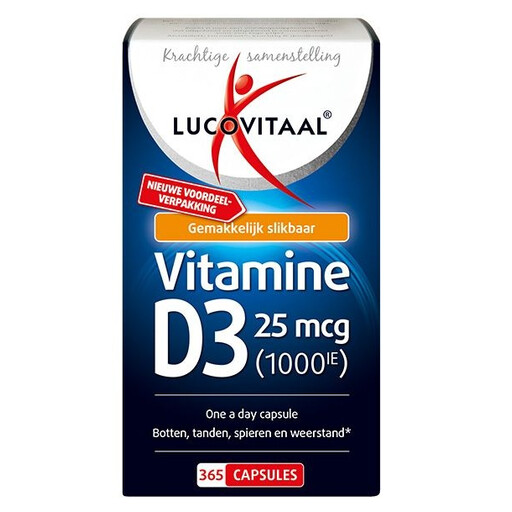
Why it suits this profile: One small capsule per day and a pack designed for long-term use make this a straightforward option for adults who want a consistent routine.
The amount of 25 mcg is clearly stated per capsule. Do check that this dosage suits your situation and that you are not using another source of vitamin D.
365 capsules, one capsule per day and an unflavoured softgel. According to the product information, this product is not vegan.
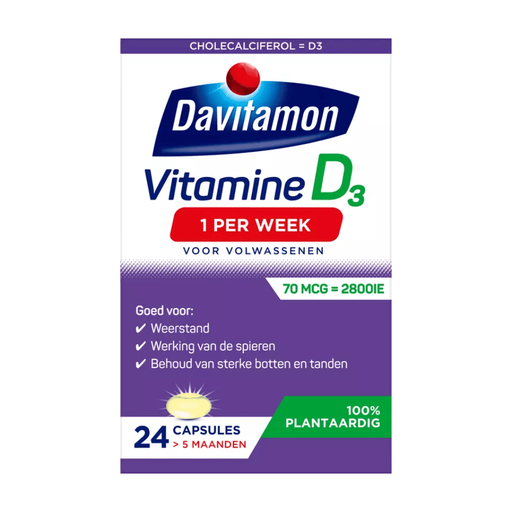
Why it suits this profile: This vegan vitamin D3 capsule is intended for adults who prefer a plant-based formula and weekly intake.
The dosage and frequency are listed separately: 70 mcg per capsule and one capsule per week. This helps avoid confusion between daily and weekly intake.
24 capsules, plant-based cholecalciferol, sugar-free according to the product information, and suitable for vegans and vegetarians.
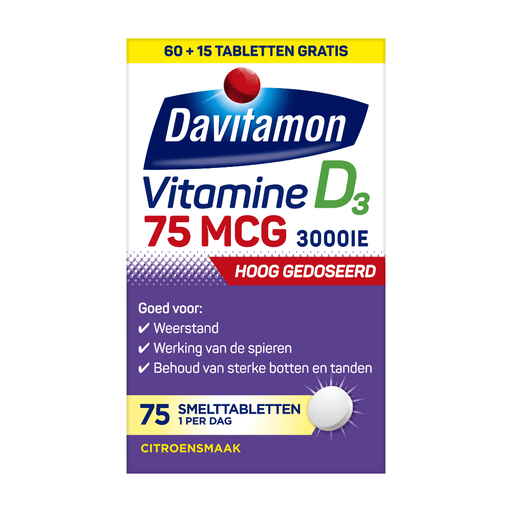
Why it suits this profile: The melt-in-the-mouth tablet is intended for adults seeking a high dosage temporarily and who do not want to take it with water.
The product information explicitly states that 75 mcg is intended for temporary use. Do not automatically use this long term or alongside other vitamin D supplements.
75 mcg per tablet, lemon flavour, no gelatine and no gluten or lactose according to the label. Not suitable for young children.
For babies and young children, vitamin D drops are often more practical than capsules. The Davitamon Vitamin D Drops 25 ml provides 10 mcg per 5 drops and, according to the product information, is intended for babies and children up to 4 years old. Always check the current dosage on the label when buying and keep the dropper clean.
We have compiled a complete, up-to-date list of products that fully meet these strict selection criteria and the applicable European safety regulations.
This depends on the dosage and the product advice. According to the label, a low-dose daily product may be intended for long-term use. A product containing 75 mcg, on the other hand, may be intended for temporary use. Check the best-before date, storage instructions and recommended duration of use. Do not combine different products without calculating the total amount.
Compare the price per daily or weekly dosage, not just the price of the pack. Divide the price by the number of capsules, then consider how often you need to take them. A pack containing 365 capsules may work out cheaper per day, while a weekly capsule means fewer times to remember to take it. Ease of use can therefore be just as relevant as the price per item.
Choose a product that clearly states the appropriate age. Drops or melt-in-the-mouth tablets are commonly used formats for babies and young children. Pay attention to the amount per drop or tablet, potential allergens and supervision when taking it. In the event of illness, medication or uncertainty about pregnancy and nutrition, it is sensible to consult a healthcare professional.
