
Vandaag of morgen in huis

Kwaliteit gegarandeerd

Welkomstaanbiedingen ontgrendelen: GRATIS bezorging | Tot 80% korting | Gratis 30 dagen JoyPlus-proefperiode
Download de app
If you want to buy vitamin D3, you will quickly come across dozens of capsules, drops, melt-in-the-mouth tablets, chewable tablets and gummies. The differences are not limited to brand or flavour. Above all, dosage, age guidance, ease of use and ingredients determine whether a vitamin D supplement is right for your needs.
As a Joybuy Product Recommendation Officer, I filter the most important product information so that you can compare marketing claims with verifiable specifications more easily.
Vitamin D3 at 75 mcg may sound appealing because of the high number, but more is not automatically necessary. You will also find vitamin D 10 mcg, vitamin D 20 mcg and vitamin D 25 mcg on the market. The right amount depends on your age, lifestyle, diet and, where applicable, advice from a doctor or pharmacist.
A product containing 75 mcg per capsule or tablet is therefore not automatically the obvious choice for long-term daily use. Always check the label and recommended duration of use.
A pack containing 365 capsules may seem good value, but also compare the dosage per item and the number of days’ use. A tub with 120 capsules can last four months when taking one capsule a day. Melt-in-the-mouth tablets in a pack of 150 offer a similar duration of use, but have a different composition and user experience.
Also watch out for conflicting information. For example, the product title for the Lucovitaal Vitamin D3 75 µg 3000 IU pack states 80 capsules, while the product specification elsewhere mentions 70 capsules. Check the current packaging and product page before buying.
Gummies and chewable tablets are easy to use, but are not always suitable for young children. Drops are often more practical for babies and toddlers, while capsules are mainly intended for adults. So check the target group and minimum age first, and only then consider flavour or format.
Look at the amount of vitamin D3 per daily dose, not just the total number of tablets. The products in this selection include:
Dutch recommendations vary according to age and circumstances. According to information from the Netherlands Nutrition Centre and the Health Council, an additional daily amount is recommended for certain groups, including young children, people with dark skin, people who spend little time outdoors, pregnant women and certain age groups. From the age of 70, an additional 20 mcg is often mentioned. Check the current guidance for your personal situation.
Vitamin D3 is fat-soluble. Several capsules and drops in this selection use sunflower oil as a carrier. Product information often states that taking them during or after a meal is preferable.
Check whether a product contains gelatine, lactose, sweeteners or animal-derived ingredients. For example, the Lucovitaal capsules containing 25 mcg list bovine gelatine and are not vegan. Some Davitamon melt-in-the-mouth tablets are described as gluten-free, lactose-free and suitable for vegetarians. According to the product information, the Lucovitaal vegan gummies contain no artificial colours or flavourings.
Also pay attention to claims such as “good for the immune system” or “for strong bones”. Treat these as permitted nutrition claims shown in the product information, not as a guarantee against illness or a medical effect. According to information provided by the brands themselves, these claims refer to vitamin D’s recognised role in, among other things, normal bones, muscles and the normal functioning of the immune system.
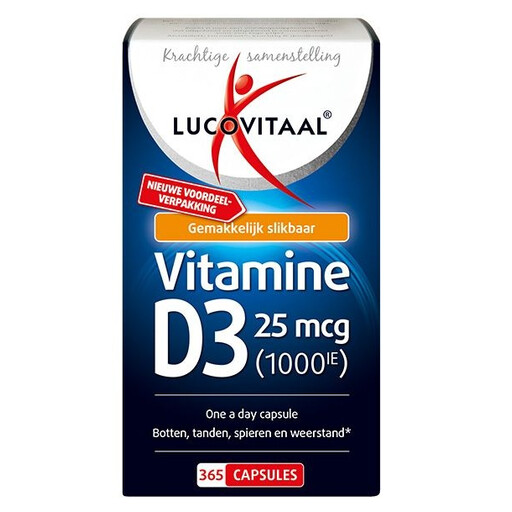
Why it’s a good fit: For adults who want to take one capsule a day and would rather not order a new pack frequently.
The product page clearly states 25 mcg per capsule and 365 capsules. This allows you to check the daily dosage and duration of use at a glance.
365 capsules, 25 mcg of vitamin D3 per capsule and a softgel format for adults.
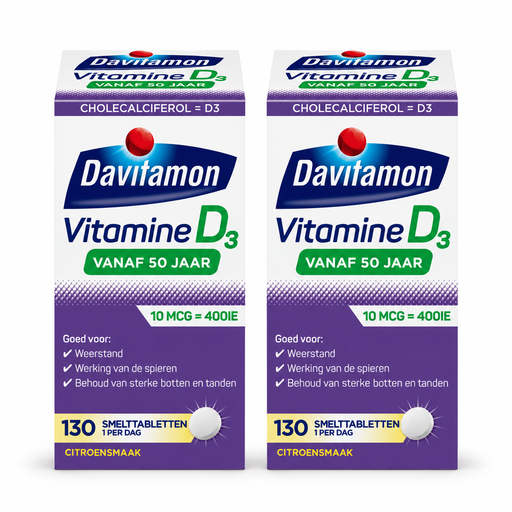
Why it’s a good fit: For over-50s who want to take a tablet without water and value a product listing tailored to their age group.
The dosage is 10 mcg per melt-in-the-mouth tablet and the recommended intake is one tablet a day. This helps avoid confusion between high dosages and everyday use.
260 tablets in total, lemon flavour and, according to the product information, gluten-free, lactose-free and suitable for vegetarians.
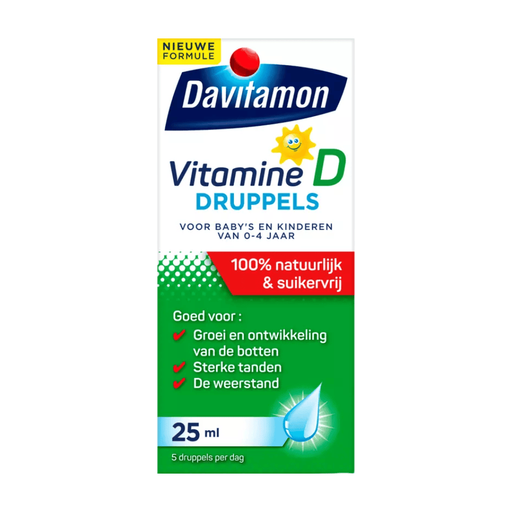
Why it’s a good fit: For parents who want to measure vitamin D accurately for their children using a spoon or during a feed.
The product information states 5 drops as the daily amount for babies and children aged 0 to 4. However, always check the current leaflet.
A 25 ml bottle, a formula containing sunflower oil and vitamin D3, and a dropper bottle for precise dosing.
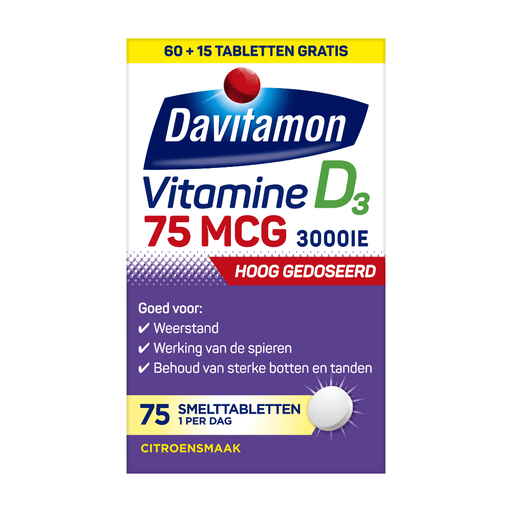
Why it’s a good fit: For adults specifically looking for a high-dose melt-in-the-mouth tablet for short-term use, for example on the advice of a healthcare professional.
The product description explicitly mentions short-term use. So do not automatically treat 75 mcg as the standard for long-term daily intake.
75 mcg per tablet, no water required and, according to the product information, gluten-free, lactose-free, gelatine-free and suitable for vegetarians.
Browse a current selection of vitamin D supplements and compare dosage, format, target group and pack size.
Check the following points on the product page and packaging:
A varied diet and healthy lifestyle remain important. A supplement does not replace these foundations.
That depends on your age and personal circumstances. The range includes vitamin D 10 mcg, 20 mcg, 25 mcg and 75 mcg. Use the recommendation from the Netherlands Nutrition Centre or Health Council as a starting point, and ask a doctor or pharmacist for advice if you are unsure.
Drops are often practical for young children, but check the age recommendation and the number of drops per day. Do not give several products containing vitamin D at the same time without checking the total dosage.
When taking one dose a day, a pack containing 60 items lasts approximately two months, 120 items approximately four months, and 365 capsules approximately one year. With drops, the duration of use depends on the number of drops per dose and the shelf life after opening.
