
Vandaag of morgen in huis

Kwaliteit gegarandeerd

Welkomstaanbiedingen ontgrendelen: GRATIS bezorging | Tot 80% korting | Gratis 30 dagen JoyPlus-proefperiode
Download de app
Buying a vitamin D3 supplement seems straightforward until you have to choose between vitamin D tablets, capsules, melt-in-the-mouth tablets, drops and gummies. Dosages also vary considerably, from vitamin D 10 mcg to 20, 25 and even 75 mcg per day.
Packaging also regularly uses terms such as “high-dose”, “extra-strength” or “for the immune system”. These descriptions do not automatically mean that a product is right for your situation. As a Joybuy Product Recommendation Officer, I therefore focus mainly on verifiable information: the amount of vitamin D3, the directions for use, the ingredients and the intended user group.
A vitamin D3 supplement containing 75 mcg provides considerably more vitamin D than a product containing 10 mcg. That does not automatically make it the right choice. The recommended amount depends, among other things, on your age, exposure to sunlight, skin tone and personal circumstances.
Davitamon’s product description refers to advice from the Dutch Health Council: certain groups need an additional 10 mcg daily, while 20 mcg per day is mentioned for adults aged 70 and over. So first check which amount is appropriate for your situation before choosing vitamin D 75 mcg.
A capsule should be swallowed with water. A melt-in-the-mouth tablet dissolves on your tongue and is handy when you do not have water available. Vitamin D drops are practical for young children, but they require accurate dosing. Gummies can be pleasant to take, but they often contain sweeteners.
Convenience plays a part in whether you take the supplement every day as stated on the label. A high-dose product left unused in the cupboard has little practical value.
Always check the full ingredients list. Some vitamin D capsules contain gelatine and are therefore not suitable for vegans. Davitamon states that several of its melt-in-the-mouth tablets are suitable for vegetarians and free from gluten and lactose. According to the product description, the plant-based weekly capsules are intended for vegans.
When choosing vitamin D for children, also check for allergens. For example, Davitamon’s oil for babies and young children contains purified peanut oil. This is important information for families with a peanut allergy.
The amount of vitamin D3 is given in micrograms, abbreviated as mcg or µg. Sometimes the amount is also shown in international units (IU):
Do not choose solely based on the highest number. Check whether the recommended daily dose is one tablet, capsule, gummy or a specified number of drops. For example, a product containing 2.5 mcg per tablet may be intended to be taken as several tablets per day.
A vitamin D supplement for children is not automatically suitable for adults, and vice versa. Check the minimum age on the label:
Do you have a medical condition, take medication or are you pregnant? Always discuss taking a higher dosage than stated on the label with a doctor or pharmacist first.
Vitamin D3 is cholecalciferol. The source of the excipients varies from product to product. So check the following:
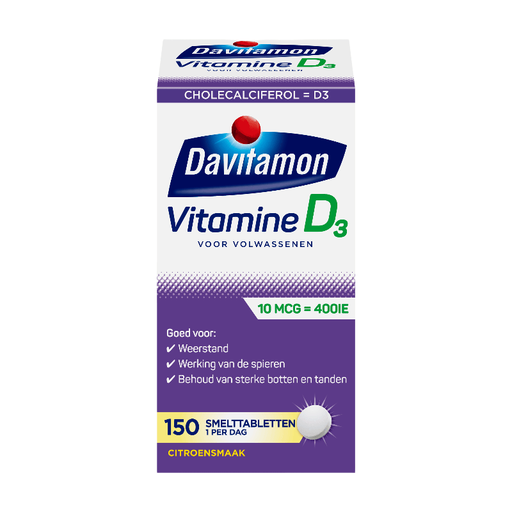
Why it suits this profile: The daily dosage is 1 melt-in-the-mouth tablet containing 10 µg of vitamin D3. This is straightforward for adults looking for a simple format without having to swallow a capsule.
The dosage and maximum daily amount are clearly stated. You do not need to work out how to combine several tablets yourself.
150 tablets, 10 µg per tablet, a melt-in-the-mouth format requiring no water and, according to the product description, suitable for vegetarians.
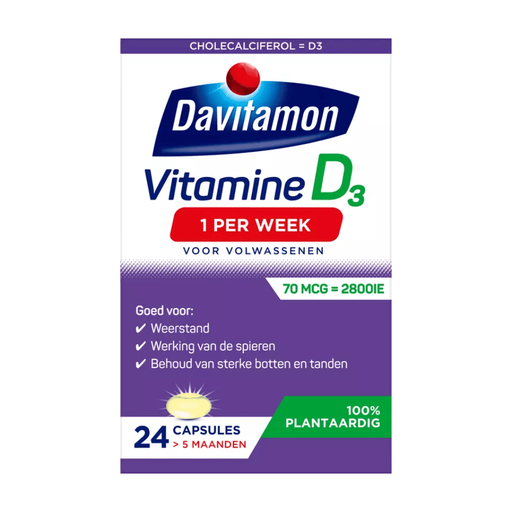
Why it suits this profile: According to the product description, this vegan vitamin D provides one capsule per week containing 70 µg of vitamin D3. This suits adults who often forget to take a supplement every day.
The weekly dosage means you do not have to combine several products every day. Do bear other vitamin D supplements in mind.
Plant-based formula, 24 capsules and a set routine of one capsule per week.
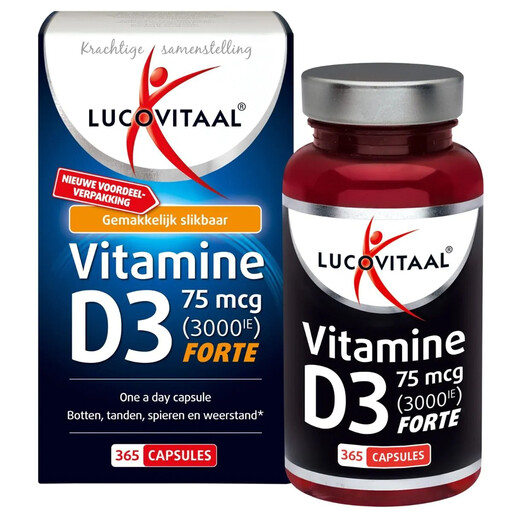
Why it suits this profile: The capsule contains 75 mcg of vitamin D3 and is intended for adults. The pack contains 365 capsules, but this dosage requires extra attention to the recommended period of use.
The amount per capsule is clearly stated. Do not automatically use this high dosage over a long period; speak to a doctor or pharmacist if in doubt.
365 softgel capsules, one capsule per day and sunflower oil as a bulking agent. According to the ingredients list, the capsule contains bovine gelatine.
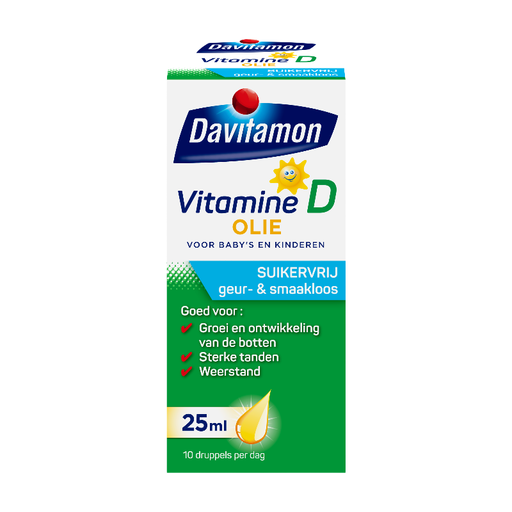
Why it suits this profile: According to the product description, these drops are intended for babies and young children. A daily dose of 10 drops provides 10 mcg of vitamin D3.
The amount is linked to a set number of drops. Please note: the oil contains peanut oil and is not suitable for anyone with a known peanut allergy.
25 ml contents, sugar-free according to the product description and suitable for giving from a spoon.
We have put together a complete, up-to-date list of products that fully meet these strict selection criteria and the applicable European safety regulations.
That depends on your age and personal circumstances. The product information mentions an additional 10 mcg per day for various at-risk groups. For adults aged 70 and over, 20 mcg per day is mentioned. Do not take a higher dosage, such as 75 mcg, without following the instructions on the label or seeking medical advice.
Capsules are suitable if you want to take a product with water every day. Melt-in-the-mouth tablets are convenient when you do not have water. Drops are particularly suitable for babies and young children, as you can give the dose from a spoon. Choose the format that fits your daily routine and always check the stated number to take.
Check the best-before date on the packaging and follow the storage advice. Store most products in a dry, dark place at room temperature. An opened bottle of drops may have a shorter period of use; for the product mentioned, for example, the instructions state that it should be used within three months of opening.
