
Vandaag of morgen in huis

Kwaliteit gegarandeerd

Welkomstaanbiedingen ontgrendelen: GRATIS bezorging | Tot 80% korting | Gratis 30 dagen JoyPlus-proefperiode
Download de app
Choosing a vitamin D3 supplement might seem straightforward: you pick a dosage, select capsules or gummies, and place your order. However, there are clear differences between vitamin D3 capsules, tablets, gummies and drops. A high dosage isn't automatically the right choice, and an appealing format says nothing about the contents.
Pay particular attention to these three common pitfalls:
Vitamin D3 is usually listed in micrograms, abbreviated as mcg or µg, and sometimes in international units, or IU. The most common conversions are:
A vitamin D3 10 mcg supplement can meet the daily supplementary needs of certain groups. A product with vitamin D3 20 mcg is often offered for adults with a higher requirement. A vitamin D3 25 mcg supplement is a practical middle option, while 75 mcg or vitamin D3 3000 IU is clearly a higher dose.
The right amount depends on age, diet, sun exposure and personal circumstances. Do not use multiple products containing vitamin D at the same time without calculating the total dosage. If you are taking medication, are pregnant or have a medical condition, it is wise to consult a doctor or pharmacist.
The content is important, but ease of use often determines whether you take a supplement consistently.
A fat-soluble vitamin like D3 is best taken during or after a meal with many products. Always follow the dosage on the label.
A product for adults is not automatically suitable as vitamin D for children. Look at the minimum age and the recommended daily dose. For children, vitamin D drops or melt-in-the-mouth tablets with 10 mcg are often offered.
If you eat a vegetarian or vegan diet, you need to pay extra attention to the source and excipients. Gelatine in a capsule makes the product not vegan. Vegan vitamin D3 is often recognisable by an explicit mention on the product page or packaging. With gummies and chewable tablets, also check sweeteners, allergens and flavourings.
According to the product information of the brands below, vitamin D contributes to the normal function of the immune system, the normal function of muscles and the maintenance of normal bones and teeth. These are permitted nutrition claims; they do not make a supplement a medicine and do not replace a varied diet.
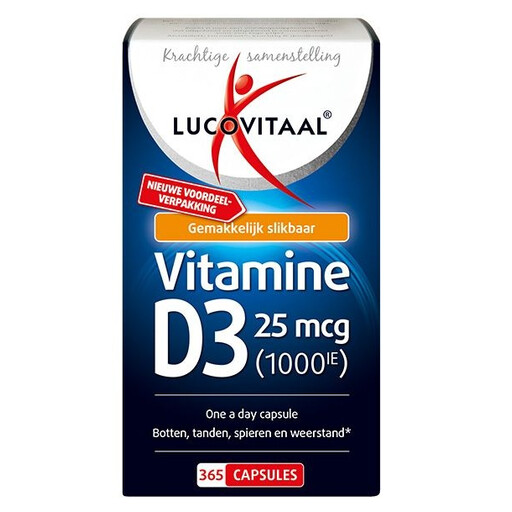
Why this fits the profile: A pack of 365 small capsules is practical for daily use without needing to reorder quickly. Each capsule contains 25 mcg of vitamin D3.
The dosage and content are clearly specified. However, do check that the gelatine in the ingredients suits your diet.
25 mcg per capsule, 365 capsules, unscented and, according to the product information, easy to take.
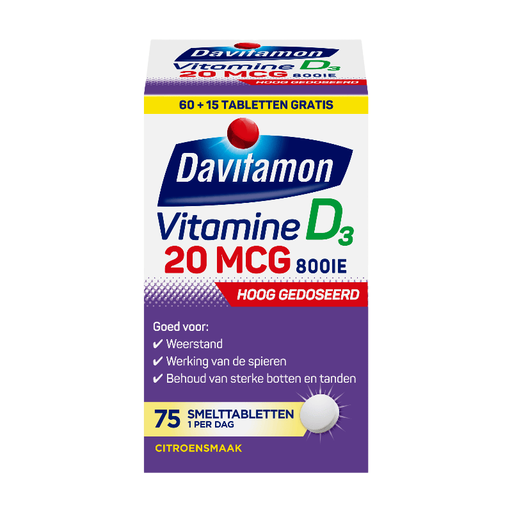
Why this fits the profile: The melt-in-the-mouth tablet is suitable for adults who don't want to use water. The light lemon flavour and vegetarian composition make taking it straightforward.
The daily dose is one tablet and is clearly stated as 20 mcg. This means you don't have to combine several small tablets yourself.
20 mcg per melt-in-the-mouth tablet, 75 pieces, lactose-free and gluten-free according to the product information.
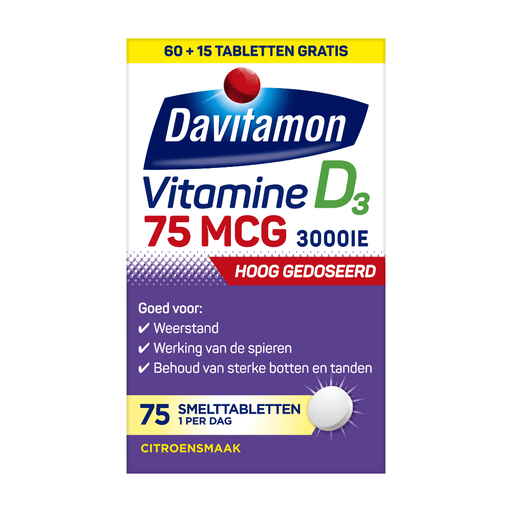
Why this fits the profile: According to the product information, this product is intended as a temporary supplement for adults and provides 75 mcg, or 3000 IU, per melt-in-the-mouth tablet.
The packaging explicitly states temporary use. This helps prevent a high dosage from being used long-term without assessment.
75 mcg per tablet, melts without water, lemon flavour and, according to the product information, free from gelatine, gluten and lactose.
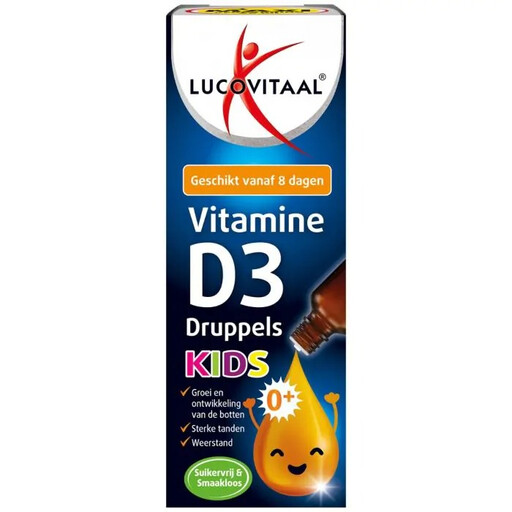
Why this fits the profile: Drops are easy to administer to babies and young children. According to the product information, the formula contains sunflower oil and vitamin D3.
The dosing instruction of six drops per day is stated. Always check that your child is not receiving another product with vitamin D.
50 ml drop bottle, suitable from a young age according to the product information and easy to mix or administer directly.
We have compiled a complete, up-to-date list of products that fully meet these strict selection criteria and comply with current European safety regulations.
Check the expiry date on the packaging and follow the storage advice. Capsules and tablets generally keep in their original, sealed packaging in a dry place at room temperature. Drops and gummies may have a shorter shelf life after opening. Therefore, follow the manufacturer's instructions.
Capsules are usually tasteless and often contain few excipients, but they may contain gelatine. Gummies are easier to chew and often have a fruit or orange flavour, but they typically contain sweeteners. Above all, compare the amount of vitamin D3 per piece and the recommended daily dose.
75 mcg, equivalent to 3000 IU, is a high dosage. Some products state this amount for temporary use in adults. Do not automatically use such a dosage long-term and, if in doubt, consult a doctor or pharmacist.
