
Vandaag of morgen in huis

Kwaliteit gegarandeerd

Welkomstaanbiedingen ontgrendelen: GRATIS bezorging | Tot 80% korting | Gratis 30 dagen JoyPlus-proefperiode
Download de app
A vitamin D supplement might seem straightforward to choose, but packaging can cause confusion. One vitamin D3 contains 10 mcg, another 75 mcg. The form also varies: from vitamin D tablets and capsules to vitamin D melt-in-the-mouth tablets. A higher dosage is not automatically suitable for daily use.
The main pitfalls for shoppers are:
First, check the amount of vitamin D3 (cholecalciferol) per tablet or capsule. The amount is usually given in micrograms, abbreviated as mcg or µg. Sometimes IU is also listed. In the product information:
Your exact needs may depend on age, lifestyle, skin type, diet and medical advice. If you are taking medication or have a medical condition, consult a doctor or pharmacist before use. Do not exceed the recommended daily dosage.
The form mainly determines ease of use.
A melt-in-the-mouth tablet dissolves on the tongue without water. This can be handy when you're on the go, at work, or for adults who find ordinary tablets difficult. Do check the sweeteners and flavourings. Some products contain mannitol, for example; according to the product information, excessive use can have a laxative effect.
Capsules are compact and easy to take with you. The products in this selection often contain sunflower oil as a filler and gelatine as the capsule material. If you are buying vegetarian or vegan, you need to check the label extra carefully. A capsule is usually taken with water, preferably during or after a meal.
Ordinary tablets are often a practical choice for daily use. Pay attention to the number of tablets per day, the dosage per tablet and any allergens. "50+" on the packaging does not automatically mean that every product contains the same amount of vitamin D.
A transparent comparison starts with three fixed points:
Dosage per daily serving
Don't just compare the pack size, but especially the amount of vitamin D3 per recommended daily dose. A product with 150 tablets might contain 10 mcg per tablet, while a smaller pack provides 25 mcg per capsule.
Target audience and duration of use
Check whether the product is intended for adults, over-50s, children or temporary use. A product for children is not automatically suitable for adults, and vice versa.
Ingredients and dietary requirements
Look out for gluten, lactose, gelatine, milk derivatives, sweeteners and flavourings. The product information for various Davitamon melt-in-the-mouth tablets states that they are gluten-free and lactose-free and suitable for vegetarians. According to the ingredients list, the Lucovitaal 25 mcg and 75 mcg capsules contain beef gelatine and are therefore not vegetarian.
According to permitted nutrition claims, vitamin D contributes to the normal absorption of calcium and phosphorus, the maintenance of normal bones and teeth, normal muscle function and the normal function of the immune system. This wording describes the permitted role of vitamin D; it is not a promise that a supplement prevents or treats any condition.
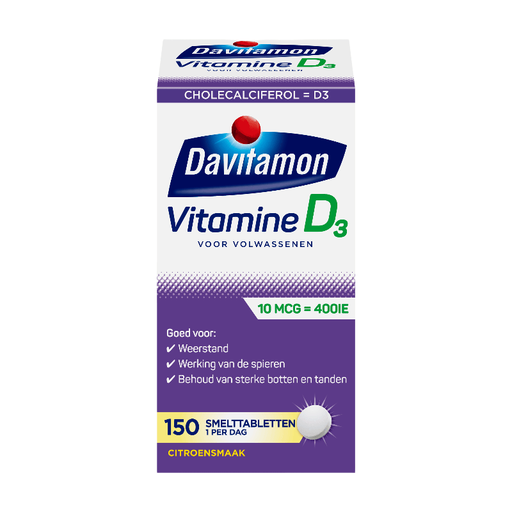
Why this fits the profile: The dosage of 10 mcg per melt-in-the-mouth tablet is straightforward for adults looking for a daily supplement. The tablet dissolves in the mouth without water.
The dosage and daily serving are clearly stated, so you don't have to rely only on the number of tablets.
150 melt-in-the-mouth tablets; 10 mcg vitamin D3 per tablet; according to the product information, gluten-free and lactose-free and suitable for vegetarians.
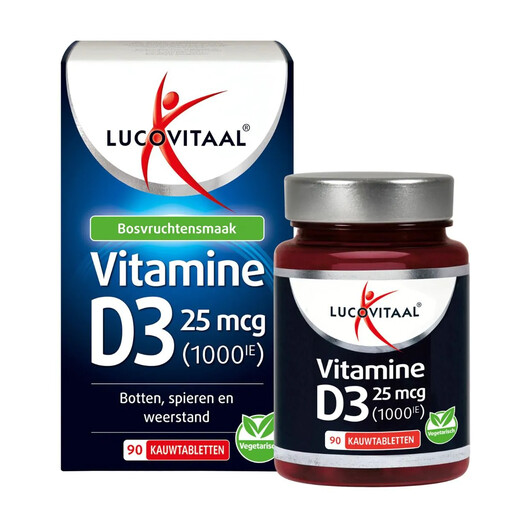
Why this fits the profile: The chewable tablet delivers 25 mcg vitamin D3 per tablet and has a berry flavour. This suits adults who want a higher daily dosage and an alternative to capsules.
The amount of 25 mcg per tablet is clearly stated. This helps you avoid choosing a chewable tablet without checking the actual dosage.
25 mcg vitamin D3; sugar-free chewable tablet according to the product description; vegetarian according to the product information.
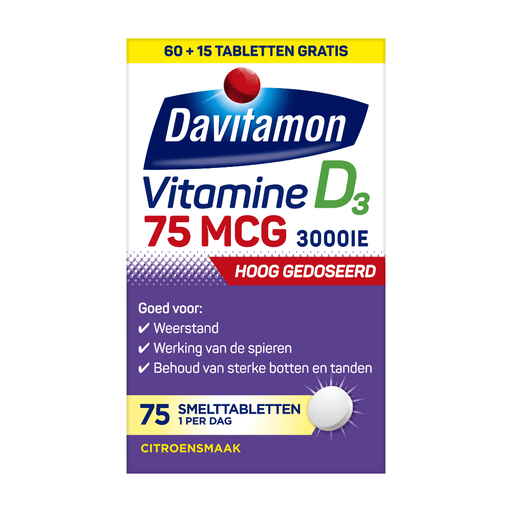
Why this fits the profile: This is a high-dose melt-in-the-mouth tablet with 75 mcg per tablet for adults who specifically need a temporary, higher supplement.
The product description explicitly states that this dosage is for temporary use. This makes the difference from a standard daily vitamin D supplement clear.
75 mcg vitamin D3; lemon flavour; dissolves without water; according to the product information, gluten-free, lactose-free and gelatine-free.
We've put together a full, up-to-date list of products that fully meet these strict selection criteria and comply with current European safety regulations.
That depends on the dosage and your personal situation. According to the product information, a product with 10 or 20 mcg is aimed at daily supplementation for certain groups. A product with 75 mcg is recommended for temporary use according to the description. Always follow the label and, if in doubt, consult a doctor or pharmacist.
For certain groups, Dutch health guidance recommends extra vitamin D throughout the year. Whether this applies to you depends on factors including age, skin type and sun exposure. Check the current guidelines and choose a product whose dosage matches them.
Capsules are suitable if you can easily take a small softgel with water. Vitamin D melt-in-the-mouth tablets are more convenient if you don't want to use water. Also look at the ingredients: capsules may contain gelatine, while melt-in-the-mouth tablets often contain sweeteners and flavourings.
