
Vandaag of morgen in huis

Kwaliteit gegarandeerd

Welkomstaanbiedingen ontgrendelen: GRATIS bezorging | Tot 80% korting | Gratis 30 dagen JoyPlus-proefperiode
Download de app
A vitamin D supplement may seem simple to choose, but packaging can make comparisons difficult. One capsule contains vitamin D3, while another supplement comes as a gummy or effervescent tablet. Terms such as “extra strong”, “natural” and “for immunity” do not always tell you enough about the formulation.
For adults who spend little time outdoors, have dark skin, are pregnant or are getting older, extra vitamin D may be relevant. However, a high dosage is not automatically the right choice. As a Joybuy Product Recommendation Officer, I therefore focus mainly on verifiable points: dosage, ingredients, ease of use, target group and total supply.
A vitamin D3 capsule containing 75 mcg provides considerably more than a supplement with 25 mcg or 10 mcg. This may suit a specific need, but it is not necessary for everyone. Vitamin D is fat-soluble and is stored in the body. Always add up the total amount if you use several supplements.
Also pay attention to the difference between micrograms and international units:
Follow the recommended dosage on the label. Consult a doctor or pharmacist if you take medication, have a medical condition, are pregnant or are unsure about taking a higher dosage.
Not every vitamin D3 product is suitable for vegans. Many capsules contain gelatine, including some 25 mcg or 75 mcg vitamin D3 capsules. Always check both the ingredients list and the nutritional information.
A vegan vitamin D product may, for example, use vitamin D3 from a plant-based source. Also check the excipients, sweeteners and allergens. A product may be free from lactose and gluten but still not be vegan because it contains gelatine.
A box of 60 capsules is not always better value than a pack containing 120 or 365. Work out the cost per day or per week. A weekly capsule may also be more convenient for people who sometimes forget to take a supplement every day.
The format matters too:
Do not look only at the amount per capsule, but at the recommended daily or weekly dosage. For example, a product containing 70 mcg per capsule may be intended to be taken as one capsule per week. According to the product information, Davitamon Vitamin D 100% Plant-Based provides one capsule per week, containing 70 mcg of vitamin D3.
For adults looking for a daily supplement, vitamin D 25 mcg and vitamin D 20 mcg are straightforward options. A product containing 75 mcg requires more attention to your total intake. Do not use this dosage alongside other vitamin D products without seeking advice first.
Vitamin D3, also known as cholecalciferol, is a commonly used form. Its source varies from one product to another:
Check the description for vegan, vegetarian, gelatine and potential allergens. If in doubt, follow the product label.
A daily capsule is easy to incorporate into a routine. A pack containing 365 capsules may be suitable if you do not want to reorder regularly. A weekly capsule reduces the number of times you need to take it, but does require a regular reminder, such as on a particular day of the week.
Different considerations apply to children than to adults. According to the product information, a product such as vitamin D oil for babies and children contains 10 mcg per 10 drops, but also contains peanut oil. Always check the age guidance, dosage and allergens.
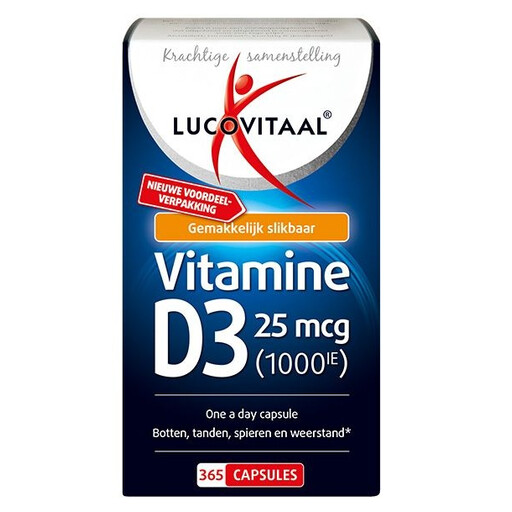
Why it suits this profile: The daily dosage of 25 mcg and supply of 365 capsules make this a straightforward choice for adults who want to establish a consistent routine.
The amount of vitamin D3 per capsule is clearly stated. However, check that the gelatine capsule is suitable for your lifestyle if you follow a vegan diet.
25 mcg vitamin D3 per capsule; 365 capsules; small capsules according to the product description.
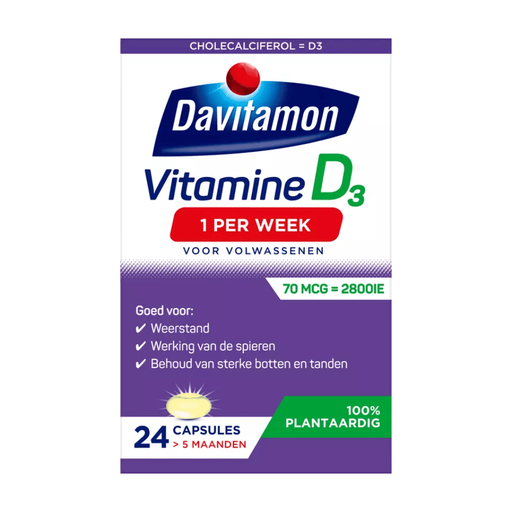
Why it suits this profile: Suitable for adults looking for a plant-based formulation who prefer one regular intake per week.
The product information describes the capsules as plant-based, vegan, lactose-free, gluten-free and sugar-free. The weekly dosage means you do not need to keep track of an additional daily intake.
24 capsules; 70 mcg vitamin D3 per capsule; one capsule per week according to the label.
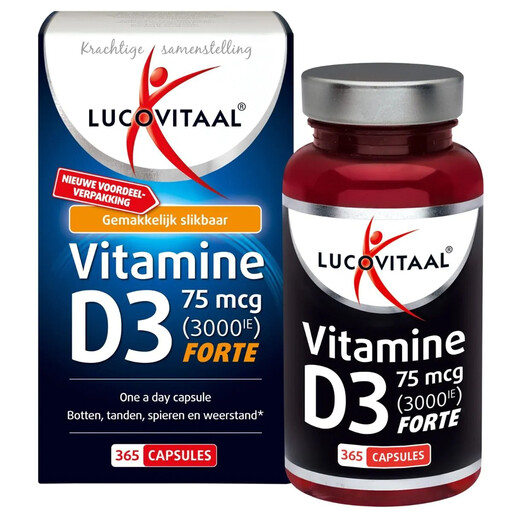
Why it suits this profile: This option is intended for adults who are deliberately looking for a higher dosage, for example following advice from a healthcare professional.
The 75 mcg dosage is clearly stated in the product information. Do not simply combine this with other vitamin D supplements.
75 mcg vitamin D3 per capsule; 365 capsules; capsules without added colourings or flavourings according to the product description.
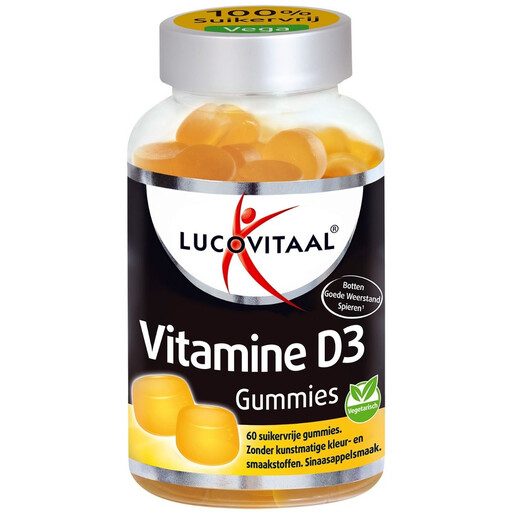
Why it suits this profile: The chewable format with orange flavour is practical for adults who would rather avoid capsules.
The packaging states a recommended intake of one gummy per day and 25 mcg of vitamin D3 per gummy. However, note the natural sweeteners present.
Vegan gummies; 25 mcg per gummy; 60 pieces; no artificial colourings or flavourings according to the product information.
If you are also looking for a vitamin C supplement alongside vitamin D, you can choose a separate capsule or a combination containing D3, zinc and selenium. According to the product information, Lucovitaal Vitamin C 1000 mg contains 1000 mg of vitamin C per capsule and is vegan. Davitamon Vitamin C + Extra D3, Zinc & Selenium contains 600 mg of vitamin C, 5 mcg of vitamin D3, 10 mg of zinc and 55 mcg of selenium per effervescent tablet.
A higher amount, such as vitamin C 1000 mg, is not automatically necessary. According to the product information, sensitive users may experience gastrointestinal discomfort if they take too much. Do not take several products containing the same vitamins and minerals without checking your total intake.
We have compiled a complete, up-to-date list of products that fully meet these strict selection criteria and the applicable European safety regulations.
That depends on your personal circumstances, age, lifestyle and any recommendations from a healthcare professional. First compare the dosage, then choose the format you can use consistently. Vitamin D3 capsules or chewable tablets are practical options for many daily routines.
Vitamin D3 is a form of vitamin D, usually referred to as cholecalciferol. Check the label for the exact amount in micrograms. The format, source and excipients may vary between supplements.
Calculate this based on the recommended intake. A pack containing 365 daily capsules provides approximately one year’s supply. For a product containing one capsule per week, the number of weeks will be stated on the label. Always check the best-before date and store the supplement according to the instructions on the packaging.
