
Viewer of dark underwater scenes
You want bright fish and fine details to stand out against a dark background. RTINGS.com describes local dimming as a trade-off: bright objects can have halos around them, or dark details can be lost.


OLED can be an appealing choice for changing aquarium scenes in a dark room. If the same image or fixed interface elements stay on screen for long periods, mini-LED LCD is another option worth comparing. RTINGS.com notes that prolonged display of static elements can put OLED screens at risk of burn-in, while local dimming on mini-LED displays can cause halos or loss of detail in dark scenes.
You want bright fish and fine details to stand out against a dark background. RTINGS.com describes local dimming as a trade-off: bright objects can have halos around them, or dark details can be lost.
You leave the aquarium running for long periods or keep showing the same interface. RTINGS.com identifies burn-in from prolonged display of static image elements as something to consider with OLED.
You want the screen size, resolution and inputs to suit your computer or console and the space available. Connections and display formats vary by model.
Choose this option if: your aquarium mainly shows changing images and dark scenes matter to you.
Trade-off: fixed image elements that recur over long periods make burn-in a relevant consideration. Check the care instructions and warranty for the exact model.
Choose this option if: the aquarium is often left running for a long time with the same frames or on-screen controls.
Trade-off: local dimming varies by model; assess the potential for halos and loss of shadow detail.
Choose this option if: you’re choosing the monitor for other uses too, and dark aquarium scenes aren’t a deciding factor.
Trade-off: don’t judge black levels by the gaming label, refresh rate or an HDR claim alone.
| What to consider | What to look for when buying | Who it matters most to |
|---|---|---|
| Contrast and detail in dark scenes | Look at tests of the exact model showing bright objects against a dark background; check for halos and lost shadow detail. | If I want to see bright fish against a dark background without distracting halos, picture quality comes first for me. Around 36% of consumers say contrast and dark detail are their main buying concern. |
| Long viewing periods and static elements | Check whether the aquarium displays fixed elements, and read the care instructions and warranty terms for the model. | If the same aquarium frame stays on screen for a long time, I take the risk of OLED burn-in into account. Around 29% of consumers give long-term use with static image elements top priority. |
| Screen size and source device | Compare the available space, resolution and video output of your computer or console with the specifications and inputs of the exact model. | If my screen needs to fit in a specific spot and work with my computer or console, I check the size and connection first. Around 21% of consumers make setup and source compatibility their top priority. |
| Energy use and aftercare | Compare the EU energy label and product information sheet for the exact monitor. Also read the warranty terms and keep your proof of purchase. | If the aquarium is often switched on, I want to consider energy-use information and what happens if something goes wrong. Around 14% of consumers put energy use and aftercare at the top of their list. |
The way local dimming is implemented can affect whether bright objects develop halos or dark details are lost.
Look at picture tests of the exact model showing bright objects against a dark background.
With OLED, displaying static elements repeatedly over long periods is a different use case from showing changing scenes.
Check the actual image pattern, care instructions and warranty terms for the model you’re considering.
A quoted refresh rate alone doesn’t tell you whether the monitor will suit your aquarium source or the space available.
First, check the dimensions, resolution and video output of your source against the monitor’s specifications.
The AW2725Q is a model-specific example of a 27-inch 4K QD-OLED gaming monitor.
The EX321UX is a model-specific mini-LED option with a 32-inch 4K screen.
The Odyssey Neo G7 G75NB LS32BG750NPXEN is a model-specific example of a 32-inch 4K mini-LED monitor.
The 27GS95QE-B is an example of the 27-inch QHD OLED option; LG marks this specific model as discontinued.
This selection includes OLED and mini-LED gaming monitors to compare for aquarium scenes in a dark room, with long-term viewing and compatibility with your setup in mind.
 No image available
The mini-LED LCD option may suit you if the aquarium is left running with fixed image elements for long periods; assess its dimming performance in dark scenes separately.
The product information lists 1,152 local dimming zones. The title lists 4K, 160 Hz in 4K mode and 320 Hz in FHD mode; check that the source and mode you want will work with your setup.
 No image available
OLED may suit changing dark aquarium scenes; if static elements remain on screen for long periods, bear the burn-in trade-off in mind.
The product title lists QHD (2560 × 1440), 240 Hz, 2× HDMI 2.1 and 1× DisplayPort 1.4. Check that the connection you need and the screen care instructions suit your setup.
 No image available
The QD-OLED option may suit dark scenes that change frequently; factor in the repeated display of fixed elements over long periods when making your choice.
The product title lists 2560 × 1440, 240 Hz, HDMI, DisplayPort and USB-C. Check which input your computer or console needs.
 No image available
This compact 4K QD-OLED model may suit you if changing dark scenes and a smaller screen size are important; bear in mind the trade-off around static images.
The product title lists 3840 × 2160. The product information lists HDMI 2.1 and DisplayPort 1.4; check that these inputs suit your source.
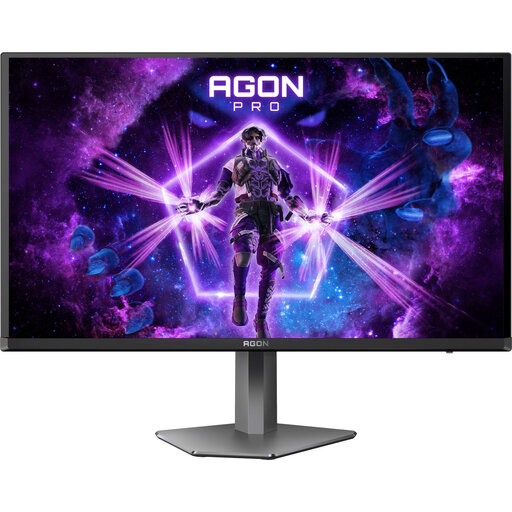 No image available
The QD-OLED option may suit changing dark aquarium scenes; if fixed elements stay on screen for long periods, bear the burn-in trade-off in mind.
The product information lists 2560 × 1440 and 240 Hz via DisplayPort; the listed refresh rate via HDMI is 144 Hz. Check which input your source uses.
It depends in part on what’s displayed: repeatedly showing still elements for long periods makes burn-in a relevant consideration. LG describes pixel cleaning when visible marks appear, but this feature doesn’t mean permanent burn-in is impossible. Check the instructions and warranty for the exact model.
Local dimming can create halos around bright subjects and cause a loss of fine detail in dark areas. Compare picture tests of the dimming implementation on the specific model, rather than looking only at the number of zones.
Use the EU energy label and product information sheet for the exact monitor. The European Commission describes an energy-efficiency scale from A to G for electronic displays; the label doesn’t tell you anything about contrast.
According to the Dutch government, the cooling-off period for distance sales is usually 14 days. If a product isn’t working properly, contact the seller to find a solution; the Dutch government lists a free repair or replacement product as possible outcomes. The applicable outcome depends on the circumstances.