What should you look for when buying?
Shure recommends trying different distances and positions to find the balance you want between the instrument sound and the sound of the room.
Standalone stereo recorder
A good choice if: you want to record both violinists with one compact setup, without a computer.
Bear in mind: the recording position matters; a greater distance may also pick up more room sound. Check the model’s storage and power requirements.
Two small-diaphragm condenser microphones
A good choice if: you want to position a stereo pair yourself and have suitable inputs.
Bear in mind: you’ll need recording equipment, XLR connections and phantom power; the setup may also pick up reflections.
USB stereo microphone
A good choice if: you already record using a compatible computer or mobile device.
Bear in mind: device and app compatibility, and the position of both the microphone and the connected device. This is not a standalone recorder.
| What to consider |
What to look for when buying |
Who is this important for? |
| Clarity in a reflective room |
Make a test recording in the intended position and listen to both violins as well as the sound of the room. |
If I’m recording in a reverberant room, I want to hear both violins clearly and assess how much room sound is present. Around 36% of shoppers put clarity in reflective spaces first. |
| Quick, standalone recording |
Check whether the model records on its own and what storage and power it requires. |
If I want to record a rehearsal without a computer, I want to be able to start quickly and listen back straight away. Around 29% of shoppers give standalone recording top priority. |
| Stereo balance |
Check whether you can position the microphones or adjust the stereo image; listen to see whether one violin dominates. |
If I want to assess the balance between the two violin parts, I want to be able to adjust the setup or stereo playback. Around 21% of shoppers put this balance first. |
| Complete setup |
Check the inputs, phantom power, cables, storage and mounting requirements for the exact model. |
If I’m buying equipment to record a lesson, I want to avoid finding that essential components are missing. Around 14% of shoppers give a complete, usable setup top priority. |
USB microphones at Joybuy
The products below are USB microphones. Check that they work with your intended recording device and app, then make a test recording of both violins in the room.
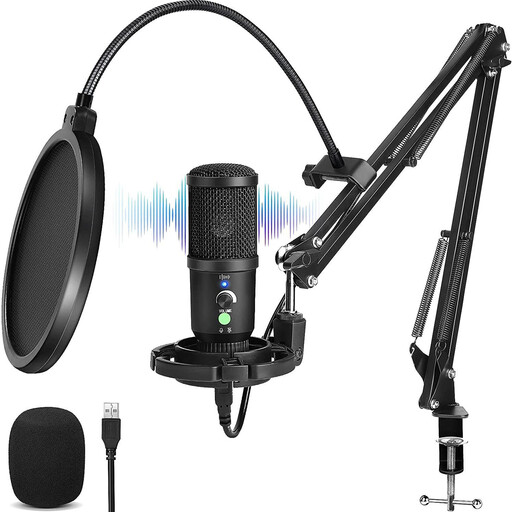 No image available
USB Condenser Microphone, Cardioid Pattern
May be suitable if you want to record using a compatible connected device; check the connection and make a test recording of both violins.
USB condenser microphone with cardioid pickup pattern.
View at Joybuy
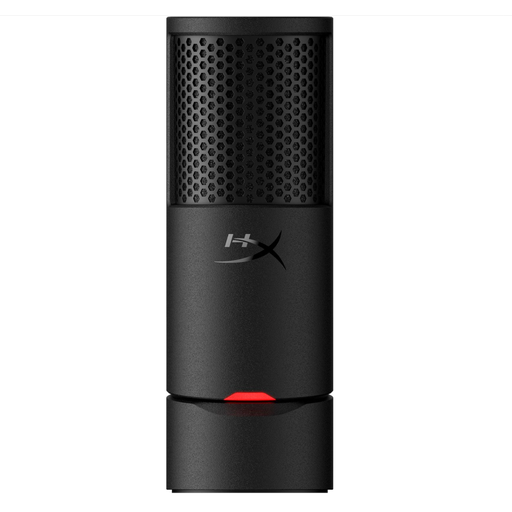 No image available
HyperX SoloCast 2 USB Gaming Microphone, Cardioid, Black
May be suitable for recording through a compatible USB device; check that your recording app recognises the microphone.
USB gaming microphone with cardioid pickup pattern.
View at Joybuy
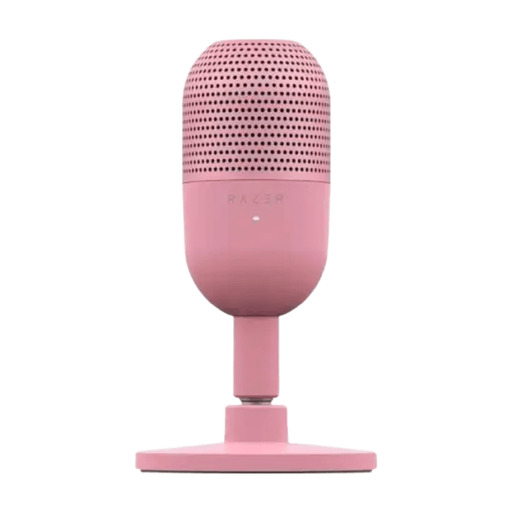 No image available
Razer Seiren V3 Mini Quartz Ultra-Compact USB Microphone
May be suitable for a USB recording setup; check the connection and compatibility with your intended device and recording app.
Ultra-compact USB microphone.
View at Joybuy
Frequently asked questions
Where should I position the microphone for two violinists?
Start in front of both players and make a short test recording. Listen to check whether both parts are balanced and how much room sound you can hear. Move the microphone if reflections or one violin dominating the recording are a problem. There is no single ideal distance for every room.
Do I also need a recorder or audio interface for a stereo pair?
Yes, you’ll need recording equipment with suitable inputs. A pair such as the RØDE M5 outputs a signal via XLR and requires P24 or P48 phantom power. Also check how you’ll record the signal and mount the microphones. According to Zoom, the H4essential has two XLR/TRS inputs with phantom power.
What should I check before buying?
For a standalone recorder, check its storage and power requirements. For a separate microphone pair, also check the cables, mounting options and recording equipment you’ll need. The required components vary by model and configuration, so also check what’s included with the exact product.
Can a school keep or share a recording of a violin duet?
If pupils or other people can be identified in an audio recording, it may contain personal data. The Dutch Data Protection Authority states that an appropriate legal basis under the GDPR is required for processing, and that schools must inform the people concerned. Whether recording, keeping or sharing is permitted in a particular situation depends, among other things, on the purpose, the party responsible, the people involved and the legal basis chosen. Discuss this with the school or its data protection officer before using or publishing the recording.


