
Seller of unique vintage cameras
You photograph a different pre-owned camera each time and want to show its engravings, connections and signs of wear clearly.


Start with a stable setup and even lighting. For small engravings or signs of wear, the lens you choose matters most—not just the camera body. RTINGS.com emphasises that presentation and lighting can matter more than the camera itself for product photography. So only buy a new body if your current camera, with a suitable lens and setup, cannot capture enough detail.
You photograph a different pre-owned camera each time and want to show its engravings, connections and signs of wear clearly.
You want to take overview and detail shots with a repeatable setup, without having to adjust the lighting and framing each time.
You want to know whether better lighting and support will be enough before buying a camera body and a suitable lens.
| What to consider | What should you check? | Who is this important for? |
|---|---|---|
| Showing small details | Compare the maximum magnification of the exact lens and the working distance for the framing you want. | If I want to show serial numbers, engravings or small marks clearly, I look at how close I can focus and how much room there is for lighting. Around 33% of consumers prioritise capturing these kinds of details. |
| Controlling reflections and colour | Check that the lens leaves enough room for lighting and that you can adjust the exposure and white balance. | With shiny metal cameras, I want to control reflections and show the colour faithfully without hiding signs of wear. Around 25% of consumers put this control first. |
| Consistent sharpness | Look at the options for aperture control, manual focus and any focus bracketing features. | When I photograph lots of different cameras, I want to get the front and back as consistently sharp as possible. Around 25% of consumers value consistent sharpness and workflow most. |
| Complete setup | Check what’s included in the bundle, the lens mount and the magnification of the included lens. Remember to factor in lighting and support too. | As a beginner, I first want to know whether my existing camera will do the job with better lighting before buying a whole new system. Around 17% of consumers name the complete setup as their main consideration. |
Magnification depends on the lens. A camera body’s megapixel count doesn’t tell you how large small details will appear on the sensor.
Before buying, check exactly what’s included in the bundle, the lens mount and the lens’s maximum magnification. You may need to buy a suitable macro lens separately.
Also allow for any extra lighting and support your setup may need.
According to Sony, the Sony SEL30M35 has a working distance of 2.4 cm at maximum magnification. This could limit the room available for lighting around reflective parts.
As well as magnification, compare the working distance for the framing you want.
A higher resolution gives you more scope to crop, but it won’t fix unsuitable lighting or product presentation.
First, try your current camera with a stable setup and adjusted lighting. Then choose a camera body or lens to suit your needs if necessary.
The EOS R50 is an APS-C body with an RF mount. An RF macro lens is a separate option for close-ups.
Pair a Z body with a separate macro lens to create a setup for both overview and detail shots.
The E-mount system includes APS-C options and full-frame bodies, but the lens you choose remains key for close-ups.
The X-system XF30mmF2.8 R LM WR Macro lens has a fixed focal length, making it suitable for both general photography and macro shots.
The Micro Four Thirds system includes a separate macro lens and a camera body with a focus stacking function.
This selection includes compact cameras and an APS-C mirrorless camera. Check that each model’s lens and close-up capabilities are right for photographing vintage cameras.
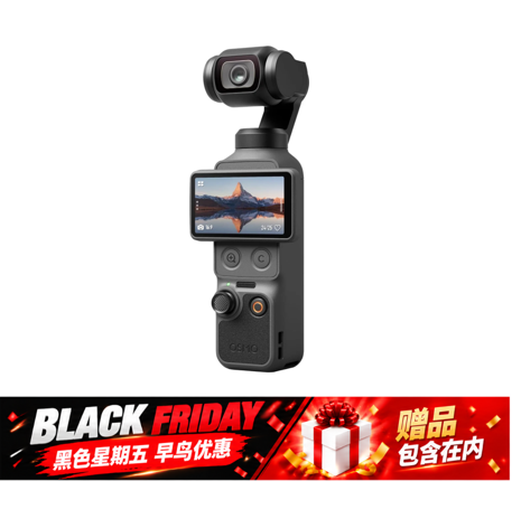 No image available
The product name lists photography as a use. For small engravings, check whether its close-up capabilities suit your subject.
 No image available
The stated optical zoom can help you adjust your framing. Check separately whether the lens can focus close enough to capture details.
 No image available
The product name lists photography as a use. Check the focusing distance and close-up capabilities before choosing this model for small details.
 No image available
The product name lists photography as a use. Check that the focusing distance is suitable for close-ups of engravings and signs of wear.
 No image available
The included lens makes this a complete kit with an APS-C mirrorless camera. Check whether the zoom lens can deliver the close-ups you need to capture small details.
No, not for every shot. Start with an overview photo, then decide how large you need engravings or damage to appear in close-up. At 1:1, the subject is reproduced at life size on the sensor. Check the stated magnification of the exact lens.
No. The minimum focusing distance is measured from the sensor, while the working distance is the space between the front of the lens and the subject. For the SEL30M35, Sony lists these as 9.5 cm and 2.4 cm respectively. Use the working distance to judge how much room you’ll have for lighting.
Take test shots at different apertures and check that both the front and back are sharp enough. If one shot isn’t enough, you can combine focus points using focus stacking. This requires multiple shots and suitable software or a camera feature.
It depends on how you use the camera and the terms of your purchase. ACM ConsuWijzer states that consumer protection does not apply when a contract is used mainly or exclusively for business. In some circumstances, small businesses may still benefit from some of this protection. So check the contractual warranty and service terms for your purchase in advance.
A Dutch seller selling to consumers must not misrepresent an offer by providing incorrect information or leaving out important details. The Netherlands Authority for Consumers and Markets describes this obligation. Make sure relevant damage is clearly shown in your photos and product description.